

Anthropic pushes AI agents into the managed era
AI News | Editor: Sandy On April 8, 2026, Anthropic unveiled “Claude Managed Agents,” a release that goes beyond a routine product update and instead signals a
AI News | Editor: Sandy On April 8, 2026, Anthropic unveiled “Claude Managed Agents,” a release that goes beyond a routine product update and instead signals a
AI News | Editor: Sandy
On April 8, 2026, Anthropic unveiled “Claude Managed Agents,” a release that goes beyond a routine product update and instead signals a shift in the generative AI race—from model capability to agent infrastructure. According to the company’s official announcement, “Claude Managed Agents: get to production 10x faster” (https://claude.com/blog/claude-managed-agents), the service is now available in public beta on the Claude Platform. It enables enterprises and developers to build, deploy, and scale cloud-hosted AI agents using composable APIs. If the past year has been defined by which model is smarter, Anthropic’s latest move reframes the competition: who can move agents from demos into production fastest.
From the official description, Claude Managed Agents is not merely an expansion of tool-calling capabilities. Instead, it packages some of the most difficult aspects of operationalizing AI agents. Anthropic emphasizes that developers no longer need to manage sandboxing, state persistence, permission control, long-running execution, credential handling, or observability. Instead, they define tasks, tools, and safety boundaries, while Anthropic’s managed execution environment handles the rest. This transforms AI agents from one-off prompt outputs into continuously running, recoverable, auditable, and governable workflows.
This shift in positioning is significant. In the past, enterprise discussions of AI agents often revealed a gap: prototypes are easy, production is hard. Models can write code, summarize documents, and retrieve information, but once they interact with real systems, internal permissions, and cross-department workflows, complexity escalates quickly. Anthropic is now targeting this “messy middle” between prototype and deployment. Its messaging—“get to production 10x faster”—makes clear that the intended audience is not casual users, but enterprises already convinced of the value of agents yet constrained by deployment and maintenance costs.
Several technical signals stand out in this release. First is long-running sessions. Anthropic states that Managed Agents can operate autonomously for hours, retaining progress and outputs even after interruptions. While seemingly a feature detail, this directly affects whether agents can perform real work. High-value enterprise tasks rarely complete in a single response; they require multi-step reasoning, tool usage, iterative refinement, and recovery. Without persistent state, agents struggle to function as true workers.
Second is multi-agent collaboration. Introduced as a research preview, the system allows agents to spawn and coordinate other agents to parallelize complex workflows. This departs from the traditional “single model plus tools” paradigm, instead reflecting how organizations operate: through specialized roles working together. Such an approach aligns more closely with real-world processes in software engineering, legal review, and financial operations, suggesting that Anthropic is betting on orchestration as a future competitive frontier.
Third is governance and observability. According to the announcement, Managed Agents include scoped permissions, identity management, and execution tracing, along with integrated session tracing, analytics, and troubleshooting tools within the Claude Console. This underscores a key reality: enterprise adoption barriers are no longer just about capability, but about explainability and control. For agents to operate in core business functions, companies must understand what actions were taken, why they were taken, and under whose authority. Governance is no longer optional—it is foundational.
One of the most notable aspects of this launch is Anthropic’s deliberate shift away from a “model release” narrative toward infrastructure. The announcement highlights that Claude models excel at agentic tasks, and that Managed Agents is an execution framework purpose-built for Claude. Internal tests reportedly show up to a 10 percentage point improvement in success rates for structured document generation compared to standard prompt loops. The implication is clear: in the agent era, model performance cannot be separated from execution infrastructure.
This signals a broader shift in business models. AI providers are no longer just selling inference; they are selling the system that turns models into reliable labor. Enterprises are increasingly paying not just for tokens, but for execution environments, security, workflow integration, observability, identity management, and operational continuity. In this sense, Anthropic is positioning itself closer to cloud providers like AWS, Microsoft Azure, and Google Cloud, rather than competing solely with OpenAI on model quality.
Anthropic is not alone in recognizing the importance of agent platforms. According to OpenAI’s official article, “New tools for building agents” (https://openai.com/index/new-tools-for-building-agents/), OpenAI has positioned its Responses API as a core interface for agent development, integrating web search, file search, and computer use. OpenAI’s strength lies in its mature developer ecosystem and broad toolset, embedding agent capabilities within a unified platform.
However, Anthropic’s differentiation lies in its stronger emphasis on the managed execution layer. While OpenAI focuses on providing primitives for building agents, Anthropic moves further into offering a fully managed runtime environment. This distinction could shape enterprise procurement decisions. For large organizations, the cost of operating agents—ensuring security, compliance, and reliability—often exceeds the cost of model usage itself.
Expanding the lens to Google and AWS clarifies the competitive landscape further. According to Google Cloud’s documentation, “Vertex AI Agent Engine overview” (https://docs.cloud.google.com/agent-builder/agent-engine/overview), its platform similarly emphasizes deployment, management, and scalability of agents in production, with features such as managed runtimes, memory systems, code execution, observability, and IAM integration. Google’s advantage lies in its deep integration with existing cloud services and enterprise data ecosystems.
AWS follows a comparable path. According to its page, “AI Agents – Amazon Bedrock Agents – AWS” (https://aws.amazon.com/bedrock/agents/), Bedrock Agents enable multi-step task execution across enterprise systems, APIs, and data sources, with built-in memory and guardrails. AWS also supports multi-agent collaboration for more advanced use cases. Its strength is global infrastructure coverage and mature enterprise-grade security frameworks.
In short, the real competition in the US is no longer just about model intelligence, but about who can transform agents into reliable, governable enterprise services.
From an international perspective, Anthropic’s move can be contrasted with developments in Europe and Asia. In Europe, French AI company Mistral announced “Build AI agents with the Mistral Agents API” (https://mistral.ai/news/agents-api), emphasizing flexibility, control, and sovereignty—reflecting European concerns around data governance and independence.
Asia, meanwhile, appears prominently in Anthropic’s own examples. The company highlights Rakuten in Japan as an early adopter, deploying agents across product, sales, marketing, and finance functions, integrated with Slack and Teams. This signals that large Asian enterprises are moving beyond experimentation toward operational adoption of agents as cross-functional productivity tools.
The broader significance of this release lies in a shift in how AI agents are valued. The question is no longer what agents can do, but whether they can be reliably managed. An agent that answers questions has limited value; an agent that executes repeatable, auditable, cross-system tasks begins to resemble digital labor. By focusing on managed infrastructure, Anthropic acknowledges that the next phase of competition will be defined by reduced deployment friction rather than more impressive demos.
This has two major implications. First, AI revenue models will increasingly resemble cloud services, with enterprises paying premiums for reliability, governance, and integration. Second, software companies may face renewed platform pressure. Rather than replacing software, agents may reshape how users interact with it. Anthropic’s references to integrations with tools like Notion, Asana, Sentry, and Atlassian suggest a future where software becomes a substrate for agent-driven workflows.
Despite its promise, Managed Agents does not eliminate key challenges. Cost remains a major concern. Long-running tasks, multi-agent orchestration, and persistent state can significantly increase compute and operational expenses. While enterprises may tolerate high costs during experimentation, large-scale deployment will require clear ROI.
Reliability and accountability also pose risks. When agents interact with real systems, errors are no longer benign—they can result in incorrect transactions, unintended data modifications, or flawed outputs. Determining responsibility between platform providers, developers, and enterprise users will become increasingly complex.
Finally, platform lock-in may intensify. Anthropic emphasizes that Managed Agents is optimized for Claude, which may improve performance but also ties customers more closely to its ecosystem. Enterprises seeking multi-model flexibility may view this as a constraint.
In the long term, the importance of Claude Managed Agents lies less in the product itself and more in what it represents: the emergence of an “agent operations layer.” The AI stack is likely to evolve into three tiers: model providers at the base, agent execution and governance platforms in the middle, and vertical applications on top. Anthropic is clearly aiming to control both the model and platform layers.
This shift will also change how AI companies are evaluated. Performance benchmarks will matter less than deployment speed, auditability, security, and integration with enterprise systems. Providers that can answer these operational questions will be better positioned to capture enterprise demand.
Anthropic’s release is therefore both pragmatic and ambitious. It does not merely announce the arrival of the agent era—it attempts to define how that era will be built, managed, and sold. Whether this leads to more efficient enterprise workflows or a new wave of complex platform competition will depend less on announcements, and more on how quickly these systems prove themselves in real-world deployment.
Leave your name and email to receive future updates from our blog and product insights.

ChatGPT Applications | Edited by Jason Chen In the age of social media dominance, Facebook (FB) has...
Read Article
AI News | Editor: Sandy In its latest announcement in April 2026 ( https://ai.meta.com/blog/introduc...
Read Article
Opinion / In-depth Analysis | Editor: Sandy As generative artificial intelligence evolves from answe...
Read Article
ChatGPT Applications | Edited by Jason Chen When organizations begin adopting generative AI, the fir...
Read Article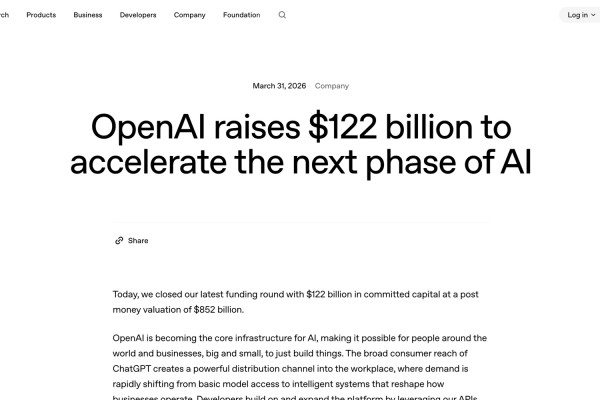
AI News | Editor: Sandy On March 31st 2026 OpenAI published an announcement of unusual weight: the c...
Read Article
AI News | Editor: Sandy The latest development surrounding Anthropic is not merely a product update....
Read Article
In today’s increasingly competitive pet food market, many e-commerce brands face the same challenge:...
Read Article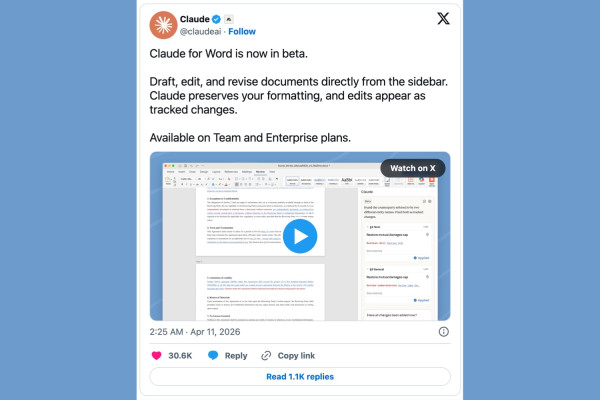
AI News | Editor: Sandy On April 10, Anthropic launched the beta version of “Claude for Word”, embed...
Read Article
AI Software | Editor: Sandy Flux AI is an all-in-one platform that combines AI image generation, ima...
Read Article
AEO | Editor: Adda Lin AI Overviews Are Not Just a New Feature. They Change the Narrative Structure...
Read Article
AI News | Editor: Sandy Anthropic’s latest launch, Claude Code Routines, pushes AI coding tools from...
Read Article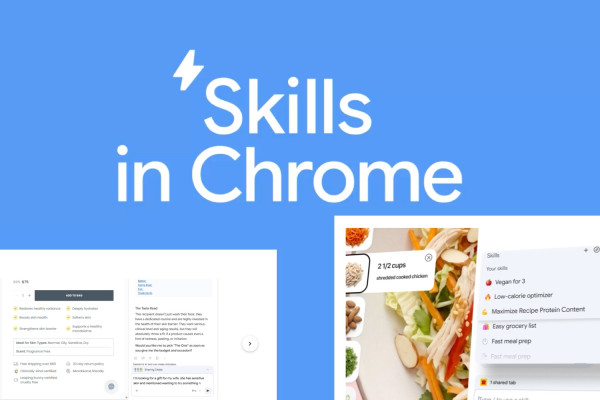
AI News | Editor: Sandy Google has moved artificial intelligence one step closer to the everyday act...
Read Article
Background This case features a dental clinic offering a wide range of services. The clinic already...
Read Article
【 AI News | Editor: Sandy】 Google’s newly released Gemini for Mac looks, at first glance, like a s...
Read Article
AI News | Editor: Sandy On April 16th 2026 Anthropic officially unveiled Claude Opus 4.7 and made it...
Read Article
Pimker - The AI marketing platform built for businesses
© Pimker 2026 The AI marketing platform built for businesses All rights reserved.