

Not just Copilot — Word now supports Claude too!
AI News | Editor: Sandy On April 10, Anthropic launched the beta version of “Claude for Word”, embedding its generative AI assistant directly into Microsoft Wor
AI News | Editor: Sandy On April 10, Anthropic launched the beta version of “Claude for Word”, embedding its generative AI assistant directly into Microsoft Wor
AI News | Editor: Sandy
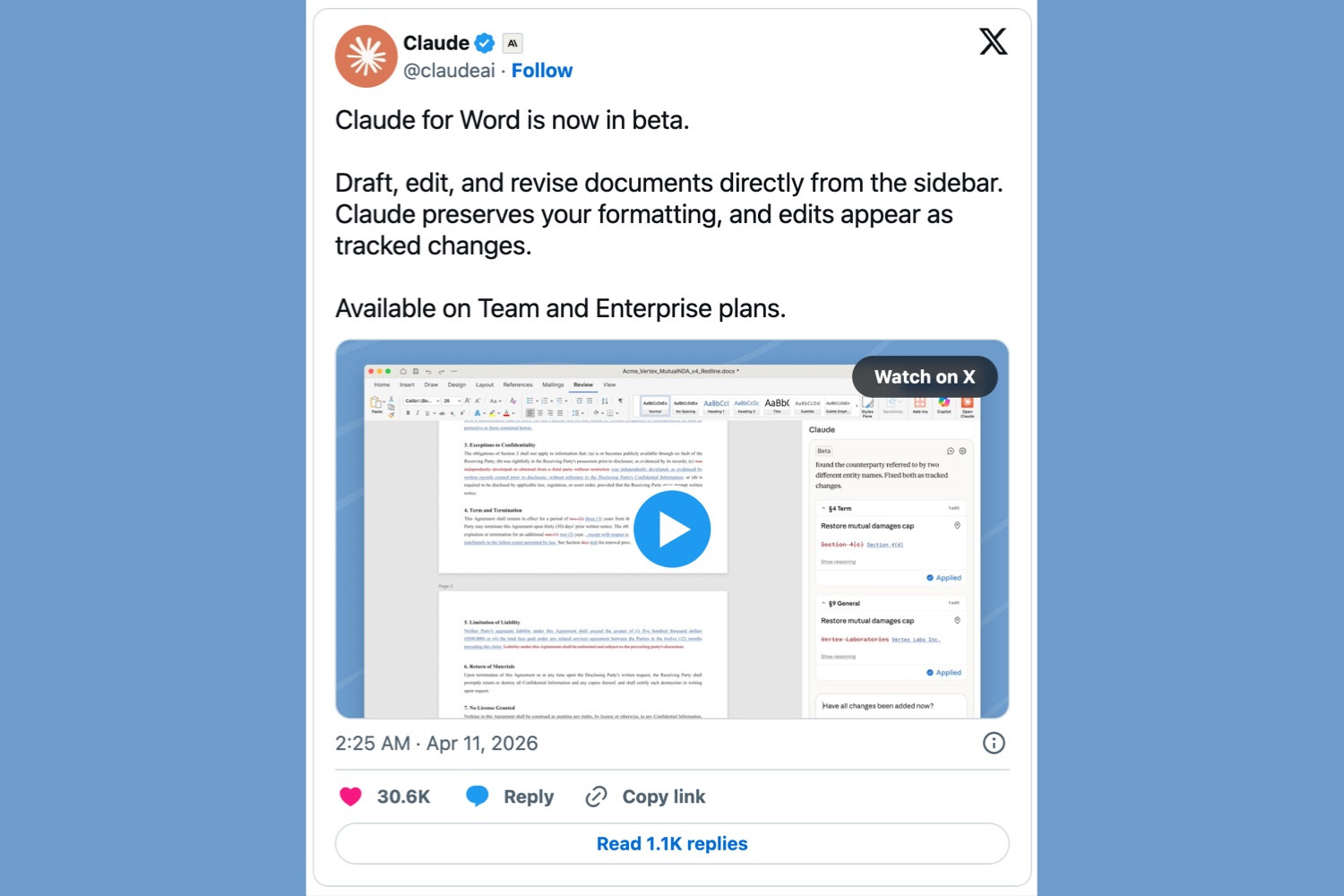
On April 10, Anthropic launched the beta version of “Claude for Word”, embedding its generative AI assistant directly into Microsoft Word through a sidebar that lets users draft, revise, review and refine documents without bouncing back and forth between a separate chat window. At first glance, this may look like just another office add-in. In reality, it marks a consequential shift in the enterprise AI race: model providers are no longer content to offer standalone chat interfaces. They are now competing for the native environments in which knowledge workers actually produce value. For Anthropic, this is not merely a feature release. It is an attempt to move Claude from being a model one consults into a layer that can participate directly in formal document workflows. For Microsoft, the development carries a different implication: its own Office stronghold is increasingly becoming a battleground where partners and rivals alike are trying to plant their flags.
According to NDTV Profit’s report, “Anthropic Launches Claude For Microsoft Word: Top Features, How To Access” (https://www.ndtvprofit.com/technology/anthropic-launches-claude-for-microsoft-word-top-features-how-to-access-11343231), the central promise of Claude for Word is simple but important: it brings AI operations into the document itself. Users can open a sidebar and ask Claude to draft text, polish paragraphs, respond to comments or revise specific sections based on what is already on the page. Compared with the now-familiar workflow of copying a passage into a chatbot and then pasting the result back into Word, the real value of this release lies in shifting AI from outside the document to inside its editing loop.
According to Anthropic’s official product page, “Claude for Word” (https://claude.com/claude-for-word), Claude does more than sit beside a document answering questions. It can rewrite selected text, read comments, present changes through Word’s native Track Changes system and preserve existing heading styles, numbering conventions and defined terminology. Those details may sound mundane, but they are precisely what tends to matter most in enterprise documentation and what generative AI tools have often handled poorly. For all their fluency, many language models have historically struggled to modify formal documents without damaging structure, formatting or institutional consistency. Anthropic appears to be targeting that gap directly.
The most notable aspect of this launch is not whether Claude can produce a smoother paragraph. It is whether it can understand and operate within the structure of serious documents. Anthropic says Claude for Word can work across long, complex files, detect inconsistent defined terms, identify broken cross-references and spot numbering errors, all while keeping the edits within a reviewable workflow. That pushes the product beyond the category of a writing assistant and closer to something more consequential: document infrastructure.
If the office AI contest of 2023 and 2024 was largely about who could generate a first draft fastest, then by 2026 the competition is clearly moving toward who can navigate the messy realities of enterprise text: context, formatting, compliance and approval chains. For many large organisations, the real question is no longer whether AI can write a plausible draft. It is whether AI can operate safely inside contracts, board papers, policy documents, bid submissions and financial narratives where every edit carries risk. Claude for Word’s use of Word’s native review and revision mechanics is, in that sense, less a cosmetic choice than a strategic one.
Technically, this suggests a model that is doing more than generating language. It must also understand document objects, paragraph selection, style inheritance, comment anchors and version-review logic. According to Anthropic’s “Claude for Word” page (https://claude.com/claude-for-word), Claude can read comments, revise text at the relevant anchor point and explain what it changed in the comment thread. That design does not eliminate errors. But it does place model-generated edits inside a process where they are easier to inspect, accept, reject or escalate. In document-heavy environments, that distinction matters.
Viewed in the context of Anthropic’s recent product cadence, this is not an isolated feature announcement. It looks more like part of a broader campaign. Anthropic’s newsroom (https://www.anthropic.com/news) and product materials show that Claude for Word now sits alongside Claude for Excel and Claude for PowerPoint, suggesting a deliberate effort to establish Claude across Microsoft Office’s most important productivity surfaces. Anthropic’s “Claude for Word” page (https://claude.com/claude-for-word) also notes that users can carry context across Word, Excel and PowerPoint add-ins within a single conversation. In practice, that means an enterprise workflow can begin in a spreadsheet, continue into a presentation and end in a formal memo or report without having to restart the AI interaction from scratch each time.
That continuity may be the most valuable thing Anthropic is actually selling. Not merely a model, but a cross-application layer for enterprise knowledge work. When businesses buy AI, they are rarely buying benchmark performance in the abstract. They are buying reductions in friction: fewer copy-paste cycles, fewer broken formats, less rework and shorter approval loops. If Claude can remain embedded across the chain of analysis, presentation and documentation, its value becomes harder to measure purely in model quality and easier to justify in workflow terms.
The competitive symbolism of this launch is hard to miss. The battlefield is Word, Microsoft’s own terrain. According to Microsoft’s support page, “Welcome to Copilot in Word” (https://support.microsoft.com/en-us/office/welcome-to-copilot-in-word-2135e85f-a467-463b-b2f0-c51a46d625d1), and Microsoft’s “Microsoft 365 Copilot” overview (https://www.microsoft.com/en-us/microsoft-365-copilot), Copilot in Word already offers drafting, rewriting, summarisation and collaboration features, with a particular advantage in its ability to draw on Microsoft 365 applications and the Microsoft Graph. In other words, Microsoft’s proposition rests on native platform integration and privileged access to workplace data. Anthropic, by contrast, appears to be betting on editing quality, model preference and the possibility that the best AI experience inside Office need not come from Microsoft itself.
That creates an unusually revealing market structure. Microsoft is a platform owner, an infrastructure provider and a major AI distributor. It is also closely tied to OpenAI while simultaneously allowing a company like Anthropic to operate inside its most valuable productivity software. According to Microsoft Learn’s overview of Microsoft 365 Copilot (https://learn.microsoft.com/zh-tw/microsoft-365/copilot/microsoft-365-copilot-overview), Anthropic is also listed among Microsoft’s subprocessors in certain contexts. The upshot is that enterprise AI is no longer a clean battle between vertically integrated rivals. Infrastructure, distribution and model capability are increasingly being split across overlapping commercial relationships.
From a strategic perspective, Anthropic’s design choice is telling. It is not merely recreating a chatbot in a Word sidebar. It is trying to integrate itself into Word’s existing review and governance mechanics. That is a direct challenge to Copilot’s home-field advantage. It sends a clear message: owning the software does not necessarily guarantee owning the best intelligence layer inside it.
Seen internationally, this release can be compared with at least three adjacent approaches. The first is Google’s. According to Google’s support pages, “Write something new with Gemini in Google Docs” (https://support.google.com/docs/answer/13951448?hl=en) and “Write & edit with Gemini in Google Docs” (https://support.google.com/docs/answer/13447609?hl=en), Gemini in Docs can generate, rewrite, summarise and work with content from other files inside Google Workspace. Google’s edge lies in native cloud collaboration and in the fact that Docs, Sheets and Slides were designed from the start around shared, web-based workflows.
Anthropic, however, has chosen a different route. Rather than building a new document environment and asking enterprises to migrate, it has gone straight into Word. That choice reflects a sober reading of the market. In law, finance, government, consulting and large corporate administration, Word remains the dominant environment for formal documents. It may not be the newest interface, but it is still one of the stickiest. For Anthropic, entering Word may be far more commercially realistic than trying to persuade enterprises to abandon it.
Then there is OpenAI. OpenAI has been steadily expanding ChatGPT’s role in business workflows, but its visible strategy has leaned more toward broad cross-application assistance, agents and general work interfaces than toward deep native revision inside Word specifically. According to OpenAI’s “ChatGPT Business - Release Notes” (https://help.openai.com/en/articles/11391654-chatgpt-business-release-notes), ChatGPT has added broader support for writing into Microsoft and Google applications, indicating that OpenAI, too, wants to move closer to the place where work happens. Still, Anthropic’s move feels more vertical and more tailored to users whose day-to-day value lies in editing formal text rather than merely brainstorming it.
A third comparison is Notion. According to Notion’s “Meet your AI team” (https://www.notion.com/product/ai) and “Use Notion AI to write better, more efficient notes and docs” (https://www.notion.com/help/guides/notion-ai-for-docs), Notion AI aims to fuse AI writing with knowledge management and project workflows in a single environment. That represents a different thesis altogether: not inserting AI into legacy office software, but trying to redefine the workspace around AI. Anthropic’s strategy looks less ambitious in form, but perhaps more practical in enterprise sales terms. It is not trying to replace established habits. It is trying to inhabit them.
Regionally, the implications are unlikely to be uniform. In the United States, enterprise AI is evolving into a contest over both model quality and platform access. In China, the same category of tools will be judged more heavily through the lens of localisation, data sovereignty and compatibility with domestic office ecosystems. In Europe, the emphasis is likely to fall on compliance, auditability and data boundaries. Claude for Word can travel internationally only if it satisfies those local conditions.
In China, enterprises also rely heavily on office productivity suites, but adoption decisions are more likely to be shaped by concerns about data localisation, geopolitical exposure and control over cloud infrastructure. That does not mean there is no demand for AI embedded directly in documents. On the contrary, the direction of travel is similar. But domestic model providers and local office ecosystems may enjoy a structural advantage. China may not replicate Anthropic’s exact path, yet the same principle is taking hold: AI needs to move from the chat box into the editor, the approval process and the enterprise knowledge base.
In Europe, where regulation and internal governance often weigh more heavily on software decisions, the appeal of a document AI tool may rest less on raw fluency and more on traceability. Who touched the document? What changed? Can the edits be audited? Can the system operate within existing compliance controls? Anthropic’s product messaging for Claude for Word (https://claude.com/claude-for-word) places notable emphasis on operating within existing security and compliance frameworks and on availability for Team and Enterprise plans, which suggests the company is already speaking the language European buyers want to hear. That may not guarantee adoption, but it does indicate where the next stage of competition will be fought.
The broader importance of this launch lies in what it says about the direction of office AI. The first visible successes of generative AI in knowledge work came from relatively low-friction tasks: drafting marketing copy, summarising meetings, reformulating notes and generating ideas. Those were useful, but they did not necessarily transform the most expensive or tightly governed parts of enterprise work. The next layer of value is different. It sits in contracts, compliance updates, investment memos, board drafts, internal policies and other documents that move through formal review chains and carry institutional risk.
Claude for Word is aimed squarely at that layer. It is not simply helping someone type faster. It is attempting to shorten the journey from first draft to internal revision to legal review to final sign-off. If tools like this mature, the skill profile of knowledge workers may shift as well. The premium will no longer rest only on writing from scratch, but on framing the right instructions, evaluating AI changes, managing version history and verifying whether a revision is acceptable. In that world, AI becomes the first processor of text, while humans retain the editorial, legal and managerial authority.
None of this means such tools are close to becoming frictionless solutions. Preserving formatting is not the same thing as preserving meaning. In contracts, regulated disclosures, policies and financial language, a subtle rewrite can alter risk allocation, legal interpretation or external messaging. Anthropic’s own materials note that Claude can make mistakes and that user review remains necessary, especially for customer-facing documents. That warning is common across the AI industry, but in document workflows it carries particular weight. The danger is not merely that the model says something odd. It is that a seemingly polished edit slips into a formal process and changes something that mattered.
There are also adoption frictions beyond model quality. According to Anthropic’s support page, “Use Claude for Word” (https://support.claude.com/en/articles/14465370-use-claude-for-word), the product is currently available to Team and Enterprise users and must be deployed through the Microsoft 365 admin centre. That signals a clear target market: managed organisations with IT controls, procurement processes and governance layers already in place. In other words, Claude for Word will succeed or fail not only on whether end users enjoy it, but on whether administrators approve it, security teams trust it and legal departments are comfortable with the associated data flows.
And the competitive clock will keep ticking. Microsoft will continue to deepen Copilot’s native integration. Google will expand Gemini’s role across Workspace. OpenAI and others may attack the same opportunity through agents, automation and cross-system enterprise orchestration. Once every major vendor wants to become the intelligence layer inside everyday work, the decisive advantage may not belong to whoever has the strongest model in isolation, but to whoever fits most cleanly into permissions systems, compliance reviews and existing user habits.
In the end, the significance of Claude for Word may not depend on whether it can outcompete Copilot this quarter. Its deeper importance lies in what it reveals about where the industry is headed. The next phase of generative AI competition is moving away from benchmark theatre and toward control over the interfaces where work is actually done. Whoever becomes the default assistant inside the document, the first participant in the revision loop and the layer that carries context across Excel, PowerPoint and Word will be in a powerful position to shape enterprise habits.
For Anthropic, the launch also signals a kind of corporate maturation. The company is no longer presenting itself only as a model maker. It is increasingly acting like a builder of enterprise work infrastructure. That is an ambitious shift, and a risky one, because it places Anthropic directly inside Microsoft’s core territory while exposing it to pressure from Google, OpenAI and a growing field of workplace software rivals. Yet if it succeeds, Claude will be more than an add-in. It will become a default participant in the enterprise document chain.
It is too early to say whether Claude for Word will prove to be a turning point in enterprise document AI or simply another carefully designed add-in with limited long-term penetration. But one thing is already clear. Once AI stops merely helping people write and begins entering the revision process itself, the document ceases to be just an output. It becomes one of the most sensitive, contested and valuable front lines in the business of artificial intelligence.
Leave your name and email to receive future updates from our blog and product insights.

【 AI News | Editor: Sandy】 Google’s newly released Gemini for Mac looks, at first glance, like a s...
Read Article
AI News | Editor: Sandy On April 16th 2026 Anthropic officially unveiled Claude Opus 4.7 and made it...
Read Article
Background This case features a dental clinic offering a wide range of services. The clinic already...
Read Article
AI News | Editor: Sandy Google has moved artificial intelligence one step closer to the everyday act...
Read Article
AI News | Editor: Sandy Anthropic’s latest launch, Claude Code Routines, pushes AI coding tools from...
Read Article
AEO | Editor: Adda Lin AI Overviews Are Not Just a New Feature. They Change the Narrative Structure...
Read Article
AI Software | Editor: Sandy Flux AI is an all-in-one platform that combines AI image generation, ima...
Read Article
In today’s increasingly competitive pet food market, many e-commerce brands face the same challenge:...
Read Article
AI News | Editor: Sandy The latest development surrounding Anthropic is not merely a product update....
Read Article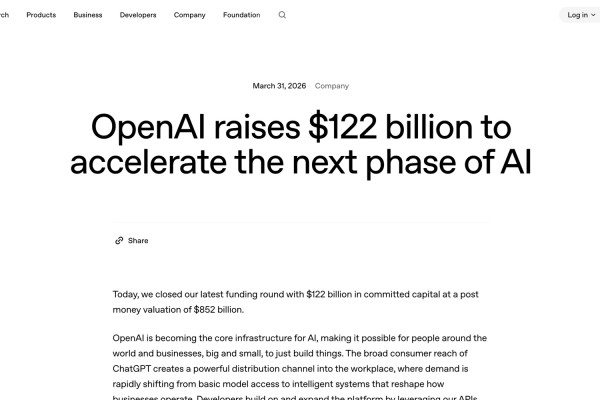
AI News | Editor: Sandy On March 31st 2026 OpenAI published an announcement of unusual weight: the c...
Read Article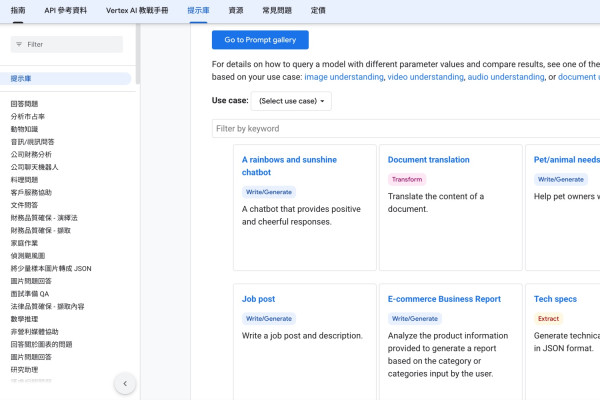
ChatGPT Applications | Edited by Jason Chen When organizations begin adopting generative AI, the fir...
Read Article
AI News | Editor: Sandy On April 8, 2026, Anthropic unveiled “Claude Managed Agents,” a release that...
Read Article
Opinion / In-depth Analysis | Editor: Sandy As generative artificial intelligence evolves from answe...
Read Article
AI News | Editor: Sandy In its latest announcement in April 2026 ( https://ai.meta.com/blog/introduc...
Read Article
ChatGPT Applications | Edited by Jason Chen In the age of social media dominance, Facebook (FB) has...
Read Article
Pimker - The AI marketing platform built for businesses
© Pimker 2026 The AI marketing platform built for businesses All rights reserved.