In today’s increasingly competitive pet food market, many e-commerce brands face the same challenge: their products are strong, their ad spend is ongoing, yet overall growth remains difficult to scale in a stable way.
This article shares a real case from a pet food e-commerce brand.
The brand focuses on natural and functional pet food formulas, targeting pet owners who care deeply about their pets’ health. While the brand already had solid products and a strong market foundation, it had reached a key digital growth bottleneck: website traffic growth was limited, conversion performance was inconsistent, and the site content was not fully delivering its potential.
This is also a common situation for many brands today.
In the past, website optimization mainly revolved around traditional SEO, ad campaigns, creative testing, and manual adjustments. But in today’s digital environment, brands are no longer competing only for search rankings. They are also competing to see whether AI can understand, organize, cite, and recommend them.
Pimker’s core positioning is to help brands become more visible in AI search and recommendation scenarios, while building a long-term growth system through continuous automated optimization rather than one-time page edits.
What challenges was this pet food brand facing?
Before implementing the system, the brand was dealing with four major challenges.
First, its traffic sources relied too heavily on existing paid acquisition, which limited long-term growth. Second, although the website had product pages, brand introduction pages, and some supporting content, the overall information structure was still unclear, making it less readable for both search engines and AI systems. Third, many optimization tasks still depended on repeated manual adjustments, which were time-consuming and difficult to sustain over time. Finally, even though the team could see changes in the data, it was hard to quickly identify what to optimize first, where to focus, and which part of performance each adjustment actually influenced.
This is a common issue for many e-commerce brands: it is not that they lack content, but rather that their content has not been structured in a way that drives growth. It is not that they lack traffic, but rather that the traffic has not been consistently converted into stronger engagement and purchase performance.
What we implemented was a continuous AI automated optimization system
In this collaboration, we did not approach the project like a traditional agency service. Instead, we helped the client implement an AI automated optimization platform that allowed the website to continuously enter a cycle of being analyzed, organized, and optimized.
This point is critical.
Many brands assume website optimization simply means adjusting a few headings, adding some paragraphs, or changing a few keywords. But truly valuable growth never comes from one-time fixes. It comes from a continuous, automated, and compounding optimization rhythm.
Pimker focuses on AI Search Growth, AI-readable content structure, SEO / GEO planning, and continuous submission and update workflows. It uses a systematic approach to organize brand content, website signals, and AI submission processes, reducing the cost of repeated manual communication and adjustments.
Phase 1: Restructuring the website into a format AI can understand more easily
The first thing we worked on was not advertising. It was the content structure of the website itself.
Because if the website information is scattered, unclear, or disorganized, then no matter how much traffic you drive later, the results will easily be diluted.
In this case, we first reorganized several key elements, including the order of product page information, brand introduction and value proposition, structured FAQ content, the clarity of shopping and conversion entry points, and page logic that was easier for both search engines and AI systems to understand.
The goal at this stage was not to “write more,” but to “make the content easier to understand.”
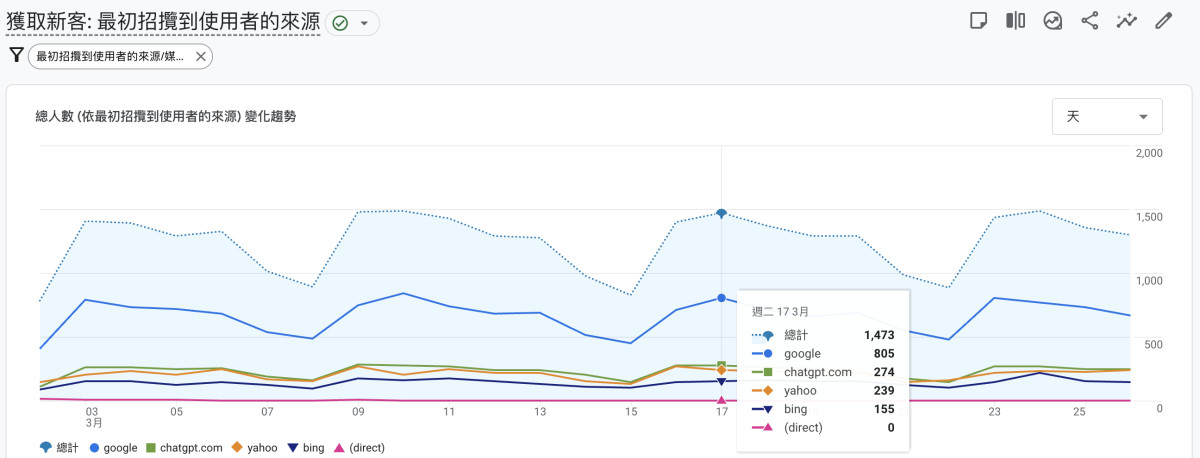
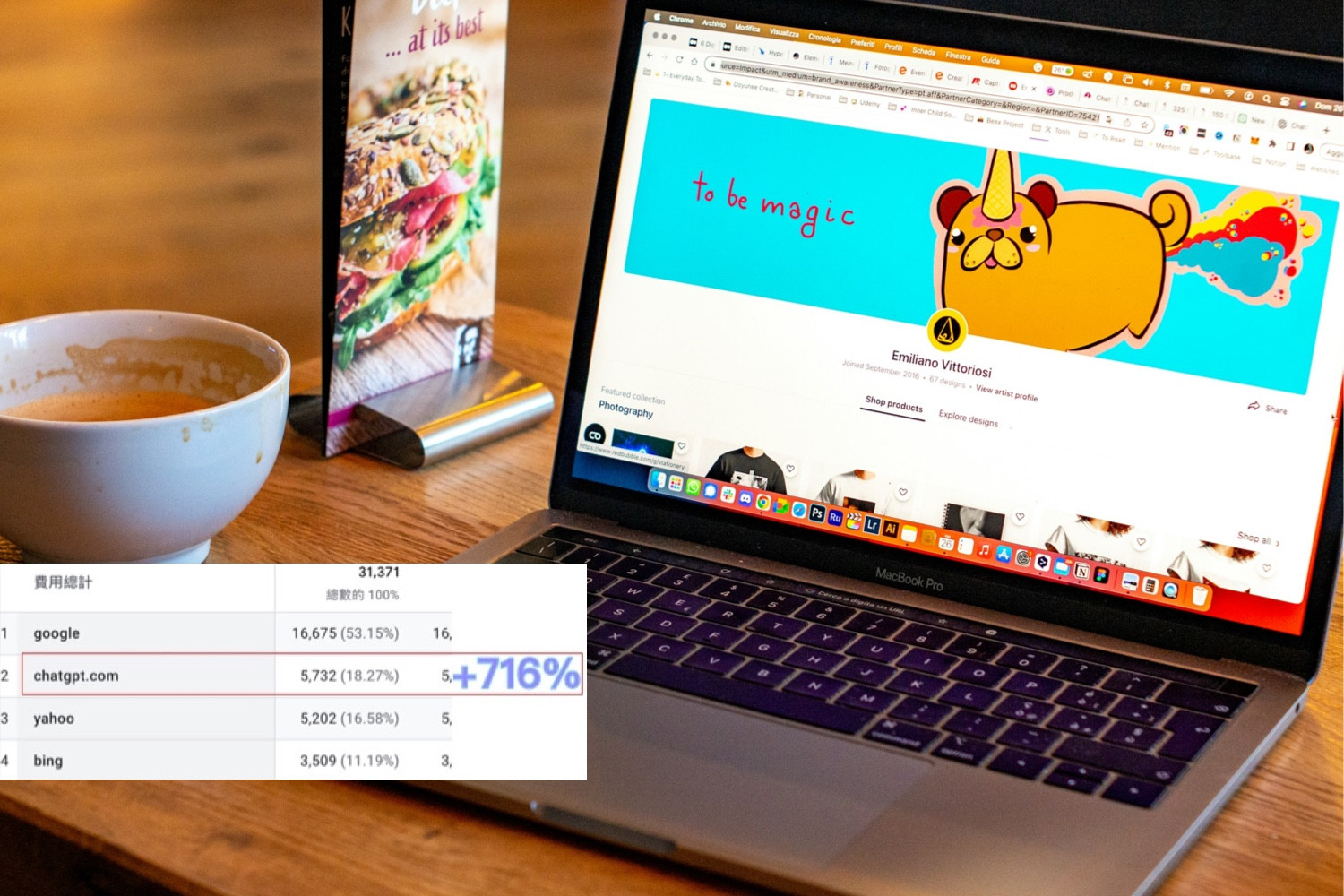
After implementing the optimization, overall website traffic — including traffic from ChatGPT — began to show clear growth. After several months of continuous optimization, AI-driven traffic gradually entered a consistent upward trend.
Phase 2: Letting the AI automated optimization system run continuously
Once the content structure was organized, the real differentiator came from the ongoing automated optimization.
The system continuously tracked search and content signals, automatically adjusted page priorities and update timing, reduced the need for back-and-forth manual revisions, and built content readability, automation, and performance tracking into one process. This was the most critical part of the case.
The reason many websites fail to generate real results after optimization is not because the direction is wrong, but because the optimization does not continue. Manual optimization usually runs into three problems: it is slow, it is difficult to sustain, and it is hard to scale.
But when optimization becomes something the system handles continuously, the entire rhythm changes.
In this brand’s case, the AI automated optimization platform continuously adjusted the website’s content structure, signal organization, and update cadence, allowing the website to move beyond a “one-time improvement” and into a state where results could accumulate over the long term.
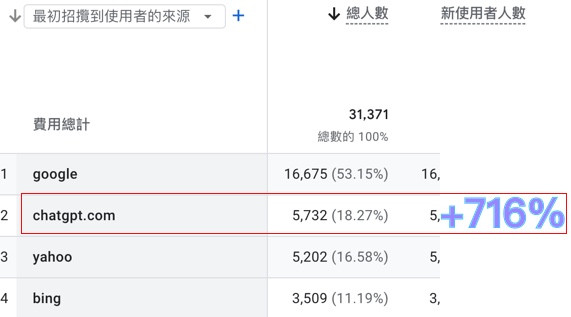
Google Analytics showed that after implementation, AI traffic was not only increasing significantly month after month, but user time on site and engagement depth also improved at the same time, indicating that both traffic quality and website experience had been strengthened.
Phase 3: Looking beyond traffic and focusing on conversion quality
Many people talk about website performance only in terms of traffic. But for an e-commerce brand, what really matters is not just whether more people are visiting the site. What matters is whether those visitors can understand the brand more easily, build trust more quickly, and ultimately convert.
In this pet food brand case, the results of optimization were not limited to increased visibility. Overall conversion performance improved as well.
The reason is quite straightforward: when website content becomes clearer, the structure becomes more complete, and brand information becomes easier to understand, users face a lower decision-making barrier.
They can more quickly understand who you are, what you sell, what makes you different, and why they should take the next step.
Why is AI automated optimization especially suitable for pet food e-commerce?
Pet food e-commerce is particularly well suited for this kind of system for three reasons.
First, there are often many product categories, which makes content easy to become fragmented.
Second, customer decisions depend heavily on trust and information completeness.
Third, brand growth in this category requires long-term consistency rather than short-term bursts.
That means advertising alone often cannot solve the core problem. The real differentiator is whether the website itself has been built into an asset that can continuously accumulate results.
That is where the value of AI automated optimization software becomes clear. It takes work that would normally require heavy manual effort, repeated testing, and continuous adjustments, and shifts it into a system that runs in the background over the long term. Brand teams no longer need to guess what to change every day or start from scratch each time. Instead, the system continuously helps the website move toward becoming easier to understand, easier to discover, and easier to recommend.
What does this case show?
What makes this case worth paying attention to is not just that a few metrics improved. It reflects something more important: when website optimization is no longer treated as a one-time project, but instead as an ongoing AI growth system, brands gain the opportunity to move from short-term execution to long-term accumulation.
This is also the core message Pimker has always emphasized: it is not about optimizing a single page for SEO, but about building a growth system designed for AI search and recommendation scenarios — from brand positioning and website structure to continuous update rhythms.
For pet food e-commerce brands, this kind of shift is especially valuable. As market competition continues to intensify, the brands that will last are not necessarily the ones spending the most on ads, but the ones that turn their websites into assets that keep compounding results.
Now is the time to adopt AI optimization
For this pet food brand, the biggest change after implementing the AI automated optimization system was not a sudden traffic spike on a single day. It was that the website began entering a healthier, more stable, and more sustainable growth state.
That kind of growth does not come from luck, nor from a single campaign. It comes from having the website structure, content readability, AI understanding, and continuous optimization rhythm properly established.
In the AI era, the most important thing in brand growth is not waiting for AI to decide whether to notice you. It is proactively structuring your brand in a way that deserves to be seen, understood, and recommended by AI.
Want to know whether your website is a good fit for AI automated optimization?
Contact Pimker (https://pimker.com/en/contact) and let us help you evaluate your current website structure, AI readability, and growth opportunities.