Opinion / In-depth Analysis | Editor: Sandy
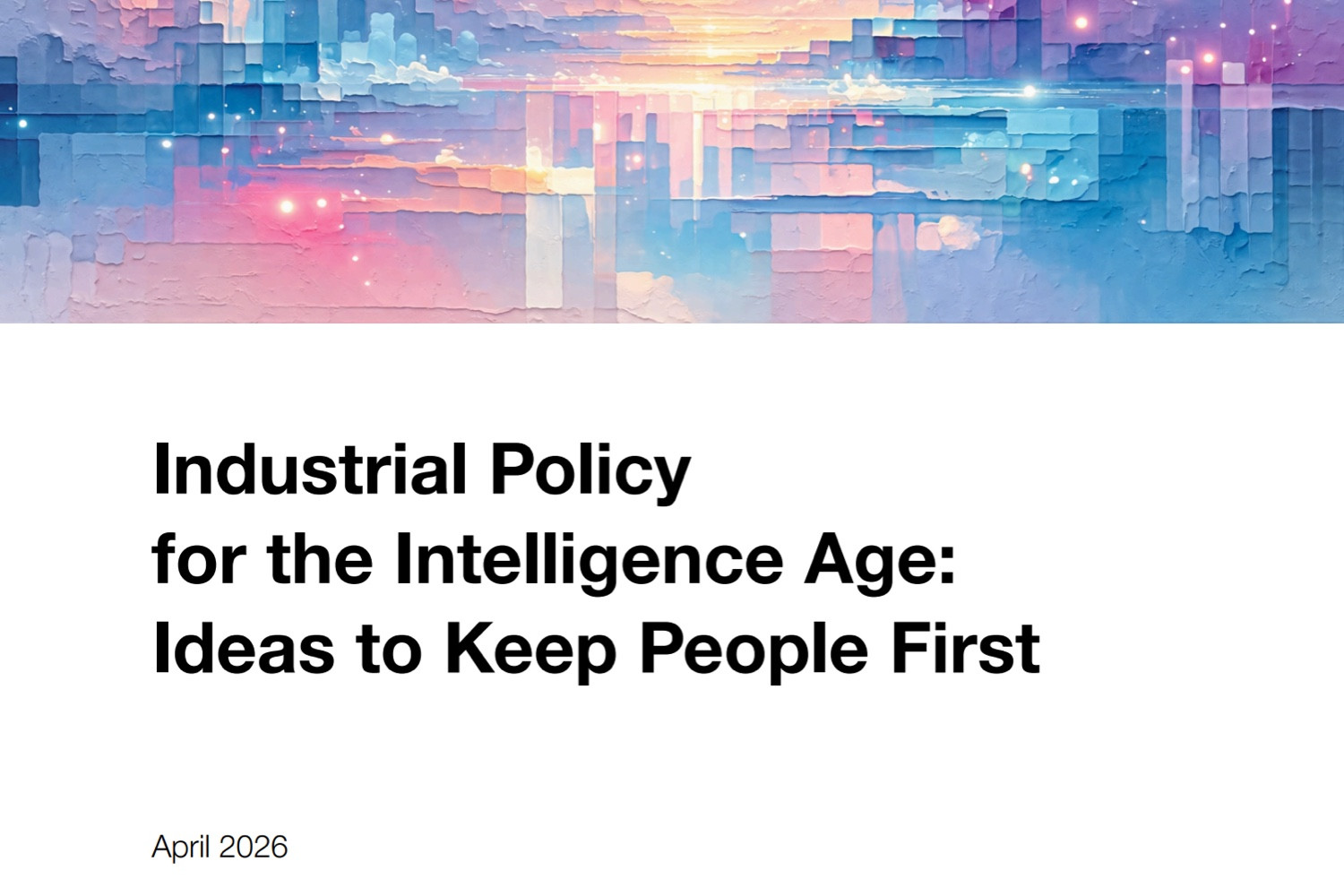
As artificial intelligence (AI) continues to advance at a rapid pace, global discussions have largely focused on which jobs will be replaced and which industries may disappear. However, a recent economic and policy blueprint proposed by OpenAI attempts to shift attention to a more fundamental issue: the greatest challenge facing future societies may not be unemployment itself, but how wealth and opportunity will be distributed.
The premise of OpenAI’s proposal is straightforward. AI is expected to bring about an unprecedented surge in productivity, enabling companies to produce more with fewer workers while generating greater value. From a macroeconomic perspective, this suggests that society as a whole will become wealthier, with more abundant resources. The problem, however, is that this newly created wealth may not naturally flow to everyone. As “work” ceases to be the primary source of value creation, traditional systems that rely on wages as the main mechanism of distribution may begin to break down.
In other words, the future may present a seemingly paradoxical scenario: nations grow richer, yet individuals face increasingly unstable—or even declining—sources of income. This structural shift would directly impact nearly every major social institution, including taxation systems, labor protections, pensions, and healthcare. These systems all share a common assumption—that most people are employed, pay taxes through wages, and accumulate social benefits over time. Once that assumption weakens, the entire framework must be rethought.
Against this backdrop, one of OpenAI’s key proposals is the concept of a “robot tax,” or taxation on AI. The underlying logic is simple: if companies replace human labor with automation and AI, then the taxes that would have been paid by workers should, in some form, be compensated by those companies. This is not only a matter of fairness but also a question of fiscal sustainability. If employment declines and tax revenues shrink accordingly, governments may struggle to maintain existing levels of public spending.
From Taiwan’s perspective, this issue is particularly sensitive. Taiwan’s labor insurance and national health insurance systems are already under financial strain. If the labor force continues to shrink while companies increasingly adopt AI to reduce human labor, the fiscal structure could face even greater pressure. As a result, whether to impose additional taxes on highly automated firms may evolve into not just an economic question, but a broader political and social debate.
However, OpenAI also makes it clear that taxation alone will not be sufficient. A more fundamental challenge lies in ensuring that the immense value created by AI is shared more broadly. To address this, the organization proposes the creation of a “Public Wealth Fund.” In essence, governments or public institutions would invest in AI and related industries, and the returns from these investments would be distributed back to the population.
In Taiwan’s context, this could be understood as a system for “sharing technological dividends.” Even individuals who do not invest in stocks could still participate indirectly in overall economic growth through public mechanisms. This approach seeks to address a growing reality: in the AI era, value is increasingly generated by capital and technology rather than labor alone. Without intervention, wealth is likely to become concentrated in the hands of a small number of corporations and investors.
This shift also points to a deeper transformation in the nature of inequality. In the past, disparities often stemmed from differences in education, effort, or industry choice. In the AI era, however, the defining divide may lie in whether one owns capital and has access to technological gains. If left unaddressed, this widening gap could have far-reaching consequences—not only economically, but also in terms of social stability and political dynamics.
On the labor front, OpenAI’s proposal of a four-day workweek presents a more optimistic vision of the future. In this scenario, AI-driven productivity gains would allow individuals to accomplish the same—or greater—output in less time, enabling shorter working hours without reducing income. Such a shift could improve quality of life and redefine the role of work in society.
Yet this outcome is far from guaranteed. An alternative scenario is equally plausible: productivity gains are captured primarily as corporate profits rather than shared with workers through reduced hours or higher wages. In that case, the result would not be “everyone working less,” but rather a divided society—where some continue working intensively while others are pushed out of the labor market altogether. This form of polarization is already beginning to emerge in certain sectors.
OpenAI also emphasizes the need to rethink social welfare systems. Most existing models are closely tied to employment, but in a future where work becomes less stable—or less universal—such designs may no longer be viable. The proposed solution is “portable benefits,” where protections such as insurance, retirement savings, and basic security are attached to individuals rather than employers.
Implementing such a system in Taiwan would require significant reform. Current structures rely heavily on employer-employee relationships, and weakening that link would necessitate entirely new mechanisms for distribution and administration. This is not merely a technical adjustment—it would involve redefining societal notions of fairness, responsibility, and the social contract.
Ultimately, the most important takeaway from OpenAI’s blueprint is not any single policy proposal, but the broader shift it highlights: in the age of AI, the central challenge will move from “how to produce” to “how to distribute.” As technology makes resources more abundant, the key question becomes how to ensure those resources are shared in a stable and equitable way.
For Taiwan, this discussion is not distant or abstract. With an aging population, declining birth rates, and ongoing industrial transformation, AI has the potential both to amplify existing challenges and to create new opportunities. If institutions adapt in time, AI could enhance overall quality of life. If not, it may deepen existing inequalities.
In the end, the question is not whether AI will change the world—it already is. The real question is whether societies are prepared to redesign their systems in response. The future of the economy will not be determined by technology alone, but by the choices we make about how to structure and share its benefits.