

Chrome’s AI Features Land in Taiwan: Three Highlights Reshaping Productivity
AI News | Editor: Sandy Around April 21, Google officially rolled out the “Gemini in Chrome” experience in Taiwan ( https://gemini.google/us/overview/gemini-in-
AI News | Editor: Sandy Around April 21, Google officially rolled out the “Gemini in Chrome” experience in Taiwan ( https://gemini.google/us/overview/gemini-in-
AI News | Editor: Sandy
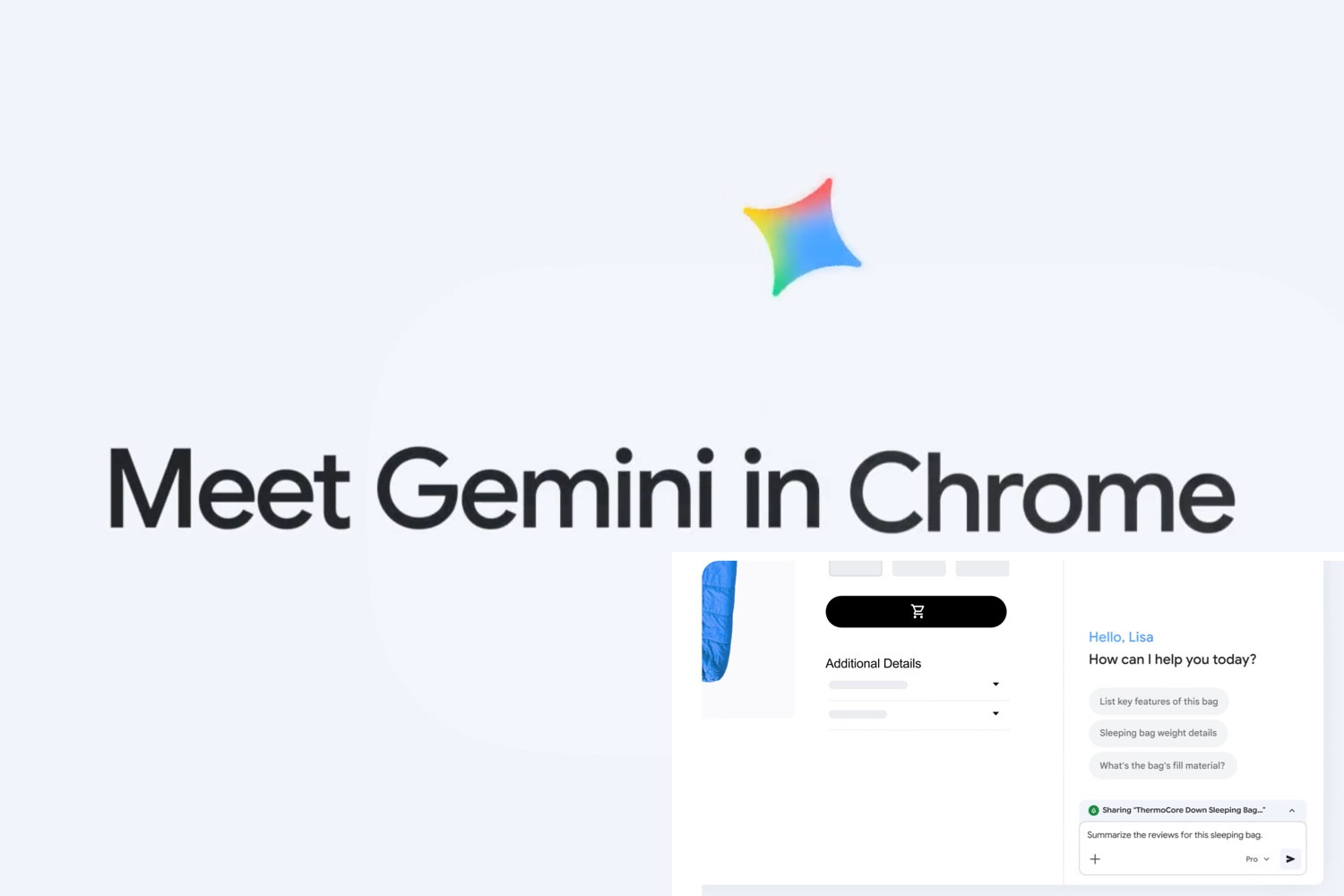
Around April 21, Google officially rolled out the “Gemini in Chrome” experience in Taiwan ( https://gemini.google/us/overview/gemini-in-chrome/?hl=en), positioning it as a new generation of browsing where users can “get AI assistance directly within the browser.” The Taiwanese product page is now live in full Traditional Chinese, signaling a clear shift: Google is turning Chrome from a passive browsing tool into a more proactive AI-powered workspace. Users no longer need to switch tabs to summarize long articles, compare multiple webpages, connect with Gmail or Google Maps, or even edit images directly within the browser. If the past two years of generative AI primarily reshaped search and writing interfaces, this launch in Taiwan represents a deeper transformation—AI is no longer an add-on; it is moving into the browser itself and beginning to mediate how users interact with the web. According to Google’s Taiwan product page, Gemini can summarize, answer questions, and compare information across open tabs, is built directly into Chrome on iOS, and remains accessible via system-level interaction on Android.
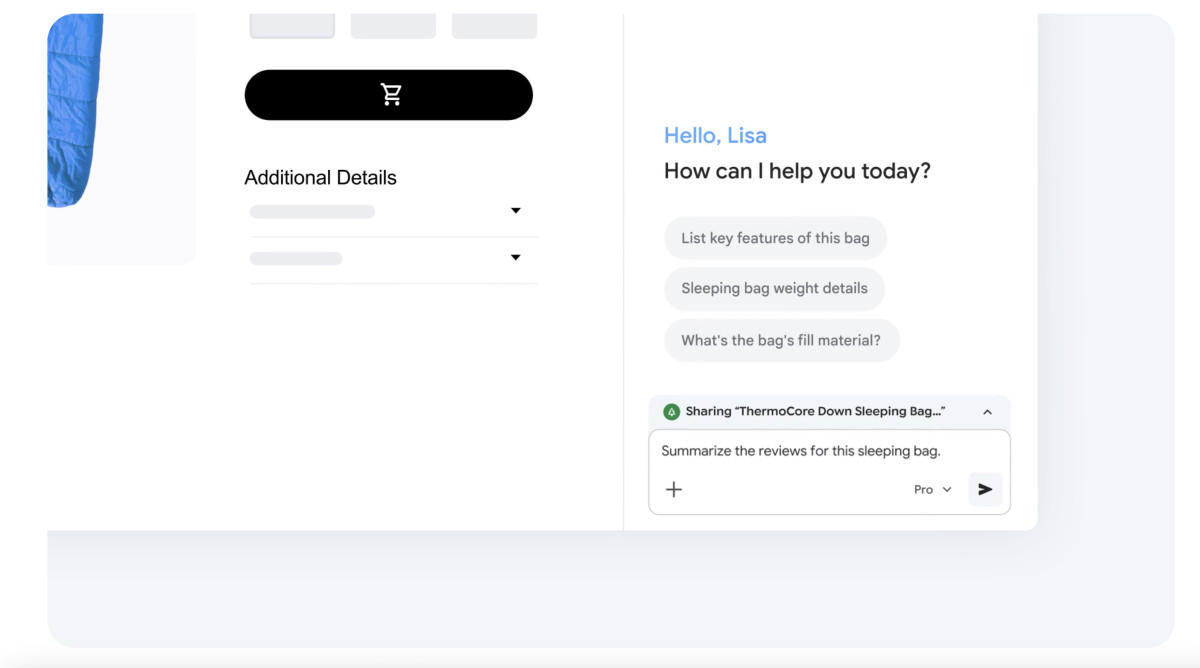
What stands out most about this rollout in Taiwan is not merely the addition of a sidebar, but a redefinition of Chrome’s role. Google’s official description emphasizes that Gemini can provide key summaries, clarify concepts, and deliver answers based on the user’s current browsing context. It can also consolidate multiple open tabs into structured insights, helping users compare specifications, pros and cons, and options. In effect, the browser is no longer just a container for displaying webpages—it is becoming an interpreter of content and an assistant for decision-making.
This shift follows a clear product logic. Previously, users planning trips, researching products, reading long-form content, or organizing information had to jump between search results, media pages, comparison sites, emails, and maps—manually synthesizing everything into actionable conclusions. Google is now targeting not just information itself, but the friction of moving it. If Gemini can understand the current page, remember related tabs, and trigger actions across Google services, Chrome evolves from an “entry point” into a “workspace.”
This also explains why Google did not confine these capabilities to a standalone chatbot interface. While the Gemini web app and mobile apps remain important, the highest-frequency tasks still occur in the browser. Whoever controls the browser stands to control the primary interface of information and workflows in the AI era. Embedding Gemini into Chrome effectively reconnects generative AI with Google’s most powerful distribution channel.
Based on Google’s Taiwan page, the rollout can be understood through three major capability pillars. The first is real-time interaction and summarization. Gemini can summarize articles, webpages, or discussion threads directly in Chrome, and extend outputs based on user prompts—for example, turning content into study notes, generating exam questions, or adapting a recipe into a vegan version. The second is cross-tab comparison and synthesis. Gemini can aggregate multiple open tabs into a single structured overview, enabling use cases such as travel planning or product comparison. The third is task continuity across Google services. Gemini can extract flight details from Gmail, check them in Google Flights, and draft a message to share with friends—removing the need to switch between tabs.
On the surface, these features improve efficiency. At a deeper level, they reshape how digital tasks are performed. Summarization changes reading behavior; cross-tab comparison alters research and evaluation; service integration transforms task completion. In other words, Google is not just building a smarter Q&A tool—it is embedding AI into the full workflow of digital activity, aiming to make Chrome a unified interface for understanding, organizing, deciding, and acting.
Taiwanese media reports note that these features are powered by Gemini 3.1 and include image-editing capabilities via Nano Banana 2. Yet for a browser product, the real technical challenge lies not in single-response quality, but in context integration. The value of Gemini in Chrome comes from its ability to understand what the user is viewing, what other tabs are open, and what the user intends to do next—then translate those signals into actionable responses.
This differs significantly from conventional chatbots. It requires handling multiple layers simultaneously: page content, window state, service integrations, and user confirmations. Google’s official messaging reflects this awareness. It emphasizes that Gemini only acts when prompted and remains under user control, while also allowing users to manage or delete activity history. This underscores a key tension: as AI becomes more embedded in browsing and task execution, accuracy is no longer the only concern—data boundaries and user control become equally critical. Errors in such systems may no longer be mere misunderstandings, but workflow disruptions or privacy risks.
The Taiwan launch also reveals how Google deploys AI products in a more nuanced, multi-layered way than it may initially appear. While earlier global announcements referenced “select regions,” the Taiwan product page is now fully live and explicitly localized, indicating that Taiwan is part of the active rollout. This suggests that Google often communicates availability through multiple channels—product pages, documentation, and local media—and these signals do not always align perfectly in timing.
At the same time, feature availability still varies. The Taiwan page makes clear that Android users interact with Gemini via system-level functionality, while iOS integrates it directly within Chrome. It also notes that more advanced features such as “auto browsing” are currently in preview and limited to U.S.-based subscribers of Google AI Pro or Ultra. In other words, while Taiwan is officially included, not all advanced capabilities are fully deployed. This “region-first, features-later” strategy aligns with Google’s broader approach: establish the interface and baseline functionality first, then gradually introduce higher-risk, higher-value agentic features.
Seen in a global context, Google’s move is less a breakthrough than a strategic necessity. In the United States, Microsoft has already deeply integrated Copilot into Edge, embedding AI into browsing, summarization, rewriting, and search assistance. In Europe, Opera has gone further with its “agentic browser” concept, where AI can actively perform tasks on behalf of users within webpages.
China presents yet another variation. Alibaba’s Quark positions itself as an AI super assistant, integrating search, content generation, and task execution into a single application. While not strictly a browser-centric approach, the strategic goal is similar: to become the primary interface through which users process information and complete tasks.
Against this backdrop, Google’s integration of Gemini into Chrome appears less like an innovation and more like a defensive move to protect its most critical entry point. Failing to embed AI at the browser level would risk ceding control of user workflows to competing platforms.
The long-term impact of Gemini in Chrome will likely extend beyond the browser itself. One immediate effect is on search and traffic distribution. If users can ask AI to synthesize multiple pages into structured insights or recommendations, the traditional model of sequential page visits may weaken. Media outlets, e-commerce platforms, and comparison sites may need to rethink how they maintain visibility, brand identity, and monetization in an environment where AI intermediates user attention.
For Google, this also signals a shift in business models. Deeper integration across Gmail, Maps, Calendar, and YouTube not only strengthens ecosystem lock-in but also opens pathways for premium AI subscriptions. The Taiwan page already references connections to Google AI Pro and Ultra tiers. This suggests a transition from a purely ad-driven model toward a hybrid of advertising, subscriptions, service integration, and potentially agent-based transactions.
However, risks remain significant. If Gemini misinterprets comparisons, drafts inaccurate communications, or executes incorrect actions across services, user trust could erode quickly. Browsers sit at the center of personal and professional digital activity; introducing AI into that layer raises the stakes of every error. This explains why Google emphasizes user control, staged rollouts, and cautious feature deployment.
For Taiwan, the significance of this launch extends beyond new features. The market has long exhibited high penetration of Google services—Chrome, Search, Gmail, and YouTube are deeply embedded in daily usage. This creates fertile ground for Gemini in Chrome to gain traction among knowledge workers, students, creators, and small businesses.
Adoption may not be explosive, but gradual and persistent. Users may start with summarization, move on to comparison, and eventually rely on Gemini for task execution. The key question is whether Taiwanese users will shift from seeing Gemini as a “research assistant” to treating it as a “workflow agent.” If that transition occurs, Google will not merely defend its browser dominance—it will redefine how users interact with the web.
Ultimately, this launch in Taiwan is less about adding features and more about testing a new paradigm of internet use. As AI begins to reside directly within the browser, the next phase of competition will not be about who answers faster, but about who can most seamlessly take over the fragmented tasks users once performed manually. Taiwan is now part of that experiment—and the outcome will depend not just on technology, but on how much control users are willing to hand over to the assistant living beside their tabs.
Leave your name and email to receive future updates from our blog and product insights.

In today’s increasingly competitive pet food market, many e-commerce brands face the same challenge:...
Read Article
AI News | Editor: Sandy On April 10, Anthropic launched the beta version of “Claude for Word”, embed...
Read Article
AI Software | Editor: Sandy Flux AI is an all-in-one platform that combines AI image generation, ima...
Read Article
AEO | Editor: Adda Lin AI Overviews Are Not Just a New Feature. They Change the Narrative Structure...
Read Article
AI News | Editor: Sandy Anthropic’s latest launch, Claude Code Routines, pushes AI coding tools from...
Read Article
AI News | Editor: Sandy Google has moved artificial intelligence one step closer to the everyday act...
Read Article
Background This case features a dental clinic offering a wide range of services. The clinic already...
Read Article
【 AI News | Editor: Sandy】 Google’s newly released Gemini for Mac looks, at first glance, like a s...
Read Article
AI News | Editor: Sandy On April 16th 2026 Anthropic officially unveiled Claude Opus 4.7 and made it...
Read Article
AI News | Editor: Sandy Anthropic on April 17, 2026 formally unveiled “Claude Design”, extending its...
Read Article
AI readability is not just a technical term. It is a key factor in whether Google, ChatGPT, and Gemi...
Read Article
Your website exists, so why does ChatGPT almost never mention it? This article explains the most com...
Read Article
AI News | Editor: Sandy The latest development surrounding Anthropic is not merely a product update....
Read Article
AI News | Editor: Sandy On March 31st 2026 OpenAI published an announcement of unusual weight: the c...
Read Article
ChatGPT Applications | Edited by Jason Chen When organizations begin adopting generative AI, the fir...
Read Article
Pimker - The AI marketing platform built for businesses
© Pimker 2026 The AI marketing platform built for businesses All rights reserved.