

What Should a Service Page Include So AI Can Understand It?
If a B2B service page is unclear, it does not only weaken Google’s understanding. It also reduces the chances of being mentioned by ChatGPT or Gemini and turnin
If a B2B service page is unclear, it does not only weaken Google’s understanding. It also reduces the chances of being mentioned by ChatGPT or Gemini and turnin
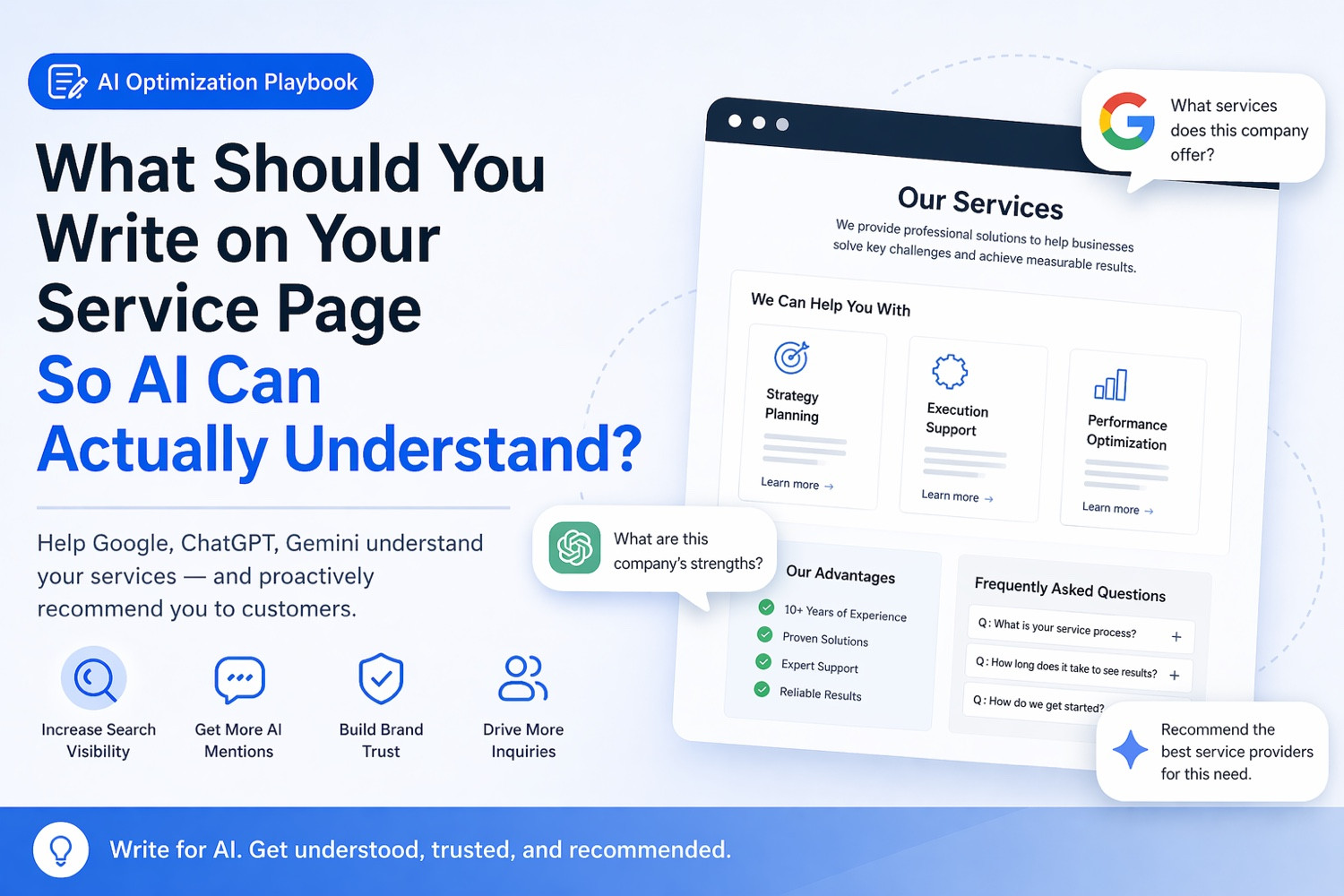
If a B2B service page is unclear, it does not only weaken Google’s understanding. It also reduces the chances of being mentioned by ChatGPT or Gemini and turning that visibility into inquiries. This article explains what matters most.
Many B2B company websites do have service pages. The problem is that their service pages look complete, but they still fail to explain the most important things clearly.
To people, they feel vague. To AI systems, they are equally hard to interpret. The result is common: your company may have real expertise, real case experience, and real services, but when potential customers search on Google, ask ChatGPT, or compare options in Gemini, your brand is still less likely to appear in the answer.
The real issue is usually not whether you have a website. It is whether your website—especially your service pages—actually turns “who you are, who you help, what problem you solve, and why someone should choose you” into a structure that can be understood.
For many B2B companies, a service page is still treated as something a company is simply supposed to have, rather than a page that should actively drive inquiries, build trust, support comparison, and help the brand become understandable.
That is why so many service pages look similar in practice: a large headline, polished design, confident copy—but after reading, the visitor still does not really know what the company does.
This was already a problem before. The difference is that in the past, people often blamed it on “not enough traffic” or “SEO not done yet.”
Now the issue is more visible.
A potential customer does not always enter through your homepage first. They may search first, or ask AI directly:
“Which company is suitable for B2B website optimization?”
“What kind of consulting firm is right for this industry?”
“Is there a good provider for small or mid-sized companies?”
If your service page cannot map to these kinds of questions with clear content, AI will struggle to understand you correctly—let alone bring you into recommendation, comparison, or citation scenarios.
A common misunderstanding is that many companies think listing service names is enough, or that if a page feels formal and professionally designed, people will naturally trust it.
But in reality, neither people nor AI judge only the surface. They judge whether you have made the key information clear.
Especially in B2B, decisions are slower, more rational, and more dependent on context. If your service page is full of adjectives but lacks structure, full of slogans but lacks real situations, full of service labels but lacks customer problems, it will struggle to function as a real business page.
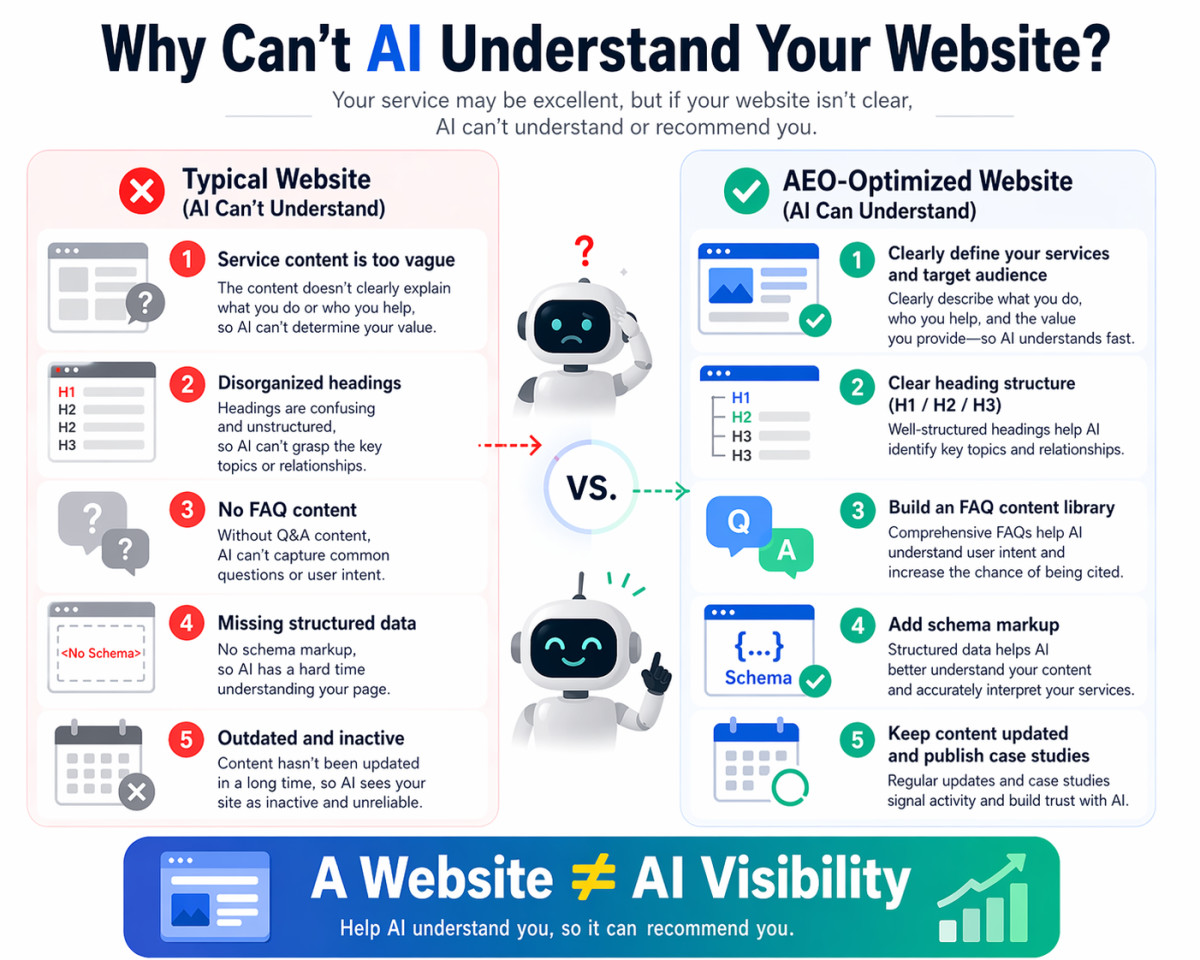
One of the biggest problems on B2B websites is not the absence of service pages. It is that the page names the service without truly explaining it.
You may write phrases such as “consulting services,” “digital transformation solutions,” “enterprise integration,” “brand consulting,” or “technical support.” These sound normal enough, but without further explanation, outsiders still cannot clearly tell what you actually provide.
AI has the same issue. It sees abstract labels, but it cannot easily determine the scope of the service, the ideal customer, the problem being solved, or the practical difference between your offer and others.
That is why many companies ask, “We already have service pages—why are we still not being mentioned?”
Because what you wrote may be an internal label, not an externally understandable explanation. A strong service page does not just list what you sell. It helps people quickly understand what the service is, who it is for, when it is usually needed, and what result it can create.
Many websites do not underperform because they lack content. They underperform because the angle of the content is wrong.
Companies tend to write from their own perspective: their capabilities, processes, philosophy, and experience. But potential customers do not usually think that way. Customers tend to think from the problem outward.
They are not likely to begin with, “I need a company that specializes in integrated marketing strategy.” They are more likely to think, “We get traffic but no inquiries—what is wrong?”
“Is this type of service even suitable for our current size?”
“Will implementation be difficult?”
“How is this different from other vendors?”
If your service page does not align with these question patterns, conversion becomes weaker—and AI also has a harder time connecting your content to real search or prompt scenarios.
This is also why Pimker’s project settings treat “when customers usually need you” and “how they phrase their questions” as important fields. The core idea is simple: a website cannot only say what the brand wants to say. It also has to match how customers actually think and ask.
B2B services are not impulse purchases. Customers do not mainly care whether your copy sounds polished. They care whether you seem trustworthy.
The problem is that many service pages overuse statements like “we are professional,” “we have experience,” or “we care about quality,” without turning trust into understandable information.
For example:
If these things are unclear, a service page can still feel vague even if it contains plenty of text.
AI also depends on these more concrete signals when organizing brands and services.
Brand positioning, why customers choose you, common questions, main services, and pricing position all matter not only because they help humans understand you, but because they help your website form a fuller brand profile.
Pimker’s brand and product settings are designed around exactly these signals, including brand positioning, main competitors, product or service lists, common customer questions, and why customers choose you.
Many B2B websites know that FAQs matter, so they add a FAQ section. But in many cases, that section exists only to fill space rather than address real hesitation before a buying decision.
An effective FAQ is not just “When was your company founded?” or “Where are you located?” Those are formal questions.
The more useful questions are the ones that affect comparison, hesitation, and inquiry behavior, such as:
These questions matter because customers are already thinking about them before they ever submit a contact form.
The real role of FAQ content is to turn hidden doubts into visible, understandable, and citable content on the site.
Pimker’s public plans and FAQ content clearly follow this logic as well, answering questions about implementation difficulty, suitable website types, plan upgrades, payment methods, and data retention to reduce uncertainty.
Another common situation is this: your page is not empty at all. The information is there, but it has not been organized in a way that is easy to understand.
A service page may mention background, process, team, technology, case studies, strengths, FAQ, and a CTA all at once—but in a messy order, without clear roles for each section. The result is that readers finish the page without understanding the main point.
That kind of page is tiring for people, and it is difficult for AI too. The system has to figure out what the page is mainly about, what the core service is, what content is supporting detail, and where the conversion path begins.
This is why title, H1, description, FAQ, structured data, and page health cannot really be separated. Pimker’s backend treats title, H1, 404 pages, internal links, images, sitemap, and schema checks as part of one website settings logic, because being understood is never only a copywriting issue. It is a structural issue.
When people talk about website content, they often talk only about traffic. But for B2B companies, the real issue is not just whether people arrive. It is whether you enter the customer’s shortlist at all.
When a potential customer searches on Google, they are not only looking for information. They are filtering options.
They quickly ask themselves:
If your service page does not provide those signals, even a click does not necessarily turn into meaningful interest.
In ChatGPT and Gemini scenarios, the issue becomes even more obvious. AI does not only rank links. It tries to organize answers, compare choices, give suggestions, and condense information.
If your website does not clearly communicate service content, use cases, brand positioning, FAQ content, and differentiators, AI will have a harder time understanding you correctly. That also makes it less likely to mention you, describe you, or compare you against others.
The impact is not just visibility. It affects the entire customer acquisition chain:
In other words, an unclear service page does not only cost you a ranking opportunity. It weakens your presence across the entire process of being discovered, understood, trusted, and chosen.
This also matches Pimker’s public positioning: the goal is not just to optimize isolated pieces of content, but to organize brand positioning, content structure, FAQ, submission rhythm, and website signals into a system that is easier for search and AI to understand. Its public messaging also makes clear that the goal is not only to make a website “found,” but to make the brand correctly understood in AI response and recommendation contexts.
The first step is not rewriting everything immediately. It is looking at what your current service page is actually doing.
If most of the page describes your company, your philosophy, or your process, but rarely addresses customer situations and questions, then the direction likely needs to change.
Start by asking whether the page clearly states who the service is for, when it is usually needed, and what result it helps create.
A lot of websites do not fail because they have too little information. They fail because each page tries to do too much.
Ask yourself what the core service of the page actually is. If one page tries to hold too many services, too many audiences, and too many use cases at once, it usually becomes unclear for everyone.
The biggest risk is a page that looks comprehensive but has no central idea. Clarity of focus matters more than adding more copy.
If you do not have the resources to fully rebuild your website right now, prioritize three things:
First, what type of company this service is suitable for.
Second, what customers usually hesitate about before taking action.
Third, why they should choose you instead of another route.
Once these are in place, a service page often moves from simple description to actual decision support.
One commonly overlooked problem is inconsistency. The homepage may express one positioning, the service page may speak in another language, the FAQ may sound like a third version, and the contact page may add nothing useful at all. That weakens the overall brand signal.
Not every page needs to be long, but they do need to be aligned. Consistency helps understanding. Inconsistency creates vagueness.
For most B2B companies, the practical move is not rebuilding the whole site at once. It is choosing one to three service pages that matter most.
Start with the pages closest to conversion, the ones customers ask about most, or the ones most tied to revenue. Clear improvements on those pages usually create more value than spreading effort too thin.
If any of the following sounds like your company, this issue is usually worth prioritizing.
First, your website has been live for some time and has at least some traffic, but inquiry volume remains weak. That often means the problem is not that nobody arrives—it is that visitors cannot quickly understand whether you are worth contacting.
Second, your service is abstract, customized, consultative, or integration-heavy. These B2B services depend heavily on clarity because customers do not instantly understand them.
Third, your company offers multiple services, but the website does not separate them clearly. That makes the brand feel like it does everything and stands for nothing specific.
Fourth, you are actively hoping to gain more organic inquiries from Google, ChatGPT, Gemini, or similar entry points. If that is your goal, service pages are almost always priority pages because they directly affect understanding and comparison.
Fifth, you are already doing content, publishing articles, running campaigns, or investing in branding, but sales progress still feels slower than it should. In that case, the issue is often not traffic. It is that your pages are not catching and converting that attention well.
On the other hand, if your offering is not yet clearly defined, the product is still evolving, or the website is not really live yet, then this may not be the first area to invest in heavily. But once your website is already part of your commercial process, this is rarely a small issue that can simply wait.
When people ask what a service page should include so AI can understand it, it sounds like a copywriting question. In reality, it is asking something more fundamental: has your website organized the brand, the service, and the customer problem into a structure that can be understood?
For B2B companies, this is not one simple trick, and it is not something solved by adding a few more keywords.
It touches how you define the service, how you describe customer situations, how you create trust, how you answer common concerns, and how your homepage, service pages, FAQ, and contact pages all reinforce the same message.
Once those things become clear, Google can understand your page topic more easily, and tools like ChatGPT and Gemini are also more likely to place you into recommendation, comparison, and mention scenarios.
More importantly, real visitors are more likely to move from “I found this company” to “I should contact them.”
So if your website already has content, services, and capabilities, but still struggles to bring in organic customer interest, the first question should not always be whether you need to publish more articles.
It may be whether your service page has actually explained you properly.
If you are not sure whether your current service pages are truly communicating the essentials, the most practical first step is not to rebuild everything immediately. It is to review, assess, and confirm the current state of your website first.
Start with your core service pages. Check whether they clearly explain the service itself, the right-fit audience, the most common concerns, and the reasons someone would choose you.
If you want someone to review your pages from the perspective of business outcomes, brand clarity, and AI readability—not just surface-level copy edits—you can leave your website details through the contact form.
From there, the review can begin with the pages that matter most and identify which areas are worth prioritizing first.

Leave your name and email to receive future blog updates and product insights.
ChatGPT Applications | Edited by Jason Chen When organizations begin adopting generative AI, the fir...
Read Article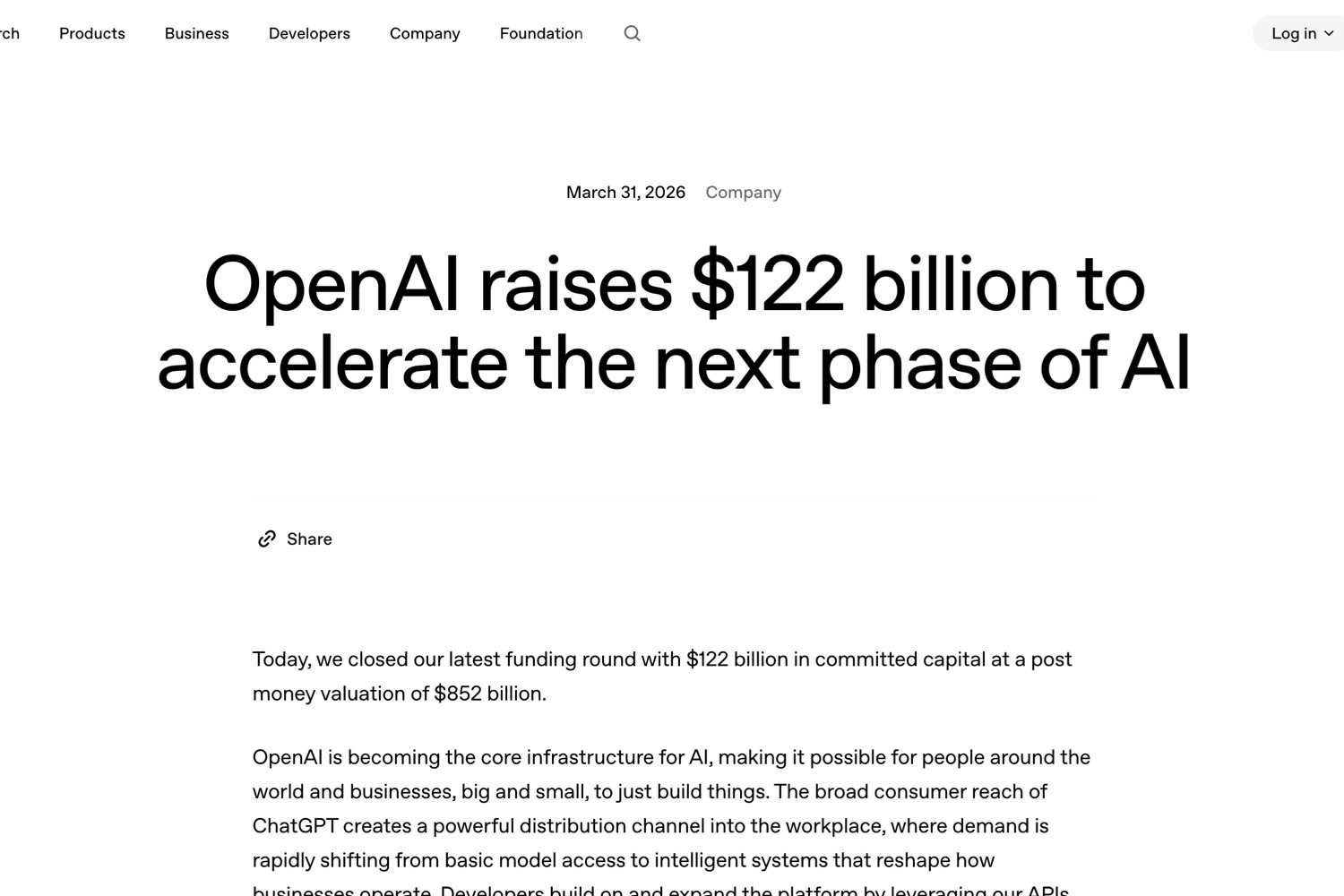
AI News | Editor: Sandy On March 31st 2026 OpenAI published an announcement of unusual weight: the c...
Read Article
AI News | Editor: Sandy The latest development surrounding Anthropic is not merely a product update....
Read Article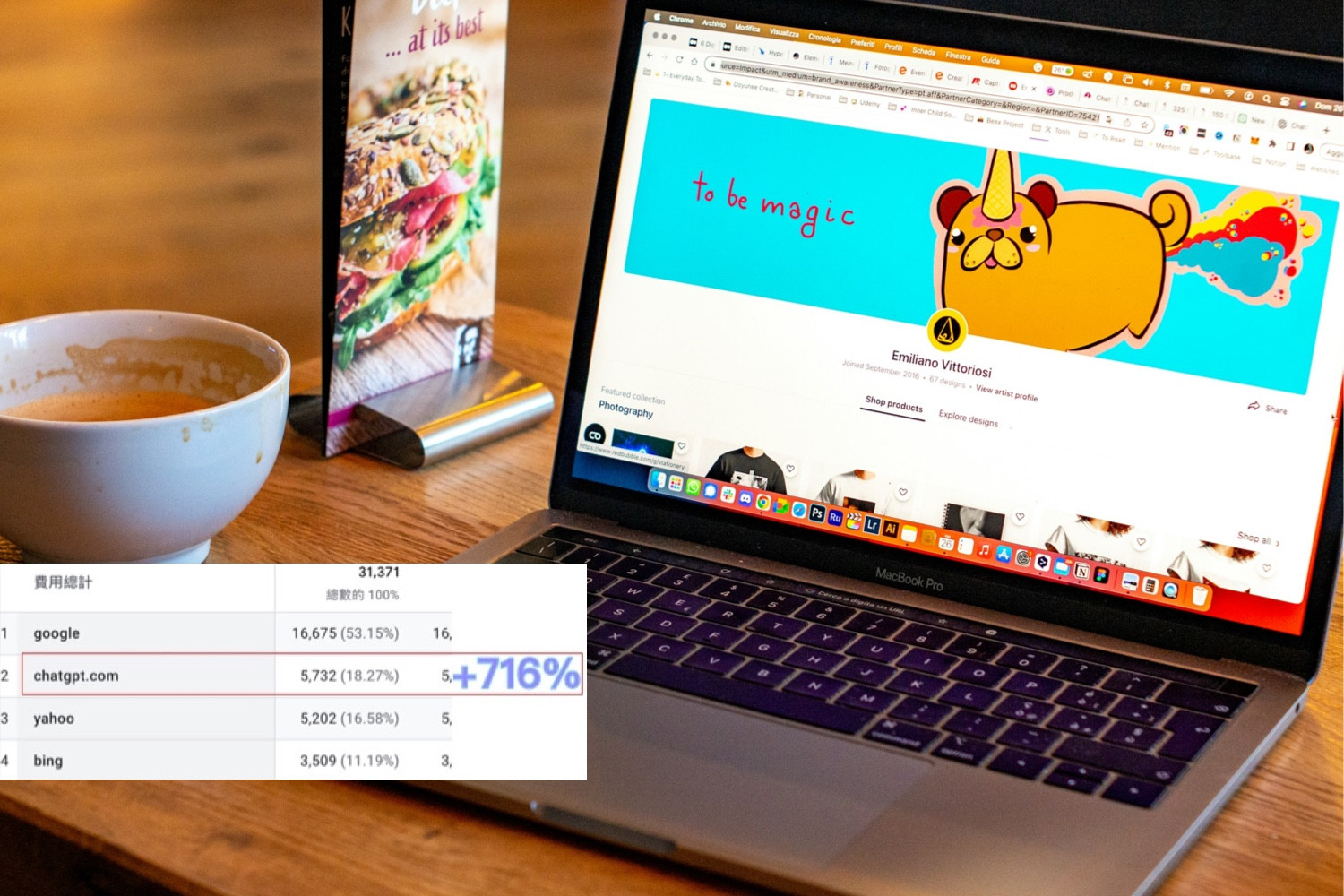
In today’s increasingly competitive pet food market, many e-commerce brands face the same challenge:...
Read Article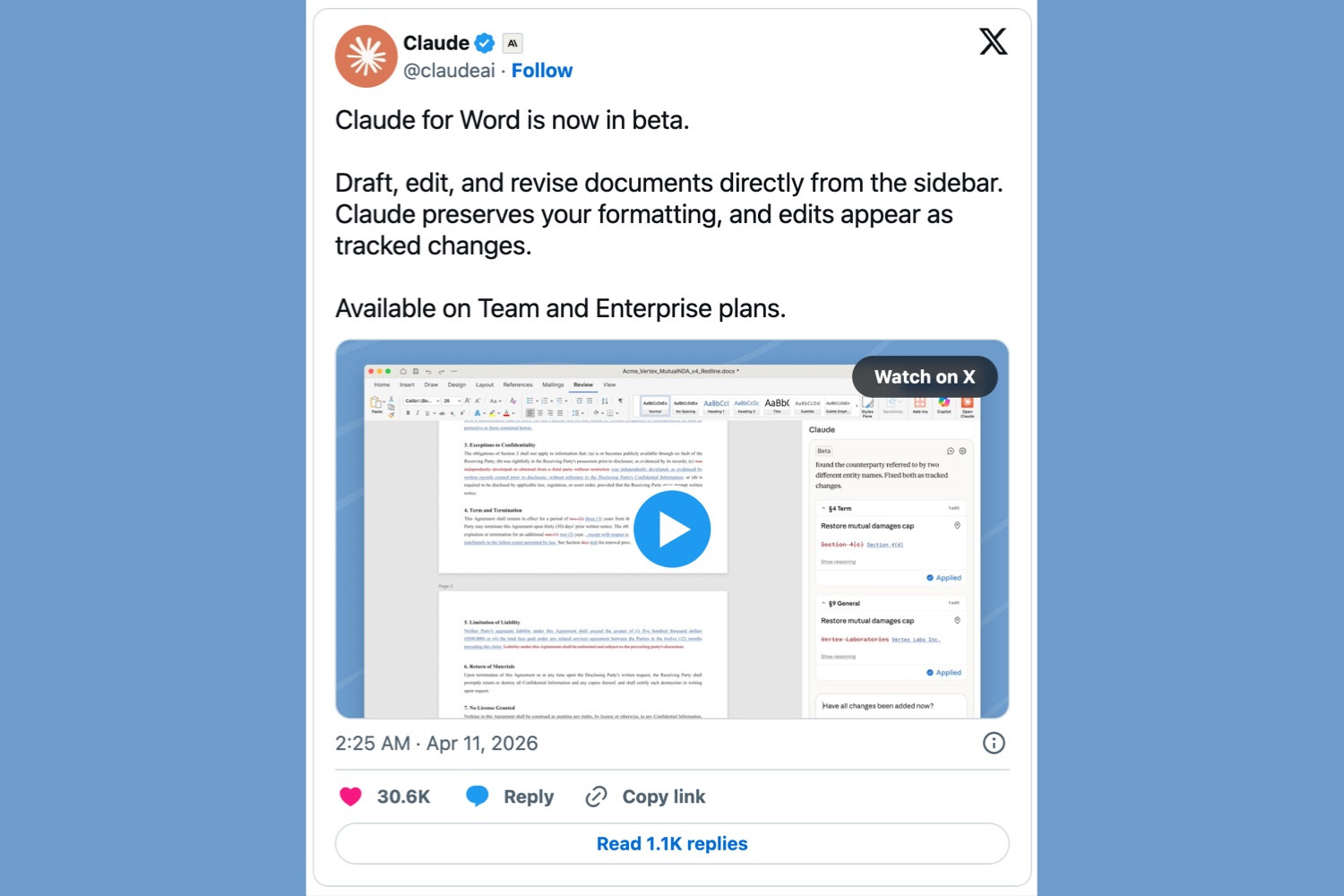
AI News | Editor: Sandy On April 10, Anthropic launched the beta version of “Claude for Word”, embed...
Read Article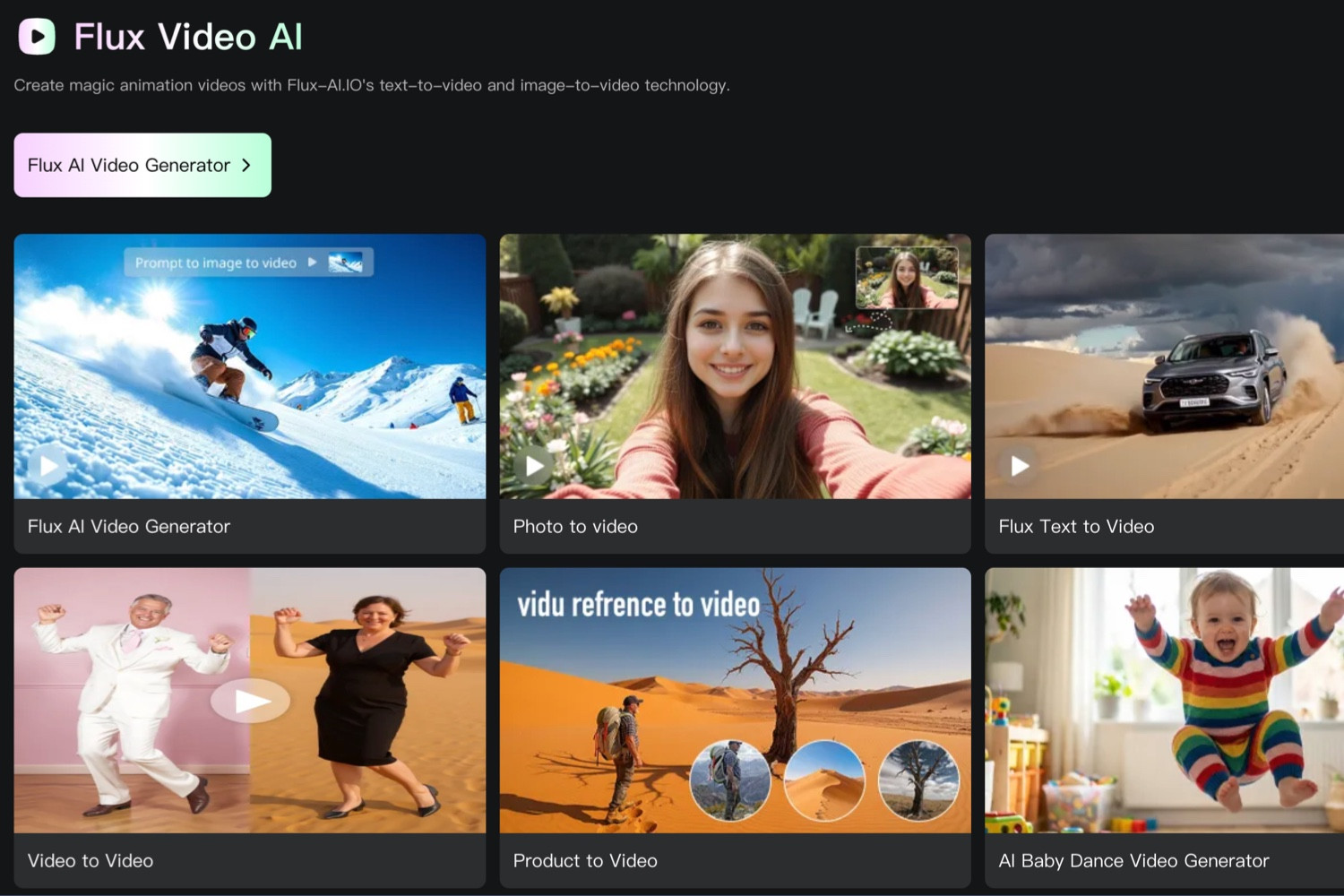
AI Software | Editor: Sandy Flux AI is an all-in-one platform that combines AI image generation, ima...
Read Article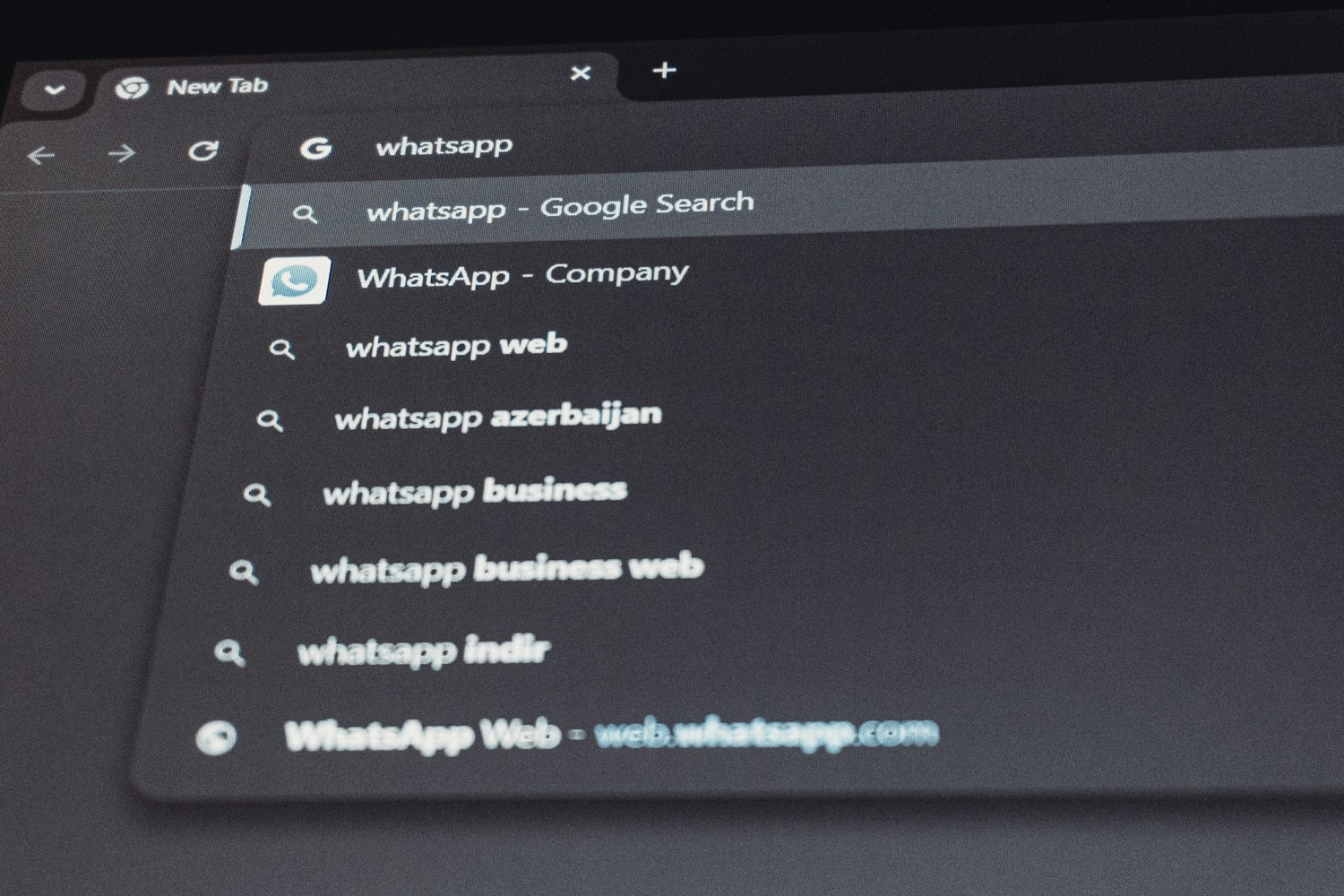
AEO | Editor: Adda Lin AI Overviews Are Not Just a New Feature. They Change the Narrative Structure...
Read Article
AI News | Editor: Sandy Anthropic’s latest launch, Claude Code Routines, pushes AI coding tools from...
Read Article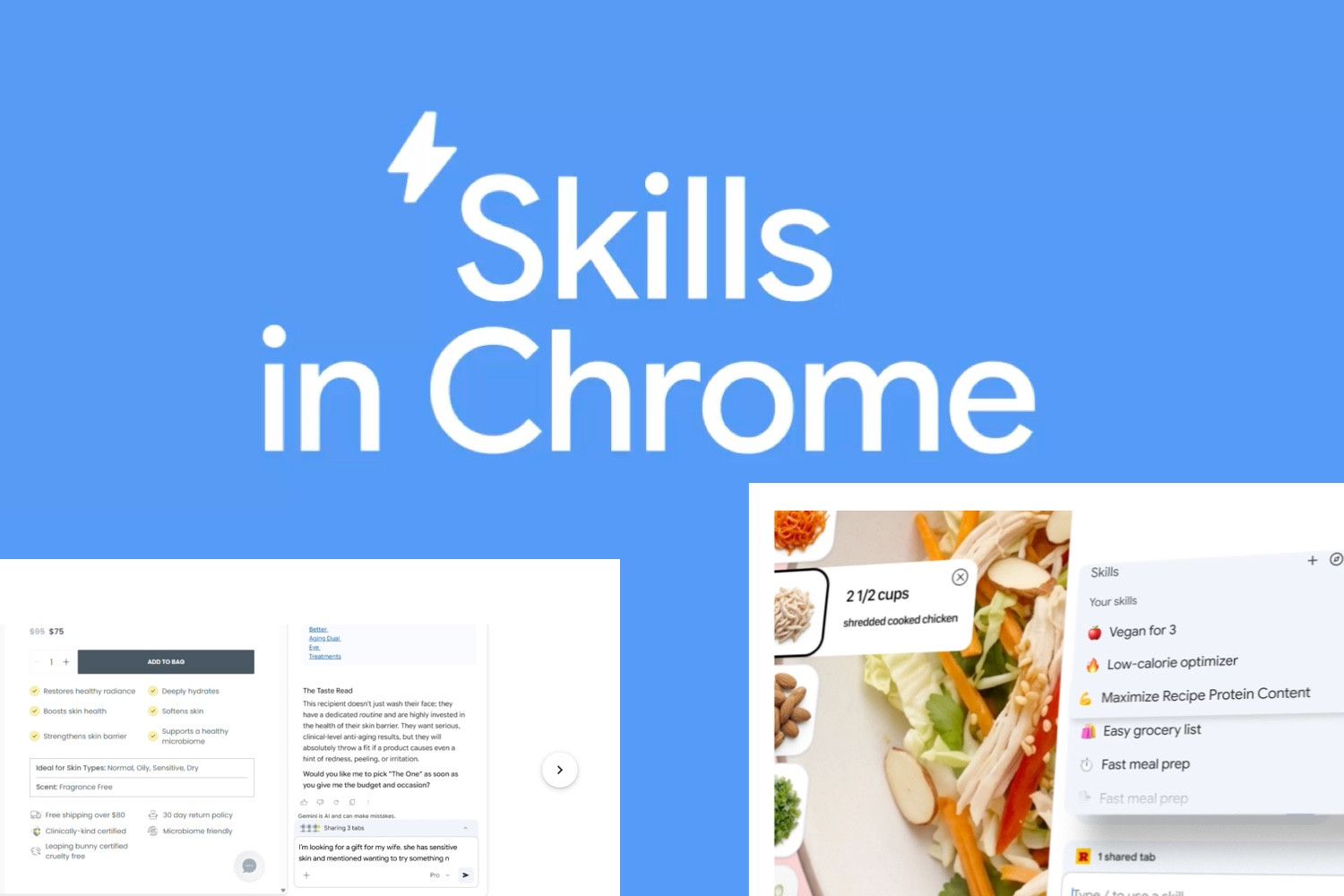
AI News | Editor: Sandy Google has moved artificial intelligence one step closer to the everyday act...
Read Article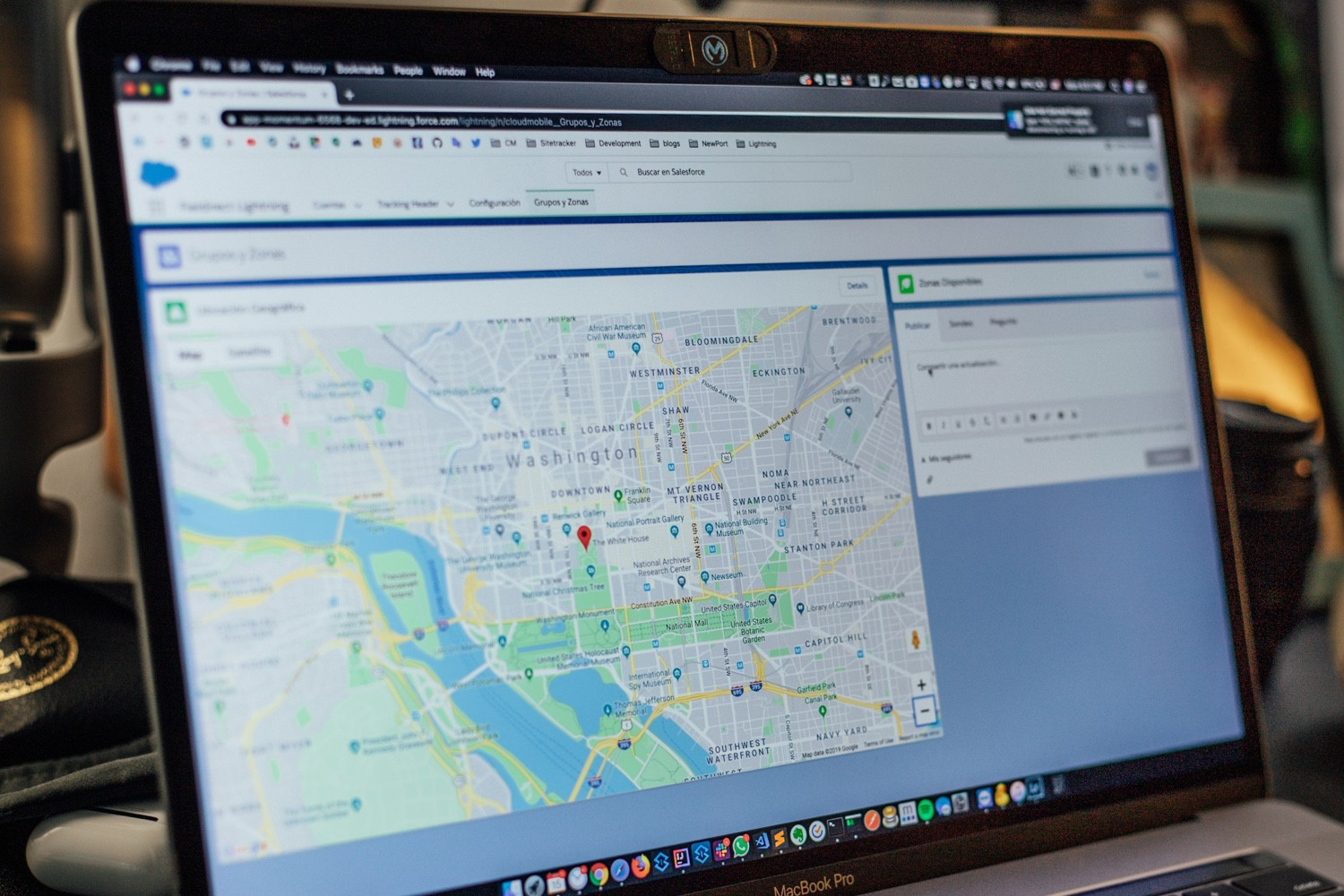
Background This case features a dental clinic offering a wide range of services. The clinic already...
Read Article
【 AI News | Editor: Sandy】 Google’s newly released Gemini for Mac looks, at first glance, like a s...
Read Article
AI News | Editor: Sandy On April 16th 2026 Anthropic officially unveiled Claude Opus 4.7 and made it...
Read Article
AI News | Editor: Sandy Anthropic on April 17, 2026 formally unveiled “Claude Design”, extending its...
Read Article
AI readability is not just a technical term. It is a key factor in whether Google, ChatGPT, and Gemi...
Read Article
Your website exists, so why does ChatGPT almost never mention it? This article explains the most com...
Read ArticleWe make your brand easier for AI to discover and recommend. From brand positioning and content structure to a strategic update cadence, Pimker turns your website into a system that supports long-term visibility.
Contact Us

© Pimker 2026 AI marketing software built for modern businesses All rights reserved.