

Claude Code source code leak leaves the AI agent battlefield exposed overnight
AI News | Editor: Sandy The latest development surrounding Anthropic is not merely a product update. It is a rare moment in which the inner machinery of a flags
AI News | Editor: Sandy The latest development surrounding Anthropic is not merely a product update. It is a rare moment in which the inner machinery of a flags
AI News | Editor: Sandy
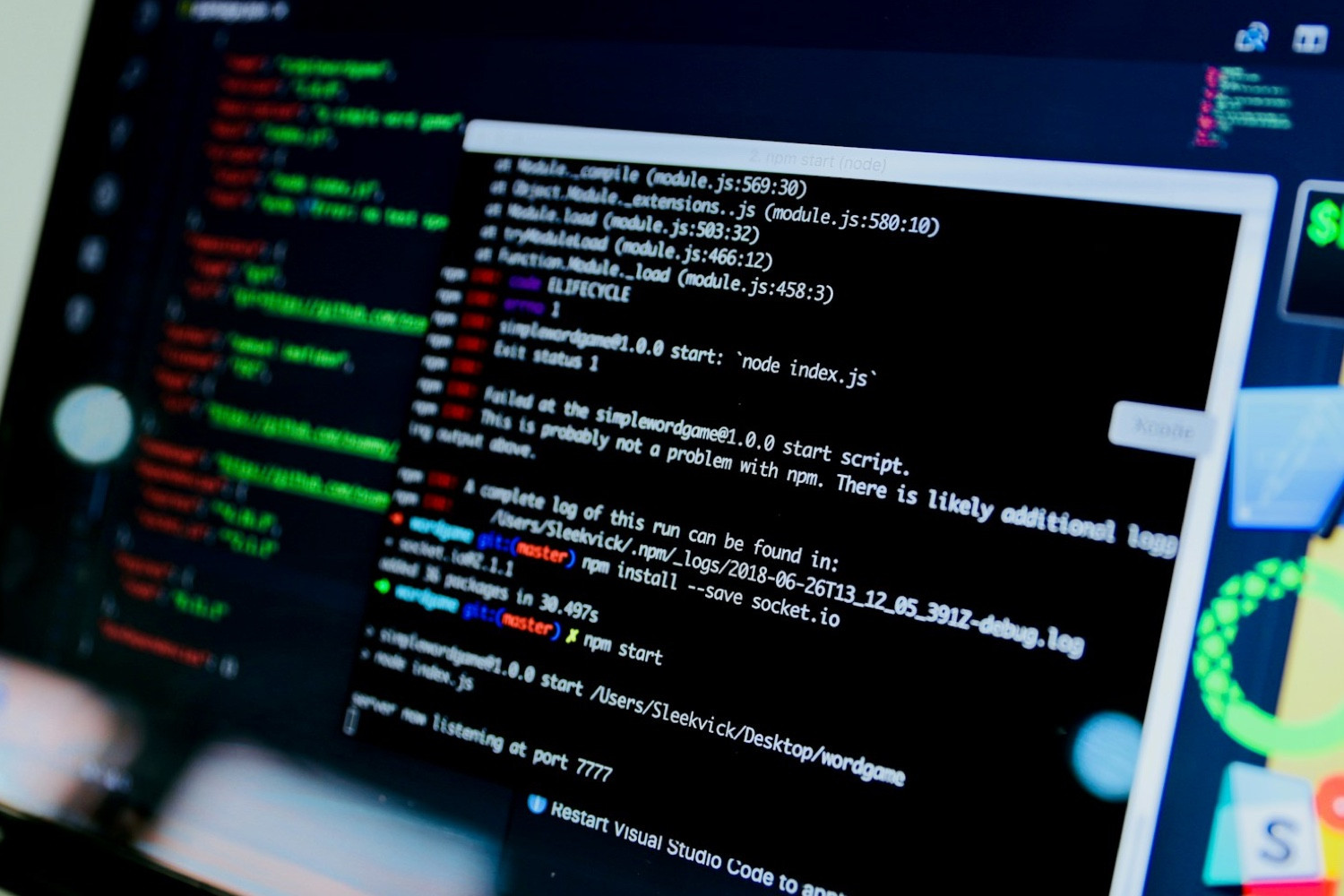
The latest development surrounding Anthropic is not merely a product update. It is a rare moment in which the inner machinery of a flagship AI tool has been thrust into public view. In late March, Claude Code’s source code appears to have been inadvertently exposed through a packaging mistake, allowing researchers and developers to inspect roughly 1,900 files and more than 500,000 lines of code. Combined with publicly accessible documentation and mirrored reference pages, the leak has given the broader market an unusually detailed look at how Claude Code actually works, what kinds of features Anthropic is building toward, and how seriously the company is positioning itself in the market for AI-powered software development. For a firm that has staked much of its reputation on reliability, safety and careful deployment, the episode is both an embarrassment and a revealing strategic moment.
According to the mirrored documentation page “How Claude Code works” (https://mintlify.wiki/VineeTagarwaL-code/claude-code/concepts/how-it-works), Claude Code is built around what Anthropic describes as an “agent loop”. Rather than responding once to a prompt and stopping there, the system repeatedly reads the user’s request, assembles context, decides whether to call tools, executes actions, and feeds the results back into the model until a task is complete or human intervention is required. That detail matters. It suggests Claude Code is not simply a chatbot for programmers, but a structured software agent designed to operate inside an engineering workflow.
This architecture marks a clear break from earlier generations of coding assistants. The tool is not confined to offering snippets or suggestions. It can inspect repositories, edit files, invoke shell commands, track git state, and compress long-running sessions when context becomes too large. Anthropic’s official “Claude Code overview” documentation (https://docs.anthropic.com/en/docs/agents-and-tools/claude-code/overview) also indicates that Claude Code is no longer limited to the command line, but increasingly spans IDEs, desktop interfaces, browser contexts and Slack. Taken together, the evidence points to a broader ambition: Anthropic is building not just a coding assistant, but an operating layer for AI-assisted development.
Source-code leaks are hardly unheard of in software. What makes this case unusually sensitive is the apparent simplicity of the mistake. According to InfoQ’s report, “Anthropic Accidentally Exposes Claude Code Source via npm Source Map File” (https://www.infoq.com/news/2026/04/claude-code-source-leak/), the issue stemmed from an npm package that included a source map file, allowing outside observers to trace and reconstruct unobfuscated TypeScript source code. Zscaler ThreatLabz, in its report “Anthropic Claude Code Leak” (https://www.zscaler.com/blogs/security-research/anthropic-claude-code-leak), likewise described the leak as originating from a public npm package containing a large source map artifact, which was then noticed and publicised by the researcher Chaofan Shou on X.
Anthropic has reportedly framed the incident as a packaging error rather than a conventional breach. In a narrow technical sense, that distinction may be correct. There is no public evidence that customer data, credentials or production systems were compromised. Yet for enterprise buyers, that may not be the central point. Anthropic has worked hard to present itself as the cautious and governance-minded alternative in frontier AI. In that context, even a preventable packaging slip raises awkward questions. If the company failed to lock down the release pipeline for one of its highest-profile developer tools, customers may reasonably wonder how robust its operational controls are for more sensitive systems.
Much of the public discussion around AI coding tools still revolves around a narrow question: which model writes the best code? The available evidence from Claude Code suggests that Anthropic is competing on a different axis. Its real advantage lies less in code generation alone than in how the surrounding system orchestrates work.
The “How Claude Code works” page shows that Claude Code prepares system context before each turn, including information such as git status, recent commits, memory files like CLAUDE.md, and the list of tools available to the model. It applies permission checks before tool calls and compresses or summarises long sessions to preserve performance within context limits. These are not glamorous features, but they are exactly the sort of engineering decisions that determine whether an AI tool can function in a serious production environment rather than as a demo.
Anthropic’s engineering post, “Claude Code auto mode: a safer way to skip permissions” (https://www.anthropic.com/engineering/claude-code-auto-mode), offers another revealing clue. The company wrote that users had approved roughly 93% of permission requests, prompting the introduction of classifiers to reduce “approval fatigue”. That detail suggests Claude Code is already being used not as an occasional assistant, but as a high-frequency, semi-autonomous worker embedded in day-to-day development. Once a tool crosses that threshold, the real product challenge is no longer just model intelligence. It becomes the problem of balancing autonomy, safety, speed and user trust.
The most revealing aspect of the leak may be what it says about Anthropic’s product direction. Claude Code appears to be evolving into a platform-like environment with support for subagents, memory layers, hooks, MCP servers, task modes and multiple interfaces. That is a significant shift. It implies that Anthropic does not merely want Claude to answer programming questions. It wants Claude Code to become an extensible control layer through which software work is delegated, managed and governed.
That ambition places it in increasingly direct competition with several different rivals, each pursuing a slightly different strategy. OpenAI, in “Introducing the Codex app” (https://openai.com/index/introducing-the-codex-app/), has described Codex in terms of overseeing multiple agents across the development lifecycle, from design and implementation to deployment and maintenance. GitHub, in “About GitHub Copilot cloud agent” (https://docs.github.com/en/copilot/concepts/agents/cloud-agent/about-cloud-agent), frames its offering around cloud-executed software tasks tied closely to commits, branches and pull requests. Google, by contrast, has leaned into developer-native openness. In “Gemini CLI: your open-source AI agent” (https://blog.google/innovation-and-ai/technology/developers-tools/introducing-gemini-cli-open-source-ai-agent/), it presents Gemini CLI as an open-source agent embedded directly into terminal workflows.
Viewed internationally, at least three broad models are now emerging. American firms such as Anthropic, OpenAI and GitHub are trying to embed AI agents inside enterprise-grade software workflows, where auditability, permissions and collaboration matter as much as raw model quality. Google’s approach, while also American, puts greater emphasis on open distribution and developer reach. Chinese technology groups are moving quickly as well. Alibaba Cloud’s documentation for “Qwen Code” (https://www.alibabacloud.com/help/en/model-studio/qwen-code) shows that it, too, is positioning a command-line AI agent around its own coding models. Europe, meanwhile, has yet to produce a globally dominant equivalent in this category, but its markets may prove especially consequential in shaping demand for governance-heavy features such as local deployment, access control and compliance-friendly auditing.
The immediate downside of the leak is obvious. Competitors, open-source developers and fast-moving start-ups can now study Claude Code’s design choices at far lower cost than before. In a market where product categories are still forming and feature imitation is rapid, that matters. If subagents, memory systems, permission layers, tool orchestration and multi-interface deployment become table stakes, then the half-life of differentiation may shrink even faster.
Yet there is a more complicated interpretation. The leak also functions as a kind of reverse validation. It suggests Claude Code’s popularity is not merely the result of branding or market hype, but of a coherent and carefully engineered system. The exposed architecture offers a practical blueprint for what serious AI coding agents increasingly require: context assembly, permission handling, tool execution, long-session compression, subagent isolation and continuity across workflows. In effect, Anthropic’s internal know-how has become a public lesson in how the next generation of AI development tools is likely to be built.
The broader commercial implications are likely to extend beyond Anthropic itself. Enterprise customers evaluating AI coding tools may increasingly shift their attention away from benchmark scores and towards operational questions: how fine-grained are the permissions, how auditable is the system, how well does it fit existing repositories and workflows, and how safely can it act with limited supervision? In other words, the market is moving from “model as product” towards “workflow as product”.
That shift matters because the most defensible and profitable layer may no longer be the model alone. It may be the orchestration environment that sits above the model and embeds itself within a company’s development processes. Once AI agents start taking on larger pieces of software work, pricing could also evolve. Consumption-based charging for tokens may remain important, but billing may increasingly expand towards seats, completed tasks, enterprise governance modules, security features, and deeper workflow integrations. GitHub has already tied its agent strategy to pull requests and software-team processes. OpenAI is moving towards multi-agent control surfaces. Anthropic appears to be trying to insert Claude Code directly into the operational heart of engineering teams.
Still, the rise of coding agents remains constrained by several hard problems. Permissions and security are the most obvious. A local or semi-autonomous agent that can modify files, run commands and connect to tools will always carry the risk of misuse, prompt injection or unintended actions. Long-horizon reliability is another unresolved issue. Multi-step agents often struggle to maintain coherence over extended sequences of tool calls, especially when tasks become ambiguous or evolve midstream. And then there is competitive pressure. OpenAI, GitHub, Google and Chinese platform players are all pushing into the same territory. Anthropic therefore needs to prove not only that Claude Code arrived early, but that it can become a durable standard in enterprise development rather than a well-designed first mover.
The timing is also awkward. Coming after other recent reports of sensitive Anthropic information surfacing unexpectedly, the Claude Code leak risks feeding a broader narrative that the company’s governance strengths may not be as airtight in practice as in presentation. In the frontier-AI race, perception matters almost as much as product capability.
On the surface, this is a story about a preventable release mistake. At a deeper level, it is a glimpse into the next phase of competition in AI software tools. The central contest is no longer simply about which company has the smartest coding model. It is about who can turn AI into a dependable layer of orchestrated digital labour: one that can call tools, manage context, respect permissions, remember state and slot into real organisational workflows.
Claude Code’s source leak may prove costly for Anthropic in the short term, particularly in questions of trust and security discipline. But it has also made one thing harder to ignore. The next frontier in software development will not be defined only by chat interfaces or code completion. It will be shaped by agent operating systems. The firms that control those systems may end up controlling a large part of how software is built. Whether Anthropic can convert this unwelcome transparency into long-term strategic advantage will depend less on the leak itself than on what Claude Code becomes once it is deployed at scale.
Leave your name and email to receive future updates from our blog and product insights.

AI News | Editor: Sandy Google has moved artificial intelligence one step closer to the everyday act...
Read Article
Background This case features a dental clinic offering a wide range of services. The clinic already...
Read Article
【 AI News | Editor: Sandy】 Google’s newly released Gemini for Mac looks, at first glance, like a s...
Read Article
AI News | Editor: Sandy On April 16th 2026 Anthropic officially unveiled Claude Opus 4.7 and made it...
Read Article
AI News | Editor: Sandy Anthropic’s latest launch, Claude Code Routines, pushes AI coding tools from...
Read Article
AEO | Editor: Adda Lin AI Overviews Are Not Just a New Feature. They Change the Narrative Structure...
Read Article
AI Software | Editor: Sandy Flux AI is an all-in-one platform that combines AI image generation, ima...
Read Article
AI News | Editor: Sandy On April 10, Anthropic launched the beta version of “Claude for Word”, embed...
Read Article
In today’s increasingly competitive pet food market, many e-commerce brands face the same challenge:...
Read Article
AI News | Editor: Sandy On March 31st 2026 OpenAI published an announcement of unusual weight: the c...
Read Article
ChatGPT Applications | Edited by Jason Chen When organizations begin adopting generative AI, the fir...
Read Article
AI News | Editor: Sandy On April 8, 2026, Anthropic unveiled “Claude Managed Agents,” a release that...
Read Article
Opinion / In-depth Analysis | Editor: Sandy As generative artificial intelligence evolves from answe...
Read Article
AI News | Editor: Sandy In its latest announcement in April 2026 ( https://ai.meta.com/blog/introduc...
Read Article
ChatGPT Applications | Edited by Jason Chen In the age of social media dominance, Facebook (FB) has...
Read Article
Pimker - The AI marketing platform built for businesses
© Pimker 2026 The AI marketing platform built for businesses All rights reserved.