

Why Is Your Website Almost Never Mentioned in ChatGPT?
Your website exists, so why does ChatGPT almost never mention it? This article explains the most common business reasons AI fails to understand a brand, and how
Your website exists, so why does ChatGPT almost never mention it? This article explains the most common business reasons AI fails to understand a brand, and how

Your website exists, so why does ChatGPT almost never mention it? This article explains the most common business reasons AI fails to understand a brand, and how to judge which parts of your website need attention first to improve inquiries and customer acquisition.
Many business owners have the same assumption: the website is live, the services are listed, and there is even a bit of Google traffic from time to time, so naturally, when potential customers go to ChatGPT, Gemini, or other AI tools to ask questions, their brand should at least have a chance of being mentioned.
But that is usually not what happens.
The frustrating part is not that your website does not exist. It is that your website exists, but functions as if it does not.
Your services are not being understood.
Your brand is not being remembered.
When AI helps users organize options, compare providers, and recommend brands, your company does not naturally come to mind.
This is not usually the result of one technical setting being wrong.
It happens because the website as a whole has not been organized in a way that is easy to understand.
Most companies do not notice this problem because of a traffic report. They notice it because of real business situations.
For example, competitors in the same market start getting mentioned by prospects.
A potential customer might say, “I saw another company mentioned in ChatGPT that also does this.” Someone else might show up to the first sales conversation already holding an AI-generated comparison.
That tells you something important.
A growing number of potential customers are no longer opening ten search results and reviewing them one by one. Instead, they are asking AI directly:
That is where the real issue begins.
If your website simply places company information, service items, and contact details on a few pages without clear structure, a person may still be able to piece things together. But for AI, that information may not be enough to form a clear judgment.
AI will not automatically understand what you do just because you have a website. It will not automatically treat you as worth mentioning just because you wrote a lot of words.
A more common misconception is that people think this is only an “exposure problem.” They assume that if they publish more blog posts or target more keywords, visibility will improve on its own.
But for most business websites, the real issue is usually not that there is too little content. It is that:
So if your website is almost never mentioned in ChatGPT, the reason is usually not that you “have not done enough marketing.” It is that your website has not been organized into an information system that can be understood, cited, compared, and trusted.
One of the most common issues on brand websites is not the lack of content. It is that the content is too vague.
The homepage may look polished. The headline may sound impressive. But after reading it, an outside visitor still cannot answer three simple questions within a few seconds:
If a real person needs time to figure that out, AI will have an even harder time organizing it accurately.
That is why many websites end up in a strange position: every page seems to be talking about the brand, but after reading the whole site, there is still no clear and stable positioning.
The result is simple. When AI tries to generate an answer, it cannot find a strong enough brand profile to work with.
If you do not express yourself clearly, AI can only understand you vaguely. And vague brands are rarely the ones that get mentioned.
Many service-based websites do not fail because of design. They fail because the content is playing the wrong role.
Their service pages are full of adjectives like “professional,” “efficient,” “customized,” and “one-stop solution,” while the information that actually helps someone make a decision is missing.
What prospects actually care about is much more practical:
If your service page does not answer those questions, AI has a hard time placing you inside a recommendation set.
Because AI is not trying to admire your tone of voice. It is trying to help users understand and compare their options quickly.
If your page is good at saying “we are great,” but not good at helping people decide whether you are the right fit, it becomes much harder for that page to earn a place inside AI-generated answers.
Many companies underestimate the value of FAQ content. They treat it like a customer service add-on, or something placed near the bottom of the site just to fill space.
But in AI search environments, FAQ content is often one of the most useful content formats you can have.
The reason is simple: users are already searching in the form of questions, and AI is especially good at organizing question-and-answer style information.
If your website does not turn real customer questions into visible website content, then you are missing one of the most natural bridges between search behavior and AI understanding.
Another common issue is having an FAQ section, but making it too superficial.
For example, questions like “What services do you offer?” or “How can I contact you?” carry very little real decision value. A stronger FAQ should sound much closer to actual customer decision-making, such as:
If those kinds of questions are not written on your website, AI has a much harder time extracting enough material to make a complete judgment.
Some websites do not have too few pages. They have pages that do not connect logically.
The homepage talks about the brand vision. The service pages talk about features. The about page tells a founder story. The blog publishes random traffic-focused articles unrelated to the core offer.
Any one page may look acceptable on its own. But together, they fail to create a consistent signal.
For a business website, clear structure is not just a technical preference. It is a basic condition for conversion.
A customer does not only need to know that you exist. They need to confirm quickly:
AI works the same way. It needs to piece together your brand profile from multiple pages.
If every page feels like it is speaking a different language, the picture AI forms will be vague, fragmented, and low in confidence.
This is one of the deepest problems on many websites.
Inside a company, it is easy to describe services using internal terms and industry language. But that is usually not how prospects search or ask questions in AI tools.
They ask about needs, not internal categories. They ask about situations, not specialized terms. They ask about outcomes, not your organizational structure.
For example, your website might say “digital transformation consulting services,” but the real customer question is “why is our traditional business website not generating inquiries?”
Your website might say “brand content strategy planning,” but what the prospect actually asks is “how do we get ChatGPT to mention us more often?”
When that gap becomes too large, your website stops matching real question patterns.
It is not that you lack expertise. It is that you have not translated that expertise into the language customers actually use when they search, ask, compare, and decide.
At this point, many people still interpret the issue as “we just need a bit more exposure.”
But the impact goes far beyond visibility. It affects the entire customer acquisition process.
When users ask AI tools questions like “Which companies would you recommend?” or “Who should I hire for this type of need?”, your website needs to provide enough clear signals about your brand, services, scenarios, and FAQs. Otherwise, AI has little reason to include you.
This is not just about losing rankings. It means you may not even make it into the initial consideration set.
Some websites do get discovered occasionally, but they are misunderstood. That can be even more dangerous.
Once the market or AI develops the wrong impression of your positioning, what follows may not be ideal customers. It may be mismatched leads, poor-quality inquiries, or comparisons with businesses you do not want to be grouped with.
Customers today are not just looking for information. They are looking for brands that shorten their decision-making time.
When AI mentions a company in an answer, the next step is often a visit to the website. If the visitor lands there and still cannot tell what you do, who you are for, or how to work with you, then the earlier mention is unlikely to turn into a real inquiry.
Many deals are not won because a company sounds the most impressive. They are won because the company is the easiest to evaluate.
If your website clearly explains the scope of service, target fit, common questions, key differences, and next step, it significantly reduces decision friction.
The lower the friction, the higher the chance of being chosen.
Whether Google, ChatGPT, or Gemini can actually bring you customers has never been only about traffic volume. The real question is whether your website can turn “being seen” into “being understood,” then turn “being understood” into “being trusted,” and finally turn “being trusted” into “being contacted.”
So this is not merely a visibility issue. It is a commercial conversion-chain issue.
If one part of that chain breaks, the outcome feels the same: you did the work, but the results never came.
Do not start by changing a long list of technical settings. Start with your homepage.
If a first-time visitor cannot understand within a few seconds what you do, who you are for, and what makes you different, then your most important entry page is not sending a clear enough signal.
A homepage does not just need to look good. It needs to create understanding quickly.
For most service-based websites, the highest-priority pages are the core service pages.
What drives inquiries is usually not the fact that you published more traffic-oriented articles. It is whether a potential customer can quickly tell, once they land on a service page, whether you are the right fit.
Clarifying service descriptions, target fit, differentiators, process, and common questions is often more valuable than blindly expanding content volume.
Do not write FAQ content from imagination. Write it from real customer language.
Collect the questions your sales team, support team, forms, and meetings hear most often, then rewrite them into visible website content.
That will usually improve both AI understanding and customer understanding faster than publishing generic definition-style content.
Many websites do not have weak pages individually. They have a weak overall signal because the pages are inconsistent.
The homepage says one thing. The service page says another. The about page sounds like a different company.
When that happens, your brand signal becomes scattered.
Review whether your homepage, about page, service pages, FAQ, and contact page are all reinforcing the same idea: helping an outside visitor understand you more clearly.
If your core pages are still unclear, expanding content often just scales the confusion.
Build the structure first. Then think about publishing cadence, additional pages, long-tail content, and ongoing optimization.
That sequence usually works much better.
The companies that usually need to solve this first tend to fall into a few groups.
You may have been operating for a while and published some content, but form submissions, calls, and brand mentions are still weak. In many cases, that is not simply a traffic-buying issue. It means the website itself is not connecting understanding to conversion.
This is especially true in industries where the website needs to explain the service, build trust, and shorten decision time, such as consulting, design, software, B2B services, professional services, training, aesthetic medicine, or high-ticket local businesses.
If these websites are unclear, they lose the chance to be compared and contacted much faster than expected.
These companies are often not lacking effort. They have simply accumulated many pages over time without ever reorganizing their brand positioning and content logic.
The result is that the more content they have, the harder they become to understand.
As soon as AI becomes part of your customer’s decision process, your website can no longer function as a static brochure. It has to function as a business asset that can be interpreted correctly.
On the other hand, if you do not currently have a website, rely almost entirely on referrals, and have no short-term plan to acquire customers through search or AI, then this issue may not be urgent right now.
But if you want Google, ChatGPT, Gemini, or similar entry points to generate more natural inquiries in the future, this is not something you can postpone for long.
So why is your website almost never mentioned in ChatGPT?
The real answer is usually not that you “are not good enough at marketing,” and it is not that you “need to publish a few more articles.”
More often, the reason is that your website has not yet been organized into a brand system that is easy to understand.
When your positioning is unclear, your service pages are full of promotional language, your FAQ is too weak, your pages do not support one another, and your content does not reflect the way customers actually ask questions, it becomes difficult not only for AI to mention you, but also for real visitors to trust you, compare you, and choose you quickly.
This is why the issue is not about one isolated trick, and not something that gets fixed by changing a single headline.
It is tied to your website’s interpretability, the way your brand is expressed, your ability to match customer questions, and whether your overall content structure truly supports business outcomes.
Once your website moves from simply “having information on it” to becoming a structure that can be understood, compared, and trusted, Google, ChatGPT, and Gemini have a much better chance of bringing you actual customers instead of vague visibility.
If you suspect your website may have this problem too, the most useful thing to do is not to immediately rewrite everything. It is to check, audit, and identify where the real bottleneck is first: is it an unclear homepage message, service pages that fail to explain your offer, a weak FAQ, or brand signals that are too scattered across the site?
You can start with a basic review of your website. And if you are not sure which part to review first, you can also leave your website details through the contact form.
The most important step is to confirm which area matters most right now on the path to being understood by AI, mentioned by AI, and contacted by potential customers.
Leave your name and email to receive future updates from our blog and product insights.
AI Software | Editor: Sandy In a world where visual storytelling is increasingly driven by “vibes,”...
Read Article
ChatGPT Applications | Edited by Jason Chen In the age of social media dominance, Facebook (FB) has...
Read Article
AI News | Editor: Sandy In its latest announcement in April 2026 ( https://ai.meta.com/blog/introduc...
Read Article
Opinion / In-depth Analysis | Editor: Sandy As generative artificial intelligence evolves from answe...
Read Article
AI News | Editor: Sandy On April 8, 2026, Anthropic unveiled “Claude Managed Agents,” a release that...
Read Article
ChatGPT Applications | Edited by Jason Chen When organizations begin adopting generative AI, the fir...
Read Article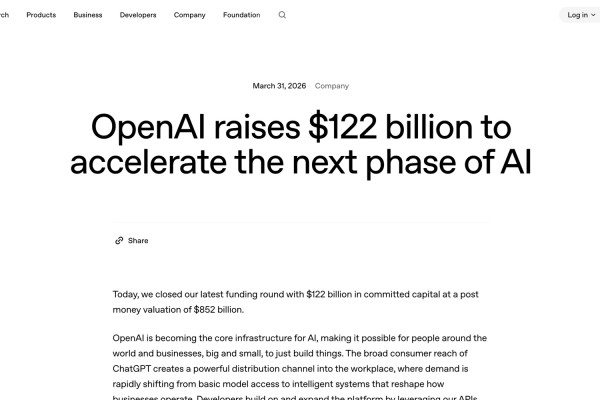
AI News | Editor: Sandy On March 31st 2026 OpenAI published an announcement of unusual weight: the c...
Read Article
AI News | Editor: Sandy The latest development surrounding Anthropic is not merely a product update....
Read Article
In today’s increasingly competitive pet food market, many e-commerce brands face the same challenge:...
Read Article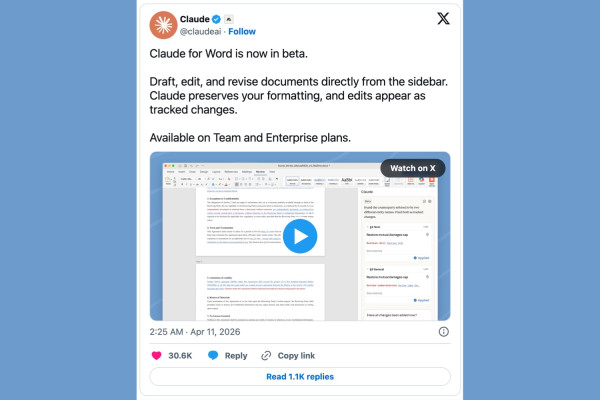
AI News | Editor: Sandy On April 10, Anthropic launched the beta version of “Claude for Word”, embed...
Read Article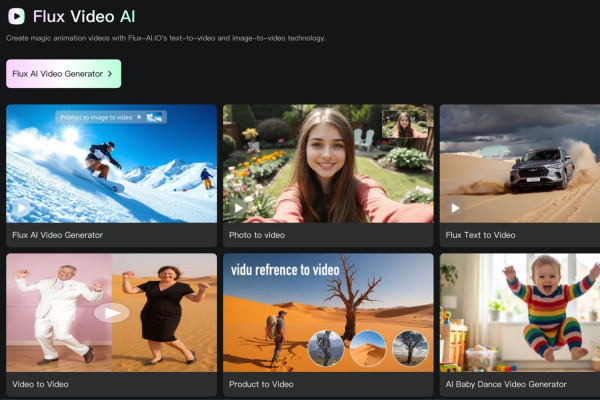
AI Software | Editor: Sandy Flux AI is an all-in-one platform that combines AI image generation, ima...
Read Article
AEO | Editor: Adda Lin AI Overviews Are Not Just a New Feature. They Change the Narrative Structure...
Read Article
AI News | Editor: Sandy Anthropic’s latest launch, Claude Code Routines, pushes AI coding tools from...
Read Article
AI News | Editor: Sandy Google has moved artificial intelligence one step closer to the everyday act...
Read Article
Background This case features a dental clinic offering a wide range of services. The clinic already...
Read Article
Pimker - The AI marketing platform built for businesses
© Pimker 2026 The AI marketing platform built for businesses All rights reserved.