

Markets change
Customer questions, comparisons, and buying decisions change, so website content needs to evolve as well.

Website content does not stop changing after launch. Services change, customer questions change, search behavior changes, and AI answer systems keep evolving in how they interpret websites.
Pimker helps brands continuously monitor content gaps, page status, FAQs, internal links, and AI visibility signals, then strengthen important pages regularly so the site stays clear, trustworthy, and easy to understand over time.
Built for brands that already have a website, service pages, articles, or case studies and want to keep improving search visibility, AI understanding, and conversion readiness.





Many businesses rarely review core pages after a website launch or one-time SEO project. Over time, the website begins to drift away from the current business.
New services are not added, old plans remain on the page, FAQs miss current customer questions, case studies do not link back to related services, and articles bring traffic without guiding visitors to conversion pages.
In the AI search era, these issues affect how AI and search engines understand the website. If signals are incomplete, inconsistent, or outdated, AI has a harder time judging what your brand currently offers, who it is for, and whether it should be mentioned.
Customer questions, comparisons, and buying decisions change, so website content needs to evolve as well.
New services, plans, case studies, and collaboration models need to be reflected on core pages.
AI visibility is not a one-time submission. It requires ongoing content, FAQs, internal links, and update records.
Monitoring and continuous optimization means regularly checking core pages, services, FAQs, case studies, articles, internal links, and conversion paths to find what should be strengthened, updated, merged, or reorganized.
It is not about blindly publishing new articles every day. It is about maintaining the site’s clarity, credibility, and visibility with a steady rhythm.
Find the questions customers ask and AI needs to evaluate that the website does not yet answer clearly.
Regularly check whether the homepage, service pages, About page, plans, case studies, and contact page still reflect the current business.
Add or refine FAQs based on customer questions, search intent, and AI visibility needs.
Check whether articles, service pages, case studies, plans, and CTAs are connected clearly enough.
Identify thin, duplicate, outdated, broken, unclear, or CTA-missing pages.
Help brand, service, audience, case study, FAQ, and update signals form a more complete website context.
Regularly check the homepage, service pages, pricing pages, and About page to make sure positioning, service explanations, best-fit audience, and CTAs are still clear.
Find questions customers often ask but the website does not yet answer, then turn them into FAQs, service explanations, case-study sections, or new content pages.
Check whether articles, case studies, FAQs, service pages, and contact pages are clearly connected so visitors know what to do next after reading.
Regularly identify outdated information, duplicate pages, thin content, inconsistent messaging, and broken links to maintain overall site quality and trust.
Pimker helps turn website optimization from a one-time project into an ongoing content and visibility maintenance process. Through regular checks, gap discovery, content improvements, and page updates, the site can stay clear as the brand grows.
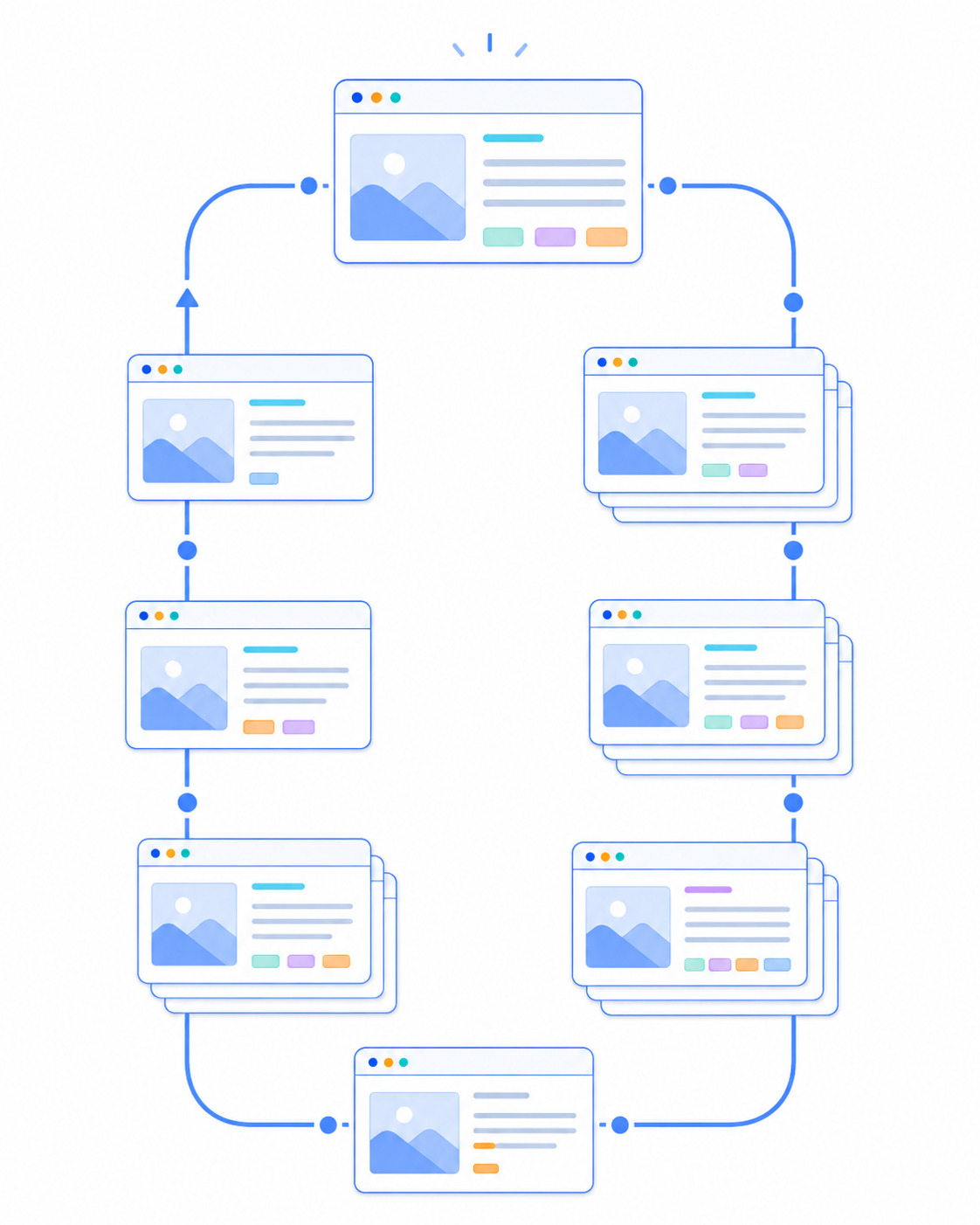
Audit current pages, identify which pages matter most, and find the content gaps that most affect customer understanding and AI visibility.
Decide which homepage, service page, FAQ, case study, article, or conversion page should be updated first.
Check whether pages are outdated, duplicated, missing key information, lacking internal links, or no longer supporting current positioning.
Turn customer questions, search questions, and AI evaluation needs into FAQs, sections, service explanations, or new pages.
Connect articles, service pages, case studies, plans, and contact pages so visitors and AI can follow the topic path.
Keep track of optimization history and next steps so visibility and content quality can compound over time.
Pimker prioritizes the pages and content that most affect brand understanding, AI evaluation, and customer conversion.
Confirm that positioning, core services, best-fit audience, CTAs, and latest information are still accurate.
Check whether service details, process, fit, deliverables, FAQs, and case links are complete.
Update company background, professional experience, service areas, team information, and trust signals.
Add new customer questions, remove outdated answers, and include information that search engines and AI need to evaluate.
Make sure case studies support related services and include problem, solution, outcome, and internal links.
Check whether articles are outdated, need updates, or should link to related service pages and CTAs.
Confirm that plan differences, fit, pricing logic, FAQs, and next steps are clear.
Check 404s, duplicate pages, orphan pages, missing titles, outdated meta, broken links, and sitemap status.
When a website is not reviewed for a long time, the content can drift away from the current business. These gaps reduce customer trust and make it harder for AI and search engines to understand the site correctly.
Outdated plans, old services, expired campaigns, or no-longer-relevant claims stay on the site and confuse customers.
The company has launched new services, but the homepage, service pages, FAQs, and internal links have not been updated.
Sales or support teams keep answering the same questions, but those answers never make it back onto the website.
Blog posts may receive traffic but do not link to relevant services, case studies, plans, or contact pages.
New pages are added without clear paths, making important pages harder to find.
Pages that have not been updated for a long time can make customers and search systems question whether the information is still valid.
404s, broken links, duplicate pages, or thin pages can hurt site quality and user experience.
The goal of monitoring is not just to produce reports. It is to convert website issues into practical improvements. Pimker helps decide whether each gap should be handled through page updates, new FAQs, stronger service content, content consolidation, or link fixes.
Adjust the homepage, service pages, About page, plan pages, and contact pages so they reflect the current brand and services.
Turn repeated customer questions into Q&A content to reduce communication friction and improve AI readability.
Add best-fit audiences, process, deliverables, limitations, case studies, and next-step CTAs to service pages.
Consolidate thin, overlapping, or competing pages so the site topic becomes more focused.
Connect articles, case studies, services, and plans so traffic can move more easily toward inquiries and conversions.
Handle 404s, outdated pages, duplicate pages, and low-quality pages to maintain overall site quality.
Use gaps and customer questions to plan new service pages, solution pages, FAQs, or case studies.
Add customer reviews, performance data, partner logos, certifications, media mentions, or guarantees to relevant pages.
Check CTAs, forms, booking paths, contact information, and plan links so users know the next step.
Add appropriate markup for FAQs, services, case studies, articles, and organization information to help search and AI systems understand content more accurately.
Monitoring and continuous optimization is especially useful for brands that already have a meaningful amount of content, frequently changing services, or long-term goals for search and AI visibility.
The site already has homepages, service pages, articles, and case studies, but lacks a regular review and update rhythm.
Service details, customer questions, and market positioning change over time and need core page updates.
Services, teams, location information, pricing explanations, and FAQs need to stay accurate.
Product features, plans, use cases, and onboarding processes change often and need website updates.
Products, brand stories, articles, FAQs, and conversion paths need ongoing organization so content does not become scattered.
After the initial optimization, an ongoing maintenance system keeps content from drifting out of date.
Branch information, location pages, service areas, and local FAQs change over time and need regular accuracy checks.
Different language and market versions need checks for translation completeness, content consistency, and page relationships.
Renovation, study abroad, medical services, enterprise consulting, and custom projects need ongoing case studies, FAQs, trust signals, and comparison content.
When competitors keep updating content and service pages, you need to monitor gaps, page quality, and AI visibility to keep brand understanding from falling behind.
A one-time SEO project or redesign can fix today’s issues, but new content gaps appear over time. Monitoring and continuous optimization keeps the website clear, trustworthy, searchable, and easier for AI to understand.
| Item | One-time SEO / redesign | Monitoring & continuous optimization |
|---|---|---|
| Core goal | Fix current website issues | Continuously find and strengthen new gaps |
| Execution frequency | Project-based or one-time | Regular checks and iteration |
| Optimization focus | Technical setup, design, initial content | Content updates, FAQs, internal links, page quality, AI visibility |
| Best fit | New site, redesign, initial SEO | Sites that are already running and growing |
| Final purpose | Build the foundation | Accumulate understanding, trust, and visibility over time |
The value of monitoring and continuous optimization is preventing website content from becoming messy, outdated, or scattered. Regular organization and improvements help the site support search, AI visibility, and customer conversion more consistently.
Pimker’s goal is not to “finish” the website once. It is to help your site become clearer as your brand grows.
It means regularly reviewing website content, core pages, FAQs, case studies, articles, internal links, and page quality to find what should be updated, strengthened, merged, or fixed so the site stays clear and understandable over time.
A redesign creates a new foundation. Services, customer questions, case studies, competition, and search behavior still change afterward. Without ongoing updates, the site can quickly develop outdated information and content gaps.
One-time SEO usually handles current technical and content issues. Monitoring and continuous optimization maintains content and AI visibility signals over time as services, markets, and customer questions change.
Pimker prioritizes the homepage, service pages, About page, FAQs, case studies, articles, plan pages, contact pages, internal links, 404s, duplicate pages, outdated content, and AI visibility signals.
Usually you need to check whether articles link back to core service pages, have clear CTAs, answer high-intent questions, and connect with case studies, plans, and FAQs.
Not necessarily. Sometimes the higher-value work is updating service pages, adding FAQs, fixing internal links, merging duplicate content, or strengthening core pages.
It depends on website size, update volume, and how often services change. Core service pages, FAQs, plans, case studies, and important articles should be checked regularly so content does not become outdated.
Priorities usually depend on business value, search intent, page importance, gap size, impact on customer decisions, and whether the update helps AI understand the site.
Outdated content can show wrong prices, old services, expired promotions, or incomplete FAQs. It can also cause search engines and AI systems to read inconsistent information.
If your site has been running for a while but updates are inconsistent, service pages do not reflect the latest business, FAQs lag behind customer questions, or article traffic is not turning into inquiries, now is a good time to check.
Let Pimker audit your current content status and AI visibility gaps, then identify the pages that should be optimized first.

© Pimker 2026 AI marketing software built for modern businesses All rights reserved.