

Get found in ChatGPT, Gemini, and Claude, make sure AI describes you accurately, and attract more high-intent traffic | Enterprise AI Growth Plan | Zero tech or marketing workload | View now AI Auto Growth Plan
Visibility Issue

You built the website. Why are visibility and traffic still dropping?

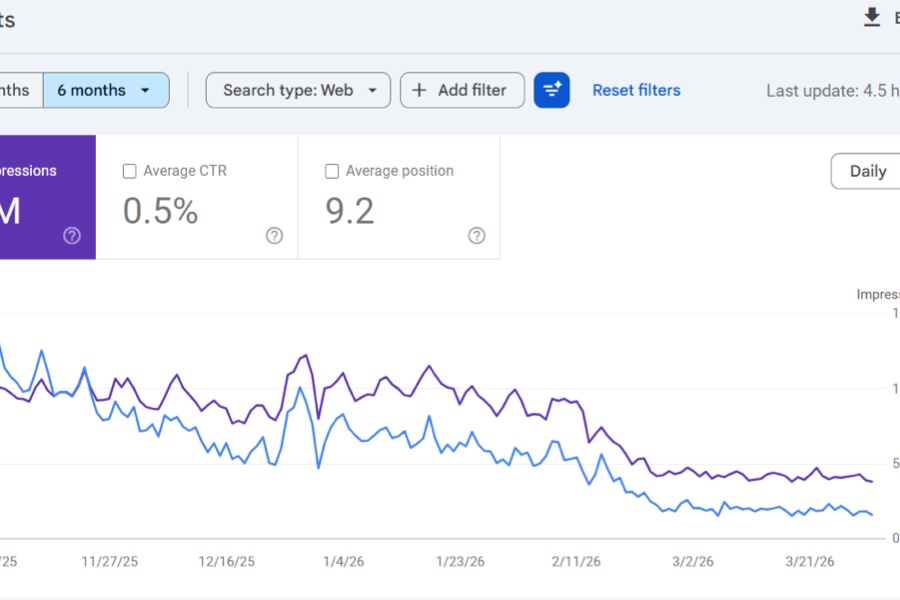
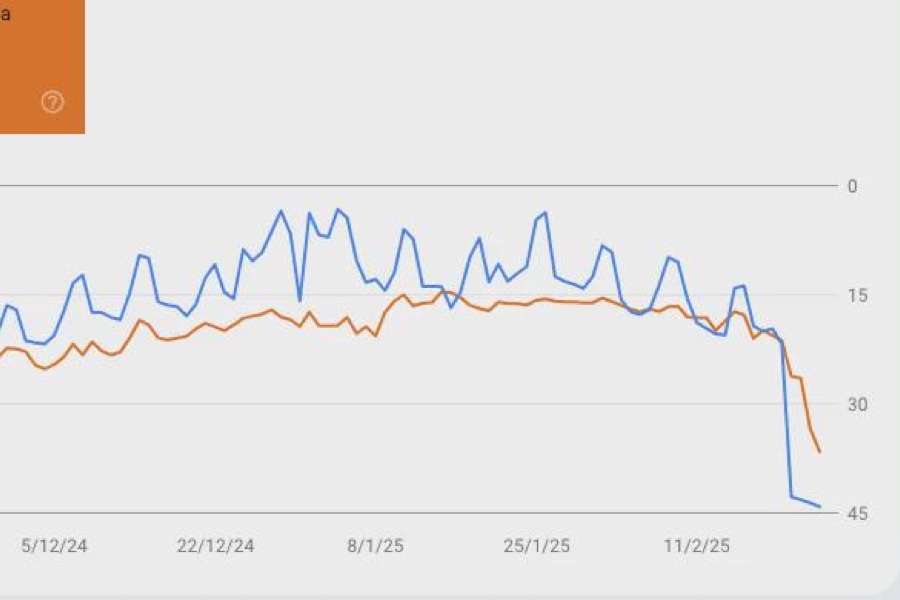
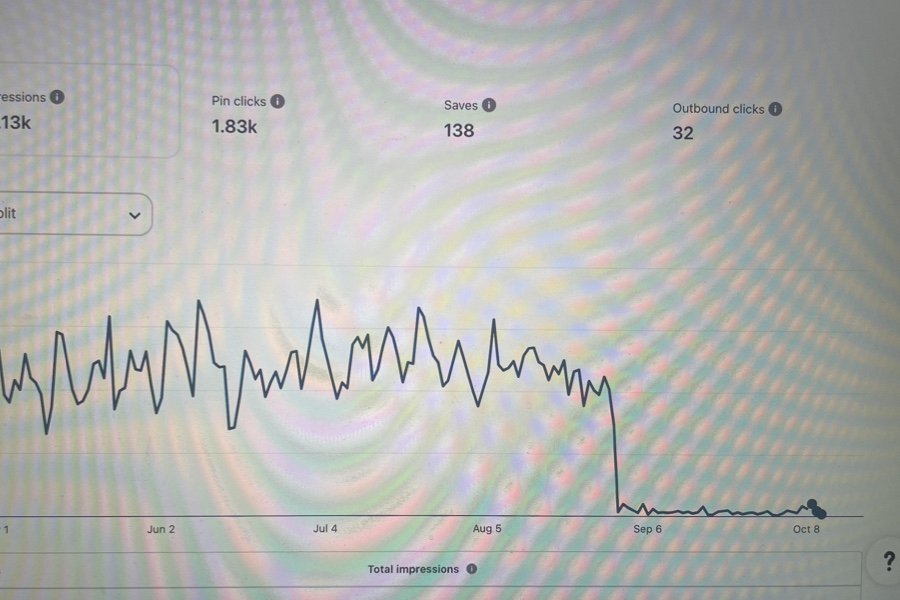
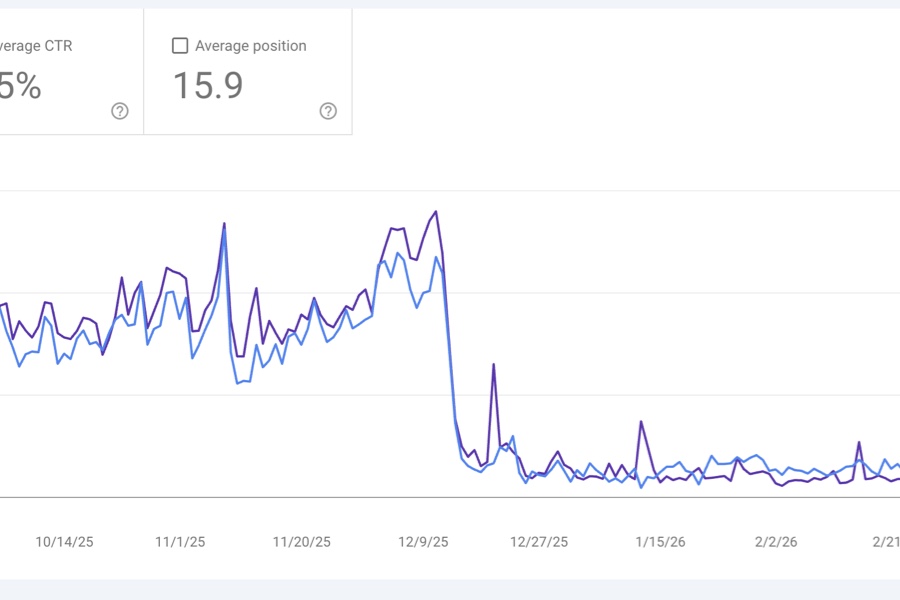
In recent years, many website owners have felt the same thing: the site is still live and the content has not disappeared, yet impressions, clicks, and organic traffic in Google Search Console and Google Analytics are no longer as stable as they used to be.

Future website visibility is not only about being found. It is about whether AI is willing to include you in the answer.

Since 2022, AI tools have spread quickly and changed how people look for information. In the past, users searched keywords, clicked into websites, and compared services. Now more people ask ChatGPT, Gemini, Perplexity, or AI search summaries directly: “Which nearby dentist is a good fit?” “How should I choose an interior design company?” “Who should I call for plumbing repair?”

This means your website is no longer competing only for traditional rankings. It is also competing on whether AI understands you, trusts you, and is willing to include you in an answer.

At the same time, Google, Yahoo, Bing, and other search entry points keep changing how results are shown. AI summaries, zero-click search, content quality evaluation, and algorithm updates have made many sites that relied on organic search feel the pressure of lower visibility, fewer clicks, and fewer inquiries.

The problem is not that you have no website, and it does not necessarily mean you have not worked hard enough. The real issue may be that your website still uses an outdated marketing structure and has not been organized into a format AI systems can easily understand, cite, and recommend.

If AI cannot find, understand, classify, and recommend your website, then even with real services, content, and case studies, it can still be skipped in new search situations.

Dental Clinic Story

A dentist’s website traffic dropped from 1,000 visitors a month to 300

He did not lack a website, and his service was not poor. His site simply had not kept up with structural changes in the AI search era.

A dental clinic owner had built an official website years earlier. It included clinic information, doctor credentials, services, contact details, and some basic SEO work. In the past, the website brought in around 1,000 organic visitors per month. It was not huge, but it was stable and sometimes generated new patient inquiries.

After several search algorithm changes and shifts in AI search behavior, he noticed traffic falling. Impressions in Google Search Console declined, and organic traffic in Google Analytics kept getting lower. The site that used to receive around 1,000 monthly visitors eventually fell to about 300.

What worried him most was that another dentist friend did not see the same decline and even had slight growth. He later found that the other clinic had already organized content for AI search, FAQs, service pages, treatment explanations, and local search signals, making it easier for search engines and AI to understand which patients the clinic suited and when it should be recommended.

The dentist knew the website mattered, but the clinic was busy. He did not have enough budget to hire a long-term content team, and he did not have time to study Google updates, AI search rules, schema, FAQs, page summaries, and content submission every day.

He later found Pimker. We first analyzed the website content, clinic services, major treatment items, and common patient questions. Then, through AI automation, Pimker periodically crawled the website, organized page highlights, strengthened AI-readable signals, and converted content into formats better suited for systems such as ChatGPT and Gemini.

He did not need to write articles every day or build a marketing department. Pimker kept organizing the site in the background, helping a website that had been passively waiting for search traffic start building AI visibility again.

He was not missing a website. He was missing a system that helps AI keep understanding the website.

Interior Design Story

A beautiful website does not mean search engines and AI understand it

Interior design firms often face the same issue: the visuals are strong, but the content structure is weak.

Another case was an interior design company. Their website looked beautiful, with many project photos, sliding effects, animations, full-screen visuals, and refined layouts. To people, it looked premium at first glance. To search engines and AI, however, the site was not necessarily easy to understand.

Many interior design websites have similar issues: many images but little text explanation, beautiful portfolios without clear style, space type, budget range, service process, or ideal customer information, and important content hidden behind animations. Users can understand the brand’s aesthetics, but AI may not know what the company truly specializes in.

When search and AI recommendations begin to value understandable content signals, these sites are at a disadvantage. AI may see images but not know whether the company is suitable for small apartments, commercial spaces, old-home renovation, or luxury residential design. Search engines may crawl the page but struggle to judge the service value and customer intent behind the projects.

The company had tried writing articles and updating cases, but the team was busy with projects, client communication, and construction schedules, so content maintenance was inconsistent. The site looked fresh, but to AI, the information was incomplete.

Pimker helped reorganize the existing website into an information structure that AI could understand more easily. Using Power AI Engine™ and IndexMore AI, we analyzed pages, portfolio content, service strengths, and differences from competitors, then periodically organized clearer page summaries and content signals.

This helped them improve AI readability from existing content without rebuilding the whole website or immediately producing a large volume of articles.

A website can be beautiful, but AI also needs to understand what is beautiful and professional about it.

Local Service Story

A plumber wanted more visibility but had no time for marketing

What he needed was not a complicated tool, but a website visibility system that runs in the background.

A plumber’s situation was typical. His service was good and old customers referred him, but he wanted more new customers to find him online. The problem was that he spent every day at job sites repairing pipes, handling leaks, installing equipment, and replying to customers. He had no time to study website writing, SEO, or AI search.

He knew visibility mattered. Many people search for nearby repairs, leak solutions, and water heater problems, and some ask AI directly where to find a reliable technician. But he had no marketing staff and could not sit at a computer every day organizing website content.

This is a common challenge for many small businesses and local service providers: they do not dislike marketing, but they do not have enough people. They know websites matter, but they do not have time for long-term maintenance.

Pimker is designed for this problem. As long as the website has basic content, our AI can periodically crawl, understand, and organize the information, converting services, service areas, common questions, page content, and brand signals into formats AI can understand more easily, then helping submit them to platforms such as ChatGPT and Gemini.

For this plumber, the best part was that he did not need to become a marketing expert. He could continue serving customers while Pimker kept maintaining the website’s AI visibility signals in the background, organizing existing content, strengthening site signals, and submitting page information on a set rhythm.

That is why Pimker is useful for many small businesses, local services, and professionals. It does not require building a large marketing team. It helps you adapt to the AI search era with lower labor costs.

You do not need to do everything yourself. Let Pimker organize, submit, and optimize your website continuously.

Next Step

Your website may be facing the same problem

If visibility is falling, organic traffic is declining, or inquiries are less stable than before, it does not necessarily mean your service has lost value. It may mean the search environment has changed and your website has not yet been structured in a way AI systems can understand and recommend.

Pimker is built for this era. Our AI-driven automation software helps websites periodically organize content, analyze pages, strengthen signals, and submit them to AI platforms such as ChatGPT and Gemini, giving brands a better chance to be seen, understood, and recommended.