

Will AI Search Make Small Companies Harder to Find?
AI search can make small companies harder to find, but not because AI intentionally favors big brands. The main reason is that AI tends to surface brands and co
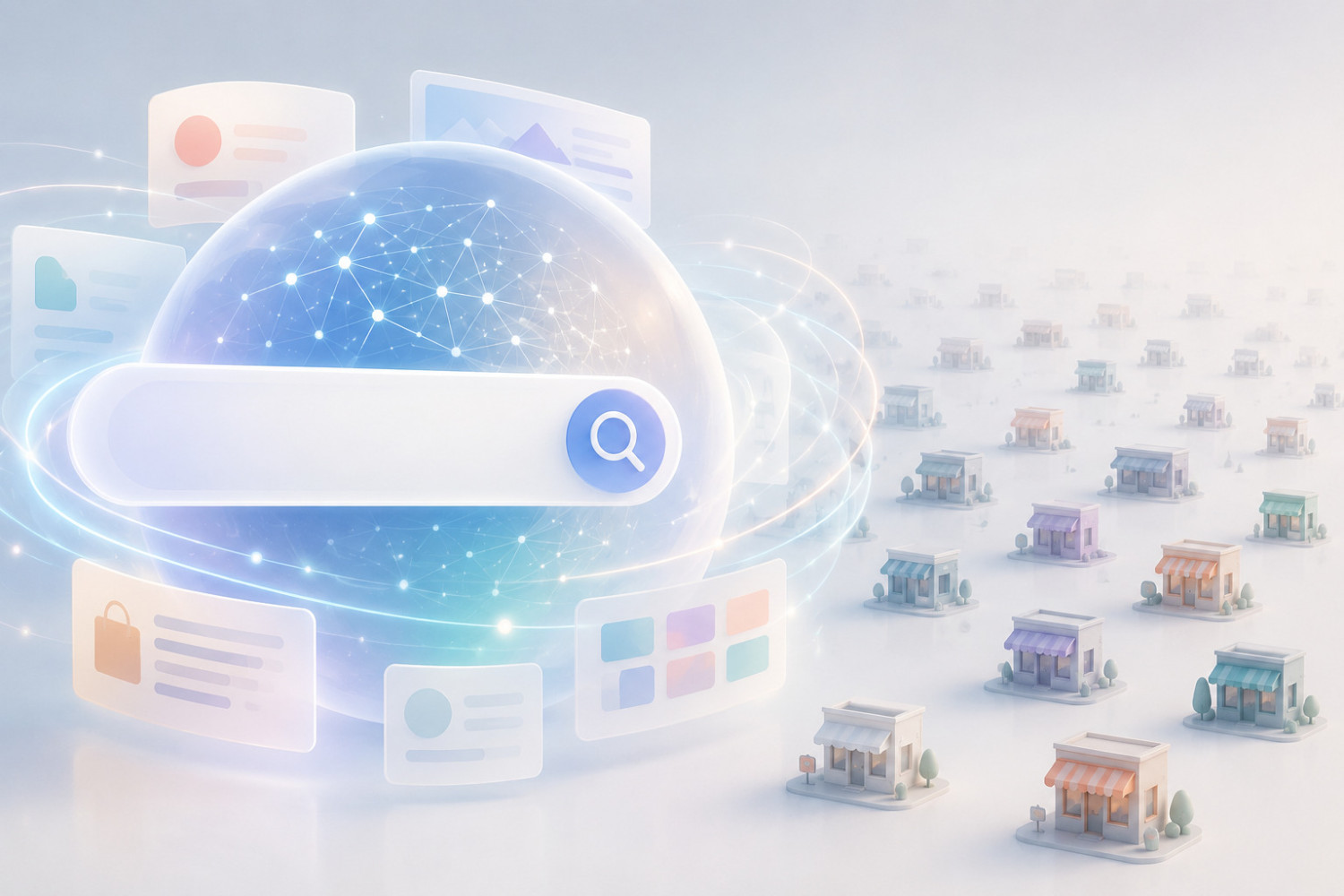
AI search can make small companies harder to find, but not because AI intentionally favors big brands. The main reason is that AI tends to surface brands and content that are clear, trustworthy, and easy to understand. If a small company’s website has thin content, vague positioning, few case studies, limited reviews, little comparison information, or unclear service descriptions, AI has less reason to include it in an answer. But if a small company clearly explains its expertise, service scope, customer problems, and trust signals, it can still be recommended for specific questions in AI search.
Why AI Search Can Be Harder for Small Companies
Traditional search gives users a long list of links. People can scan results, open multiple pages, compare options, and decide for themselves. Even if a small company appears in position 5 or 8, it still has a chance to be seen.
AI search works differently. If someone asks, “Which website optimization companies help small businesses in New York?” or “Who can help a B2B brand improve AI search visibility?” AI will often summarize a few strong options instead of showing dozens of links. That means there are fewer visible spots.
Think of it like this: traditional search is like posting the whole class list on a board. AI search is more like a teacher recommending three students. If you have not clearly shown what you do, who you help, and why you are credible, AI has less reason to recommend you.
That is why it helps to first understand what AI search is. AI search is not just about stuffing more keywords into a page. It tries to understand whether a brand or page is relevant, clear, and useful for the user’s question.
Why Big Companies Get Mentioned More Often
Large companies usually have a few built-in advantages.
First, they have more information about them online. News articles, reviews, case studies, social media discussions, official documentation, and third-party mentions all help AI understand who they are and what they offer.
Second, their brand names are searched and mentioned more often. When AI systems organize an answer, brands with more public information are easier to recognize and include.
Third, large company websites often have stronger content structures. They may have product pages, case studies, FAQs, comparison pages, help centers, and documentation. These pages help AI answer basic questions such as: What does this company provide? Who is it for? What proof supports its claims?
But this does not mean small companies have no chance. The real issue is often not that the company is small. The issue is that the company is not clearly explained online. If AI cannot understand your business, it will struggle to recommend it.
The Real Risk Is Not Ranking Lower. It Is Being Misunderstood.
Many small businesses assume that having a website is enough. In AI search, that is no longer true.
AI needs to understand several things: Who do you serve? What problem do you solve? How are you different from competitors? Do you have case studies, reviews, or outcomes that support your claims? Does your website answer the questions customers actually ask?
If this information is unclear, AI may know your website exists but still not know when to recommend it. That creates a dangerous situation: your business is online, but it is not understood.
For example, a small consulting firm might write, “We provide professional consulting services.” That sounds polished, but it does not tell AI whether the firm does marketing consulting, finance consulting, HR consulting, operations consulting, or software implementation. A clearer version would be: “We help B2B SaaS companies improve content conversion, AI search visibility, and sales funnel performance.” That gives AI a much stronger reason to connect the company with specific user questions.
AI Search Can Also Create New Opportunities for Small Companies
AI search makes broad visibility more competitive, but it can also create new openings for small companies.
The reason is simple: AI cares about how well an answer matches a question. A small company does not need to beat every large brand on the internet. It only needs to be more useful for a specific type of query.
For example, a large company might say, “We provide digital marketing solutions.” A small company could be much more specific:
“We help B2B companies with 10 to 50 employees turn their websites into AI-readable service pages, FAQ pages, and comparison pages so prospects can find them through search and AI answers.”
The second version is more specific. It explains the audience, the problem, the method, and the outcome. Even if the brand is smaller, AI can more easily understand when it is relevant.
If you are worried that AI answers may reduce website clicks, do AI answers affect website traffic is a useful next topic because it explains how traffic, citations, and visibility are changing.
What Small Companies Should Do to Stay Visible in AI Search
Small companies do not need to pretend to be big. They need to become easier to understand.
Start with the homepage. It should clearly explain who you are, who you serve, and what problem you solve. Each service page should answer real customer questions. Add case studies, customer outcomes, reviews, industries served, and common use cases.
Avoid relying only on vague words like “professional,” “innovative,” or “high quality.” Replace them with concrete explanations. For example, instead of saying “We improve marketing performance,” say “We help manufacturing websites increase inquiry form submissions from high-intent buyers.”
FAQ and wiki-style content can also help. AI systems often understand structured, question-based content more easily because it maps directly to the way users ask questions. Clear titles, headings, page structure, and internal links also make the site easier to interpret.
If you are unsure whether your page is clear from an AI perspective, you can use the Webpage Score tool to review positioning, content completeness, trust signals, conversion design, and AI readability.
Conclusion: AI Search Does Not Eliminate Small Companies. It Filters Out Unclear Ones.
Will AI search make small companies harder to find? Yes, in some cases. It will especially affect companies with thin public information, vague website content, and weak trust signals.
But small companies are not automatically doomed. If a small business only publishes a nice-looking website and expects customers to figure everything out, AI may overlook it. If that same business clearly explains its services, expertise, case studies, differentiation, and common customer questions, it can become more visible in specific search situations.
The future is not only about which company is bigger. It is about which company is easier for both humans and AI to understand. Small companies can still compete, but they can no longer afford to be vague.
Further Reading
- To understand the basics first, read what AI search is.
- To understand how AI answers can change clicks and visits, read do AI answers affect website traffic.
- To check whether your own page is easy for AI to understand, use the Webpage Score tool.