

Why Do Google Search Results Look More and More Like AI Answers?
Google search results are starting to look more like AI answers because Google is moving from “showing a list of webpage links” to “understanding your question,
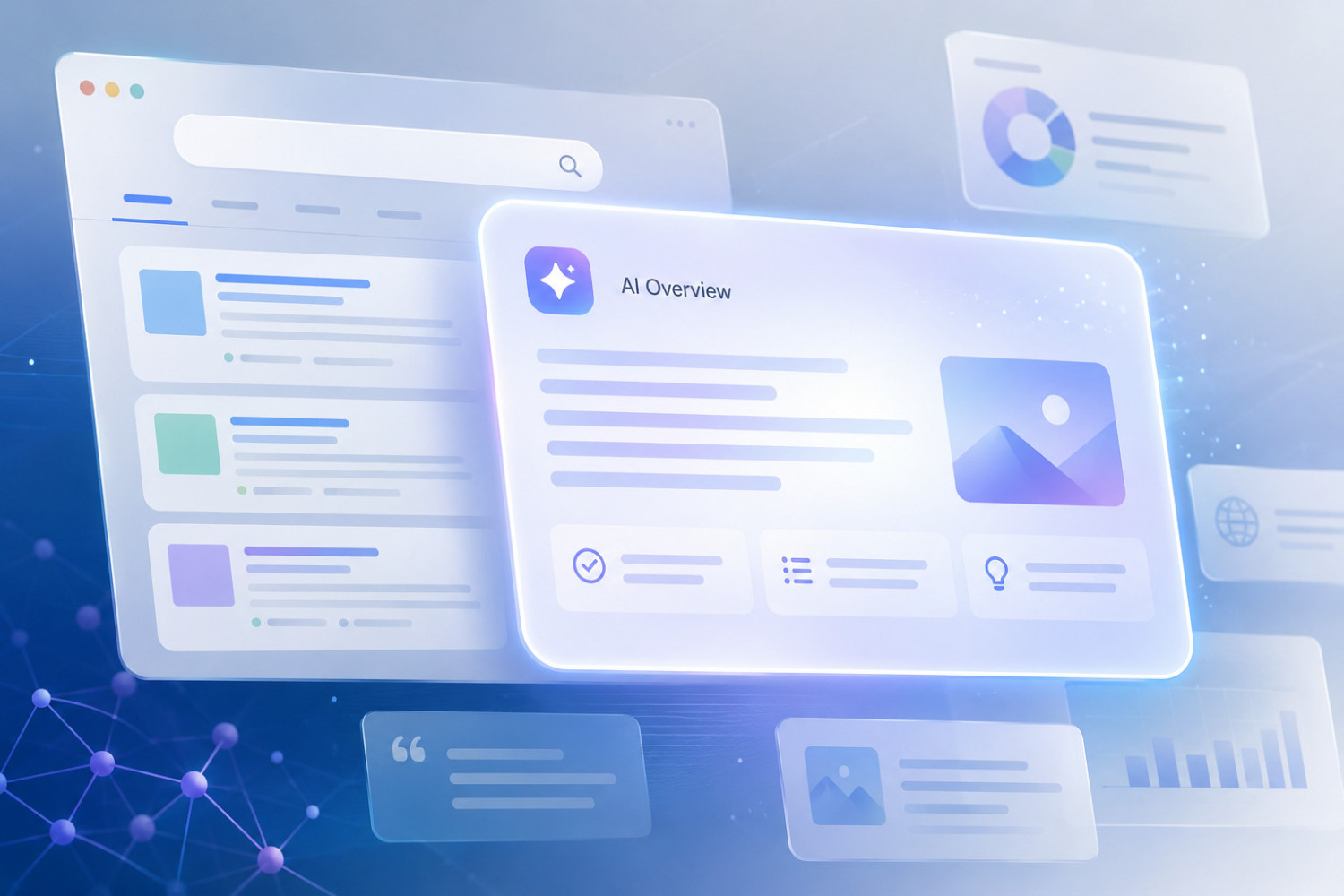
Google search results are starting to look more like AI answers because Google is moving from “showing a list of webpage links” to “understanding your question, summarizing the key points, and then showing useful sources for further reading.” In other words, Google is not just trying to help you find information. It is increasingly trying to read, compare, and organize information for you, then present it in a format that feels closer to a ChatGPT-style response.
Google used to feel like a library catalog. Now it feels more like a teaching assistant.
In the past, if you searched for “Austin coffee shops” or “resume template,” Google mostly gave you a list of links. You had to open several pages, compare them, and decide which one was useful or trustworthy.
Now, Google often behaves more like a teaching assistant. If you ask, “Why does coffee make it hard to sleep?” the search result may not just show articles. It may first explain how caffeine affects sleep, when you should avoid drinking it, and who should be more careful, then show sources that support or expand on that answer.
That is why search results feel more like AI answers. The search page is no longer only an “entry point” to websites. It is becoming a place where answers are assembled. A good way to understand this shift is to think of it as part of AI search: instead of only matching keywords, AI search tries to understand the question and turn scattered information into a clear answer.
Reason 1: People search in a more conversational way now
People used to type short keyword phrases, such as:
“coffee shops near me”
“resume template”
“what is SEO”
But more people now type full questions, such as:
“How should a college student write a first resume?”
“How can a small business make sure ChatGPT can find it?”
“Why do Google search results look more like AI answers?”
When users search in a more conversational way, Google’s answers naturally become more conversational too. This is not just a design change. It reflects a deeper change in how people look for information.
Reason 2: Google wants to reduce the work of sorting through information
The hardest part of search is often not a lack of information. It is having too much information. You may see 10 or 20 results, but you still have to figure out which one is credible, which one fits your situation, and which one is current.
That is why Google increasingly summarizes results, shows steps, highlights comparisons, and suggests related questions. The goal is to help users understand the basic answer before they open several pages.
You may now see search results with:
- a direct answer
- bullet-point summaries
- related follow-up questions
- suggested sources
- expandable details
These elements make Google feel less like a list of links and more like a prepared answer.
Reason 3: Generative AI can reorganize information
Traditional search mainly ranked webpages based on relevance, keywords, quality, links, and authority signals. Generative AI can do something different: it can take information from multiple sources and reorganize it into natural language.
Put simply, traditional search is closer to “finding articles.” AI search is closer to “building an answer.”
That is why businesses should not only ask, “Do we rank?” They also need to ask, “Can AI understand us clearly?” If your website has vague service descriptions, scattered content, incomplete company information, or weak trust signals, AI may struggle to understand what your business does. When AI answers appear directly in search results, website traffic can also change; this is why the question Do AI Answers Affect Website Traffic? matters for many businesses.
Reason 4: Links still matter, but they are not always the main event
Google is not removing website links from search. Links still matter. What is changing is their role.
In older search results, the main event was a list of blue links. In newer search experiences, the AI-generated summary may appear first, while links act as sources, supporting references, or places to read more deeply.
So SEO is not dead. It is becoming more about making your website understandable to both search engines and AI systems. If your company introduction, service pages, case studies, FAQs, and trust signals are unclear, AI may not know whether to mention you. That is why many business owners now ask Can ChatGPT Find My Company?: search discovery no longer happens only through classic Google rankings.
Search is shifting from “ranking competition” to “answer competition”
In the past, the main question was: “Does my webpage rank number one?”
Now there is another question: “When AI answers a user’s question, does it understand, cite, or recommend my business?”
Users may not open every result one by one. They may first read the AI summary. If that summary is enough, they may click only a few sources, or none at all.
That means content strategy has to change. A website cannot rely only on keyword stuffing or generic marketing copy. It has to answer real questions clearly, such as:
- Who is this service for?
- How is it different from other options?
- What is the process, price range, limitation, or common concern?
- Why should someone trust this company?
The clearer your content is, the easier it is for search engines and AI systems to understand it.
What this means for website owners
If you run a website, Google’s shift toward AI-like answers means your site cannot be just an online brochure. It needs to become a source of information that AI can understand, trust, and summarize accurately.
Start by checking a few things:
- Does your homepage clearly explain who you are, who you serve, and what problem you solve?
- Do your service pages explain the process, ideal customers, examples, and FAQs?
- Does your content answer real user questions in natural language?
- Do you show trust signals, such as case studies, reviews, experience, credentials, or company details?
- Is your important content readable as text, instead of being hidden inside images or animations?
If you are not sure whether your page is clear from an AI perspective, you can use Webpage Score to review a single page’s positioning, content completeness, trust signals, conversion design, and AI readability.
Summary
Google search results look more like AI answers because search is moving from “link list first” to “answer first.” As users ask more conversational and complex questions, Google needs to understand the intent, organize information, provide a summary, and place source links around the answer.
For users, this can make research faster. For website owners, the challenge is bigger: your site does not only need to be found by Google. It also needs to be understood, trusted, and accurately represented by AI systems.
Further reading
- To understand the basic concept, start with What Is AI Search?
- To think through the traffic impact, read Do AI Answers Affect Website Traffic?
- To check whether AI tools can discover your brand, read Can ChatGPT Find My Company?
- To understand content trust signals, read What Is E-E-A-T?