

Why Might SEO Alone Not Be Enough?
SEO alone may not be enough because people no longer rely only on traditional Google search results to find answers. They also use ChatGPT, Gemini, Google AI Ov
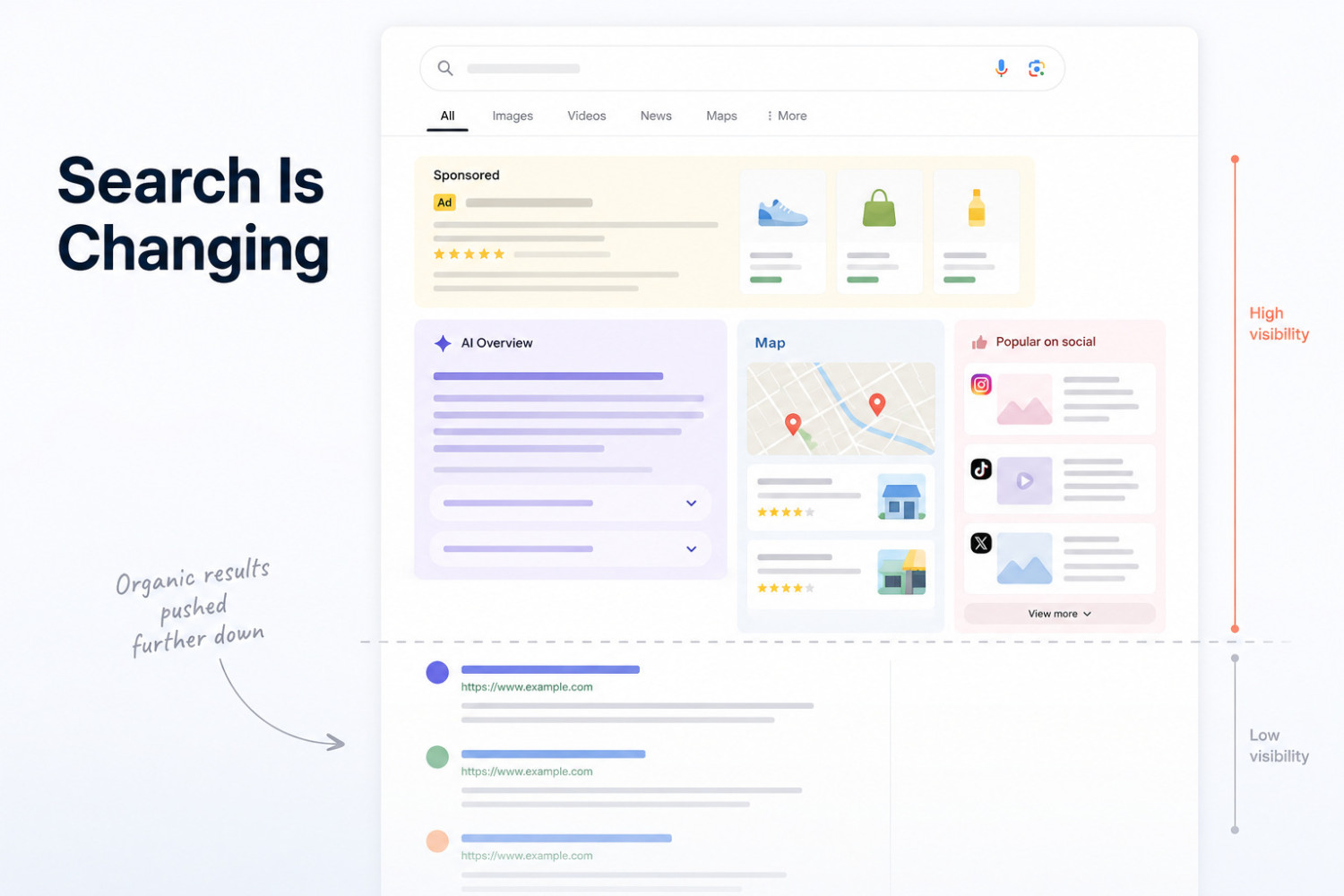
SEO alone may not be enough because people no longer rely only on traditional Google search results to find answers. They also use ChatGPT, Gemini, Google AI Overview, social platforms, and review content to make early comparisons and decisions. SEO is still important, but it mainly helps a website get discovered, indexed, and ranked by search engines. Businesses also need content that AI systems can understand, cite, compare, and recommend accurately. Otherwise, a website may rank in search but still get left out before the customer makes a decision.
SEO still matters, but it is no longer the whole picture
SEO is the foundation of a discoverable website. Your titles should be clear, your pages should load reliably, your content should match search intent, and your site structure should make it easy for Google to crawl. None of that has become irrelevant.
The problem is that user behavior has changed. In the past, someone might search “best orthodontist in Los Angeles,” open several websites, and compare them manually. Now, that same person might ask an AI tool, “Which orthodontists in Los Angeles are a good fit for students?” or “Compare three web design agencies for a small business.” In that moment, the first thing they see may not be a list of blue links. It may be a summarized answer.
That means your website has to clearly explain who you are, who you serve, what problems you solve, and why someone should trust you. If that information is vague, AI may not include your business in its answer. When you look at why Google search results look more and more like AI answers, it becomes easier to see why AI-readable content now matters alongside traditional SEO.
The risk of relying only on rankings
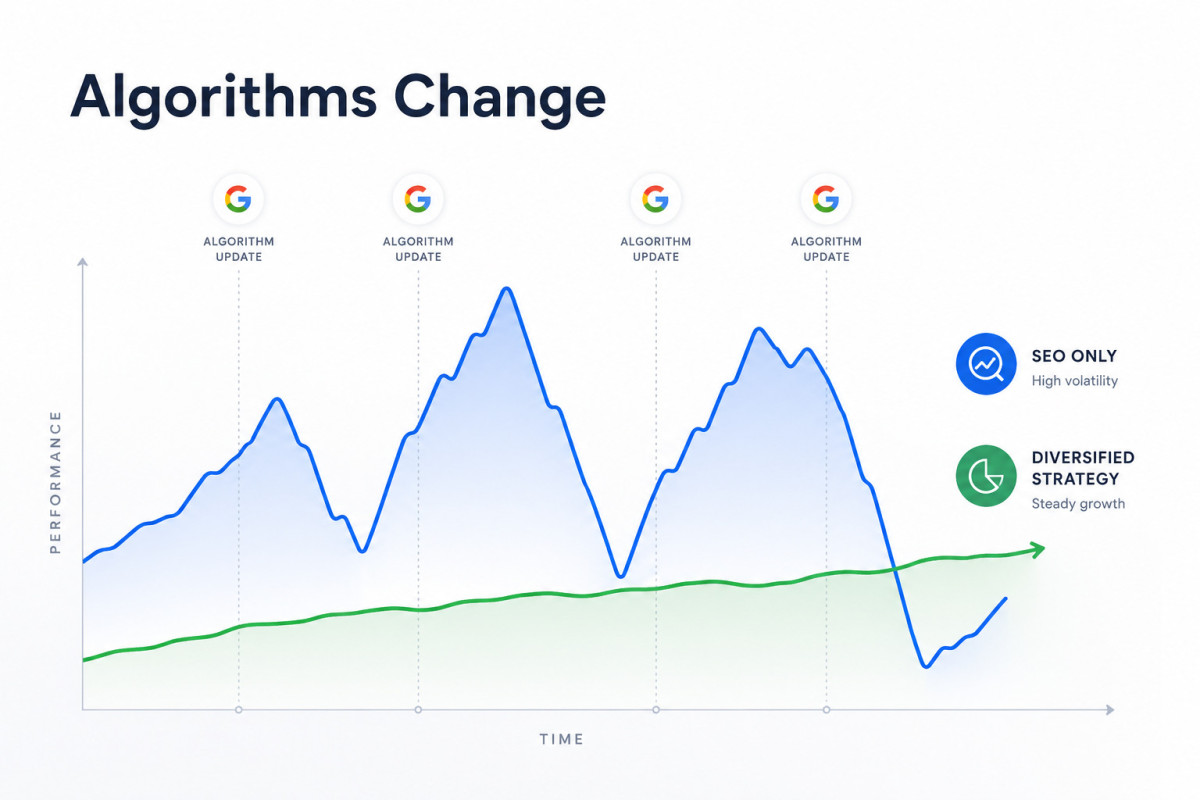
The first risk is that ranking high does not always mean getting the click. Search results can now include summaries, comparisons, question boxes, and AI-generated answers. A user may get enough information before visiting any website. So businesses need more than rankings. They need to be mentioned, cited, and included in the shortlist of options.
The second risk is that AI may summarize your competitors and leave you out. Suppose a competitor’s website clearly explains its audience, pricing logic, case studies, FAQs, service area, and process. Your website only says, “Professional services. Contact us today.” AI will likely understand the competitor more easily. AI does not call your sales team to ask for missing details. It works from public, readable, trustworthy information.
The third risk is that the buyer journey is now more fragmented. A potential customer may ask ChatGPT first, check Google next, read reviews, browse social proof, and only then visit a website. If your brand appears in traditional search but is unclear in AI answers, comparison content, FAQs, case studies, and trust signals, you may be removed from consideration early.
AI cares about clear answers and trustworthy context
Traditional SEO often focuses heavily on keywords. AI search cares more about whether the content actually answers the question. A page that repeats “best web design agency” many times might help a little with old-school keyword matching, but it may not give AI enough useful information.
AI needs specifics. Who is the service for? What problem does it solve? What is the process? What proof exists? How should a customer think about pricing? What should they do next? These details help AI understand and summarize a business more accurately.
That is why companies should not only ask, “Which keyword should we rank for?” They should also ask, “Can AI describe our company correctly?” If AI cannot find your company, or if it finds you but cannot explain what you do, users are less likely to consider you. The question Can ChatGPT Find My Company? is really a way to check whether your public information is clear, credible, and easy for AI to understand.
SEO alone can also miss conversion
Even when SEO brings traffic, traffic does not automatically become customers. Some websites have many articles and decent rankings, but visitors land on the site and do not know what to do next. Other websites look polished, but their positioning is vague, their proof is thin, and their calls to action are weak.
A website needs to do three things at the same time: be discoverable by search engines, be understandable to AI, and be persuasive enough for real people to take action. SEO is the entry point. AI readability is the chance to be recommended. Conversion design is what turns attention into inquiries. If you want to check whether a specific page is clear from an AI perspective, Webpage Score can help evaluate positioning, content completeness, trust signals, conversion design, and AI readability.
What should businesses do?
The answer is not to stop doing SEO. The better approach is to expand SEO into a search and AI visibility strategy. You still need technical SEO, keyword planning, content quality, and internal linking. But you also need to structure information in a way that AI systems can understand.
Your homepage should clearly explain your positioning. Your service pages should define what you offer, who it is for, how it works, and what outcomes clients can expect. Your case studies should show what you actually did. Your FAQs should answer the questions customers really ask. Your articles should explain ideas in clear sections instead of simply stacking keywords.
The clearer your content is for humans, the easier it becomes for AI to summarize and cite it.
Conclusion
SEO alone may not be enough because modern search is no longer just “type a keyword and click a website.” Search engines and AI tools increasingly organize the answer first, and users decide afterward whether to explore further. SEO is still the foundation, but businesses also need AI readability, brand credibility, complete information, comparison-friendly content, and conversion design. The real goal is not just to rank. It is to make sure your brand can be found, understood, trusted, and chosen at every stage of the user’s decision process.
Further reading
- To understand why search pages are starting to feel more like answer pages, read Why Do Google Search Results Look More and More Like AI Answers?.
- If you are concerned that AI answers may reduce website clicks, read Do AI Answers Affect Website Traffic?.
- If you want to check whether a page is easy for AI to understand, try Webpage Score.