

How to Write an Effective FAQ?
Learn why most FAQs fail, which questions matter most, and how a stronger FAQ can improve Google visibility, AI understanding, trust, and conversions. Many comp
Learn why most FAQs fail, which questions matter most, and how a stronger FAQ can improve Google visibility, AI understanding, trust, and conversions. Many comp
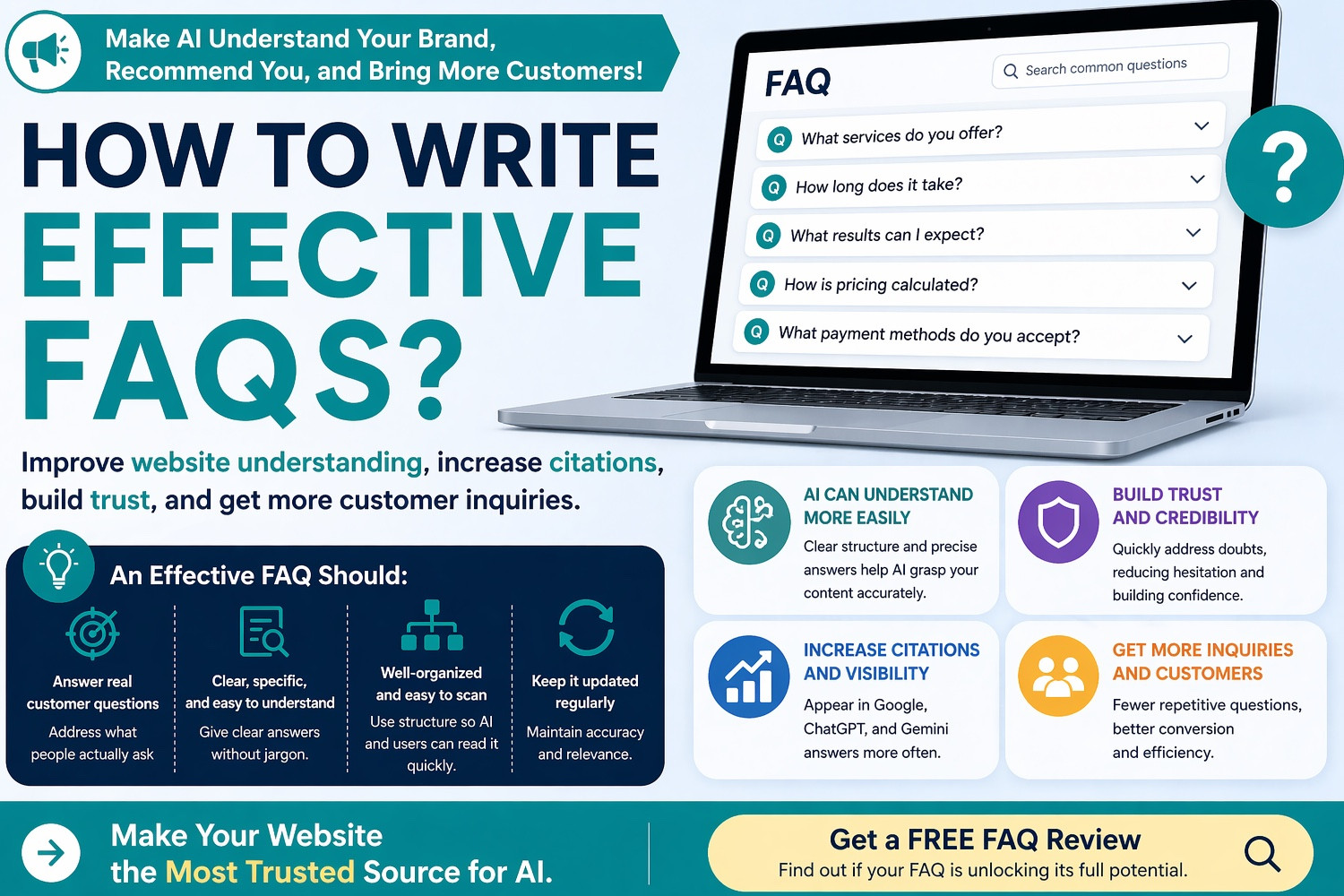
Learn why most FAQs fail, which questions matter most, and how a stronger FAQ can improve Google visibility, AI understanding, trust, and conversions.
Many company websites do have an FAQ section, but in reality, it often does almost nothing.
It may sit quietly in the footer, contain only a few overly basic questions, or look like “extra information” without actually helping potential customers make decisions.
The result is simple: Google may find your site, but not see enough value to surface it in higher-intent comparison and decision-stage searches.
At the same time, tools like ChatGPT and Gemini may struggle to extract clear, trustworthy, quotable information from your pages.
For many SMEs, brand websites, and service-based businesses, an FAQ is not an optional extra. It is one of the key factors in whether your website can be understood, trusted, and turned into inquiries.
Many companies only create an FAQ at the very end of a website project. It becomes something added later, a place to store miscellaneous customer questions rather than a core business asset.
But for commercial websites, the opposite is true. Before a customer ever contacts you, they are usually asking themselves a series of silent questions. Are you the right fit for me? How are you different from competitors? What price range should I expect? Is the process difficult? If this is my first time, will I know how to begin?
If your homepage and service pages do not answer these clearly, your FAQ becomes the place where understanding gaps must be filled.
The problem is that most FAQ sections are not written to address these commercial questions. Many FAQs focus on shallow questions such as “Do you offer this service?” or “How can I contact you?” These questions are not wrong, but they do very little to help a real prospect compare options or move closer to a decision. On the other hand, some FAQs become overly internal and operational. They may contain detailed explanations, but they still fail to address what the customer actually cares about, and they do not reinforce your positioning, differentiation, or trustworthiness.
There are three common misunderstandings behind this.
First, many people think an FAQ only exists for SEO, so adding a few questions is enough.
Second, many people think an FAQ should only answer surface-level questions such as whether something is possible or available.
Third, many people assume that as long as an FAQ is on the website, AI systems will naturally understand it. In reality, if the questions are weak and the answers are vague, an FAQ does not just fail to help. It can make the whole site feel less focused.
One of the biggest problems with most FAQs is not that they do not exist, but that they are written for the wrong audience. Website owners often write from their own perspective. They explain what they think matters, while overlooking how customers actually think during research and comparison.
For example, if you offer a B2B service, the real questions prospects ask are often not “What services do you provide?” but “What kind of company are you best suited for?”
“If my website already gets traffic but few leads, what part can you improve?” or “How much internal effort will this require from my team?”
These are the kinds of questions that appear before a business decision. If your FAQ does not address them, your website may explain what you do without helping the buyer move forward.
Some companies turn their FAQ into an administrative support section. It ends up covering payment methods, refunds, login issues, and technical steps. These are useful topics, but if that is all your FAQ contains, your site may look functional rather than credible.
An effective FAQ should not only solve operational questions. It should also reinforce what your service pages could not explain fully.
It should clarify who you are best for, how your process works, how you differ from alternatives, and why a customer would choose you.
These may not feel like traditional FAQ topics, but they are exactly the signals that help both customers and AI systems understand your business correctly.
Some FAQ questions are too broad, such as “What is your service?” or “Why choose us?” Questions like these usually produce vague promotional answers. In other cases, the question is specific, but the answer is only one sentence long, such as “Yes” or “We do.” That may be short, but it has almost no informational value for Google, ChatGPT, or Gemini.
The most effective FAQs sit in the middle.
The question is specific enough to address a real concern, and the answer is complete enough to explain it clearly. It is not about writing long essays. It is about creating answers that make sense to both people and AI systems, so each section clearly communicates what is being answered, who it applies to, and what judgment it supports.
A common issue is that the FAQ exists in isolation. The service page says one thing, the About page says something slightly different, and the FAQ sounds like it was written by someone else entirely. That creates a very practical problem: your website sends inconsistent signals.
When a customer reads your site, they may feel that something is off without knowing exactly why.
When search engines or AI systems try to interpret your business, it becomes harder for them to determine what you offer, what audience you are suited for, and what differentiates you.
The FAQ should not be a disconnected side page. It should continue and strengthen the narrative established by your homepage, service pages, and proof points.
Many FAQs are written once when the website goes live and then left untouched. But customer questions change. Markets shift. Your service positioning evolves. If the FAQ never changes, it quickly stops functioning as a response to real demand and becomes decoration.
This matters even more for businesses hoping to gain visibility through Google, ChatGPT, and Gemini. A static FAQ may no longer reflect your current positioning, service scope, or the real decision questions customers ask today.
That means you miss valuable opportunities to address high-intent searches and AI-driven discovery.
When people talk about FAQs, they often reduce the topic to traffic. But for a commercial website, the real value of a good FAQ is not simply that it creates another page or section that can be indexed. Its real value is that it makes your business easier to understand, easier to compare, and easier to trust.
Let’s start with Google.
Search users are not always typing in your brand name. They often search through needs, doubts, comparisons, and risk evaluation. If your website contains FAQ content that directly answers those questions, Google has a stronger basis for treating your page as relevant.
This is not just because you added keywords. It is because your content genuinely answers the question behind the search. That affects more than visibility. It affects whether the right people click in the first place.
Now look at AI tools such as ChatGPT and Gemini.
These systems do not simply match words. They prioritize information that is structured clearly, semantically complete, and useful as a direct answer. If your FAQ reflects how customers really ask questions, and if the answers clearly explain service scope, use cases, differentiation, and limitations, your website becomes easier for AI systems to interpret.
On the other hand, if your FAQ is vague, overly promotional, or too thin, AI may still see it, but it will have very little to work with.
More importantly, FAQ content affects trust. Many prospects do not inquire the first time they see your brand.
They compare first. They want to know whether you are professional, transparent, and aligned with their situation. If your FAQ resolves common doubts clearly, it reduces the friction of “I’ll ask later” or “I’m still not sure.” That directly influences inquiry rates and conversion.
That is why an FAQ is not just a traffic feature. It is trust content before conversion. It helps search engines understand you, helps AI systems summarize you, and helps prospects decide whether to take the next step.
The first thing to review is not how many questions you have, but what kind of questions they are. If most of them sit at the customer support level, such as payment, login, shipping, or simple rules, then your FAQ is probably not supporting sales or conversion.
The priority should be questions that influence whether a prospect moves forward. In other words: Are we a fit? How are you different? What is the process like? What do I need to prepare? What are the limits? What usually improves first?
Your FAQ should not be a reformatted duplicate of your service page. If it only restates the same claims in question-and-answer form, its value is limited. A stronger FAQ fills the gaps left by the service page. It addresses the questions customers still have after reading your main offer.
A simple way to evaluate this is to ask: after reading the service page, what important questions would a serious buyer still have? Those are the questions your FAQ should address first.
The most valuable FAQ topics rarely come from brainstorming in isolation. They come from real-world conversations such as sales calls, inquiry forms, customer service messages, onboarding discussions, and objections raised before purchase.
If you want to improve your FAQ, the first goal is not quantity. It is identifying the high-frequency, high-intent questions that influence buying decisions. Ten sharp, useful questions usually outperform thirty generic ones.
Many website FAQs only make sense if you read the surrounding page or previous question. That is inconvenient for readers and not ideal for AI systems. Each question and answer should be as self-contained as possible. Someone should be able to understand what is being asked, what is being answered, and why it matters, even if they read only that one entry.
That makes the content easier to scan, easier to quote, and more useful in more contexts.
If you want to optimize your FAQ, do not only edit the FAQ section itself. Review your homepage, service pages, About page, and contact page at the same time. Because even if the FAQ is clear, it will only have limited impact if the rest of your site still feels vague.
An FAQ becomes most valuable when it supports a larger message. It works best when your entire website presents a consistent, understandable, and credible picture of your brand.
The businesses that need to address FAQ quality most urgently are usually not the ones with the most content. They are often the ones in the following situations.
First, companies that already have a website and some traffic, but their inquiry volume remains low or inconsistent.
These businesses often do not have a visibility problem alone. They have a persuasion problem.
The FAQ is often the missing layer between interest and action.
Second, service-based businesses, B2B websites, consultants, and specialized providers.
Buyers in these categories usually have many questions before reaching out.
They do not make decisions based on slogans alone.
If the FAQ is weak, too many of those questions remain unresolved until manual sales conversations, which increases friction and loss.
Third, brands whose positioning is still unclear or whose service boundaries are easy to misunderstand.
FAQ content is especially useful for clarifying what you do, what you do not do, who you are for, and who you are not for.
That is not just content support. It is brand filtering.
Fourth, companies that want to become easier to understand through Google, ChatGPT, Gemini, and similar channels.
Because at its core, an FAQ is a way to turn real customer questions into visible website content that can be read, interpreted, compared, and trusted.
By contrast, if your website is still in an early stage and your homepage, basic service pages, and contact information are not yet clear, then FAQ optimization may not be the first priority.
In that case, build the site’s core pages first.
A strong FAQ cannot replace a weak website structure.
When an FAQ performs poorly, it may look like the problem is only one weak content section. But the real issue is usually much larger. FAQ quality affects the overall understandability of your website. It influences how search systems assess the value of your content, how AI tools summarize and interpret your brand, and whether prospects feel confident enough to move forward.
That is why an FAQ should not be treated as a keyword container or an afterthought added at the end of a web project. Its real role is to translate customer questions, brand positioning, service differences, and trust signals into structured, readable answers.
If your FAQ exists but does not contribute to understanding, mentions, inquiries, or conversion, the issue is usually not that you have too few questions. The real issue is that your website has not fully organized how customers think, compare, and decide.
If you suspect your FAQ may be “present” but not actually effective, the most useful first step is not rewriting everything immediately. Start by reviewing your current FAQ, service pages, and brand messaging together. Look at which questions are already answered, which important ones are missing, and which existing answers are too weak to support trust or action.
You can begin by checking your site from that perspective. And if you want help evaluating whether your FAQ, service pages, and overall website are making it easier for Google, ChatGPT, and Gemini to understand your business, you can also reach out through the contact form for a free review. That way, you can identify the real issue first and decide what to improve next.

Leave your name and email to receive future blog updates and product insights.
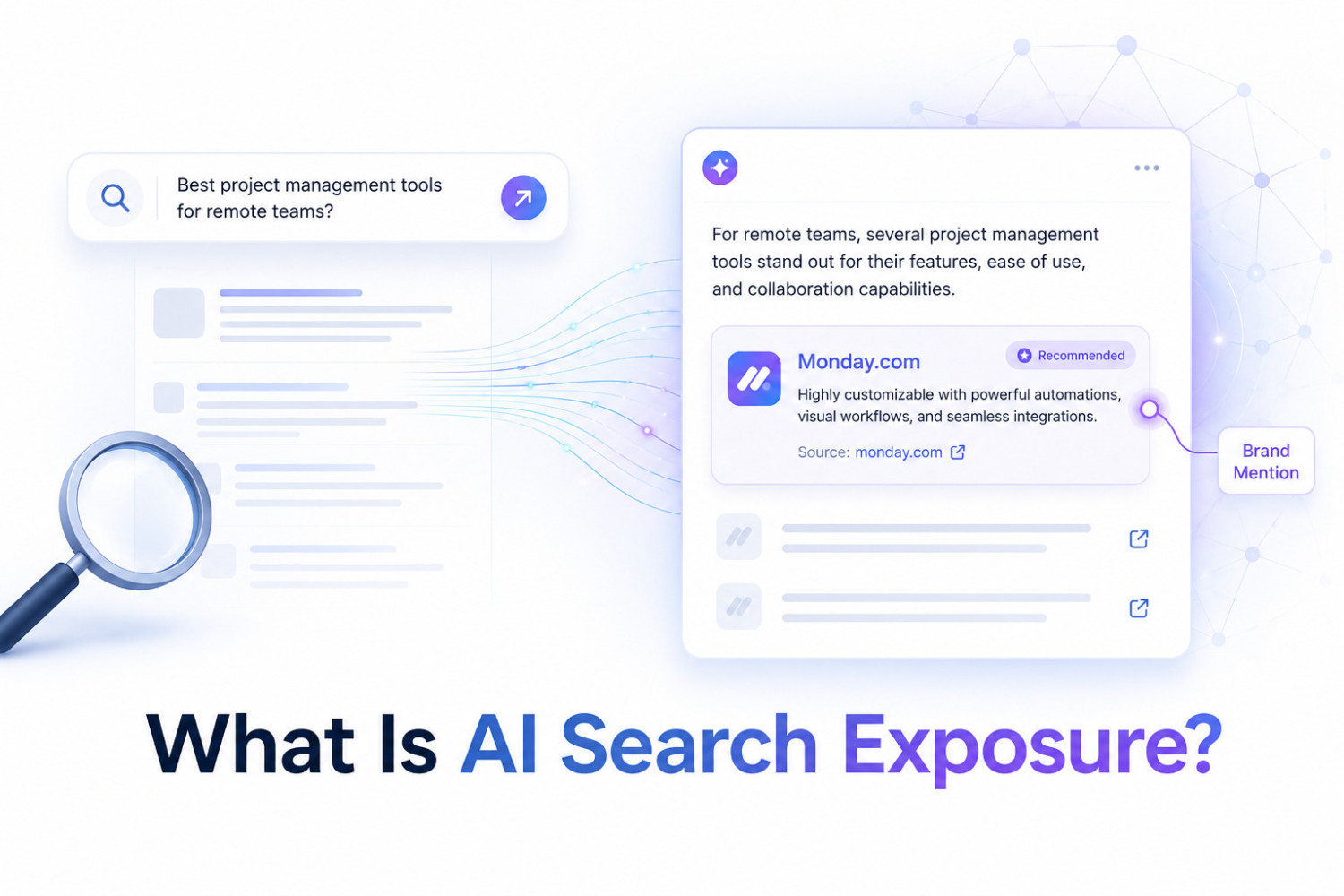
AI search exposure means the chance that your brand, website, product, service, or content appears i...
Read Article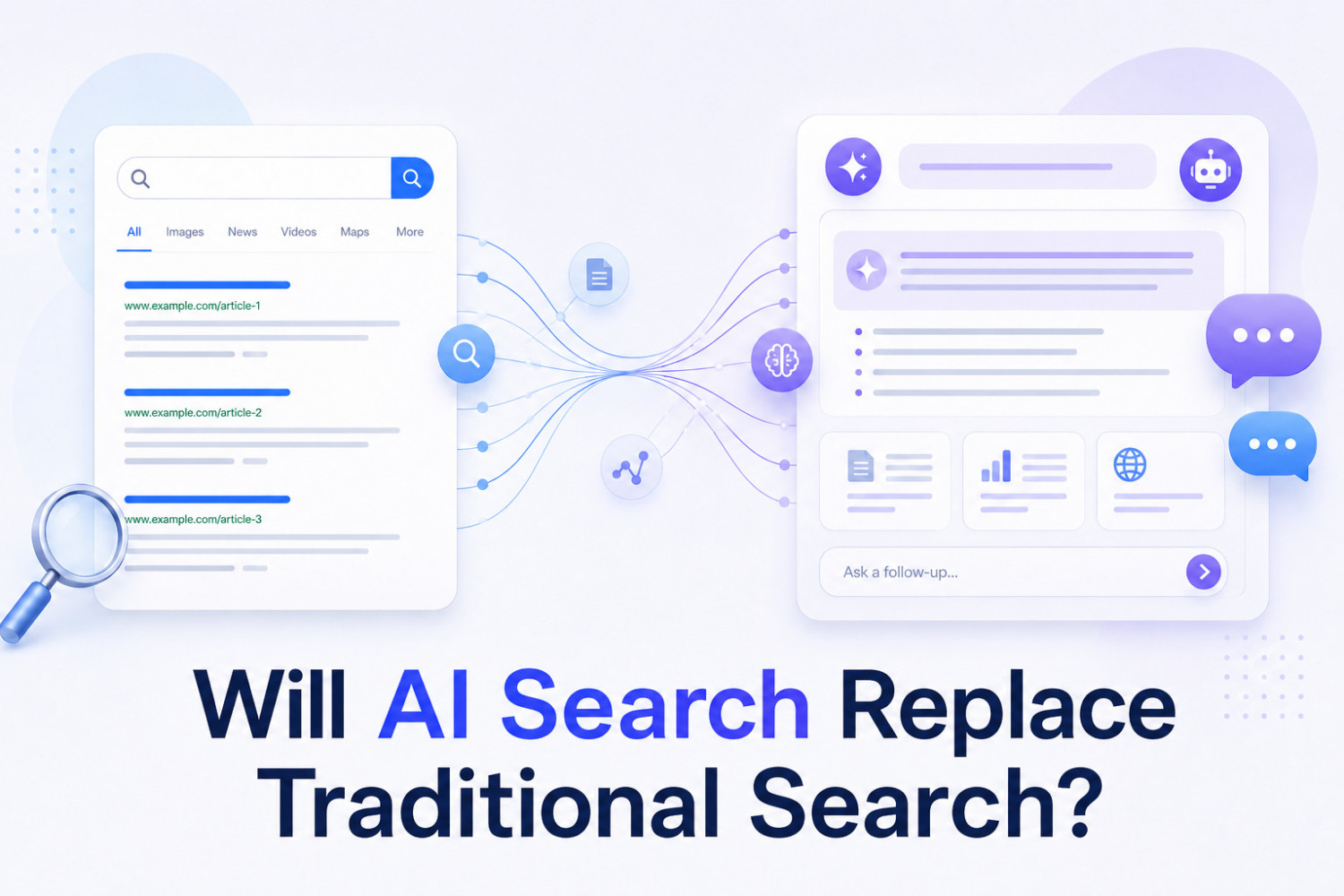
AI search probably will not completely replace traditional search, but it will change how many peopl...
Read Article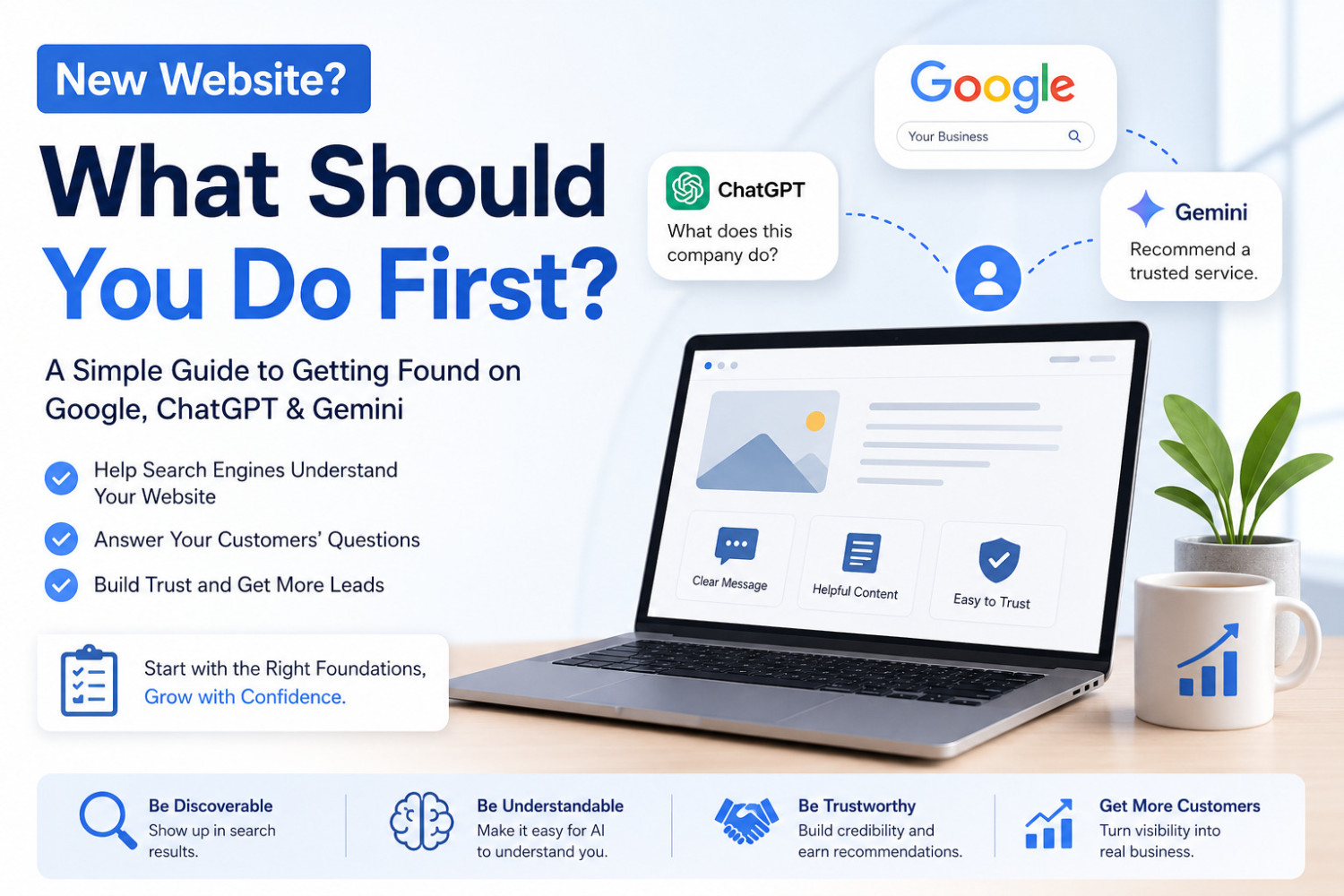
When a new website goes live, many businesses assume, “Now that the site is done, customers should s...
Read Article
Yes. AI search can be very helpful for B2B businesses, especially when the product or service is exp...
Read Article
Yes, they often can. Even if the mini plan mainly optimizes your homepage, once that homepage become...
Read Article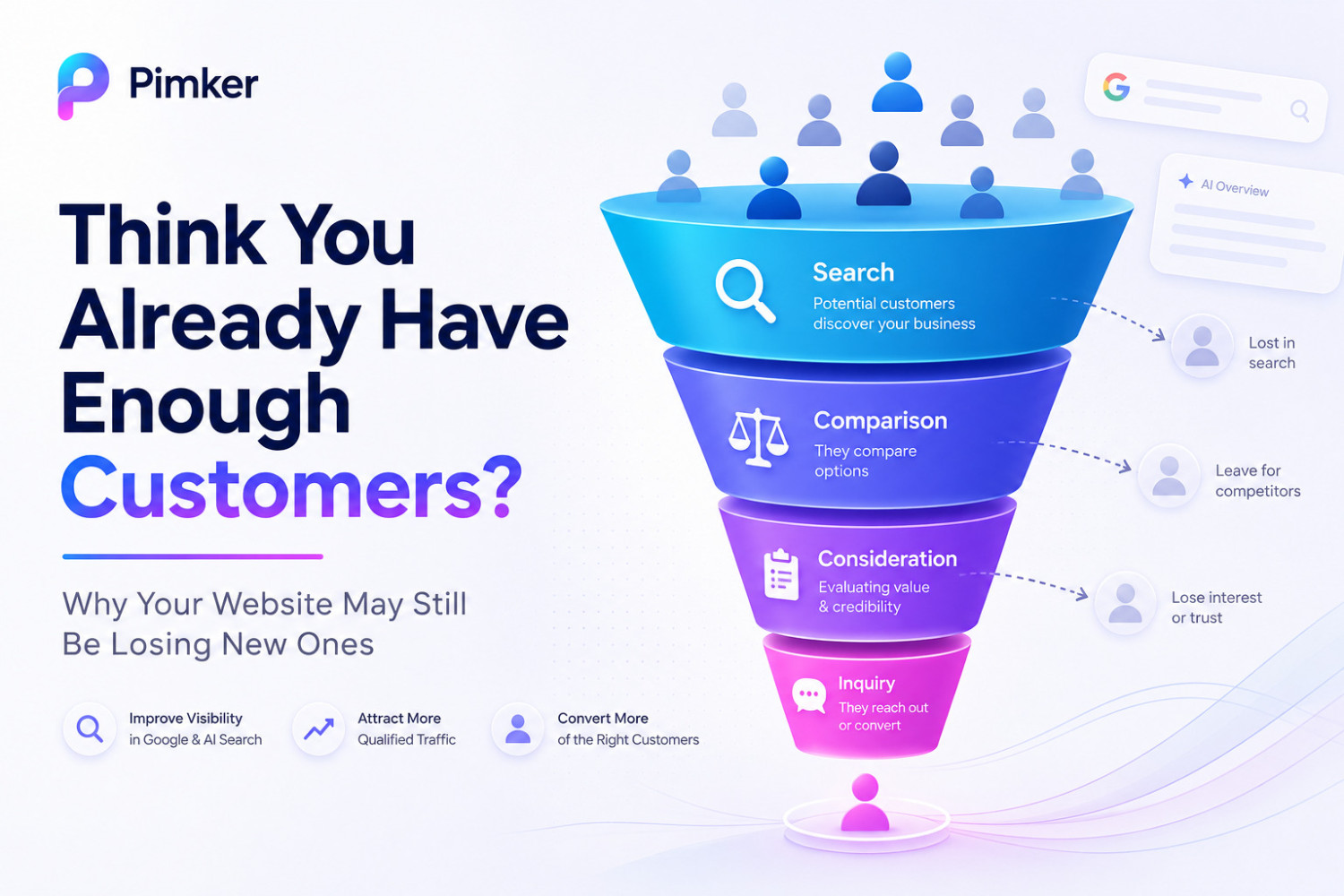
Many business owners think, “We get phone calls. People fill out our contact form. We probably have...
Read Article
Yes, AI answers do affect website traffic, and the impact is becoming more noticeable. In the past,...
Read Article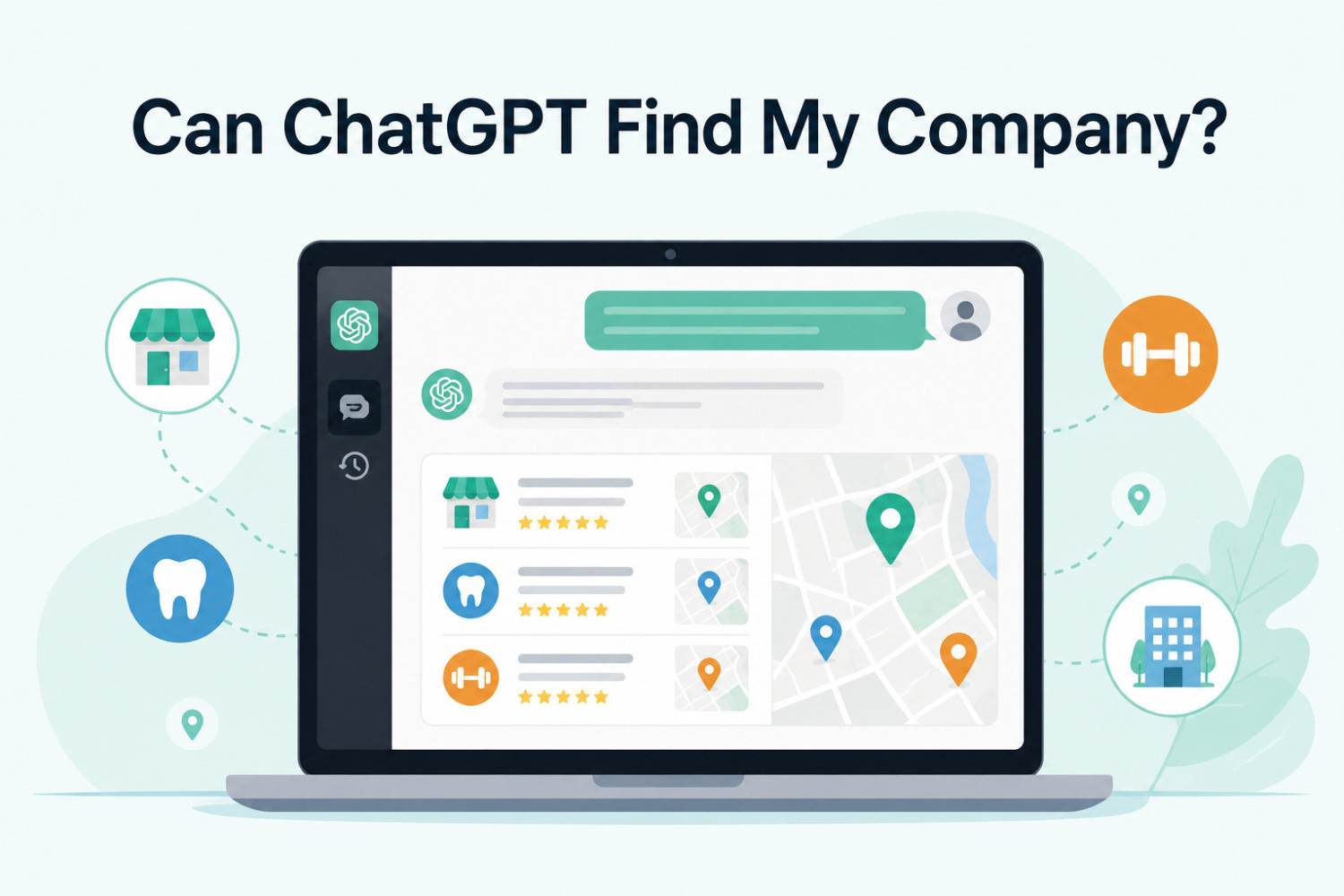
ChatGPT may not be able to find your company automatically. The more accurate answer is this: if you...
Read Article
Google search results are starting to look more like AI answers because Google is moving from “showi...
Read Article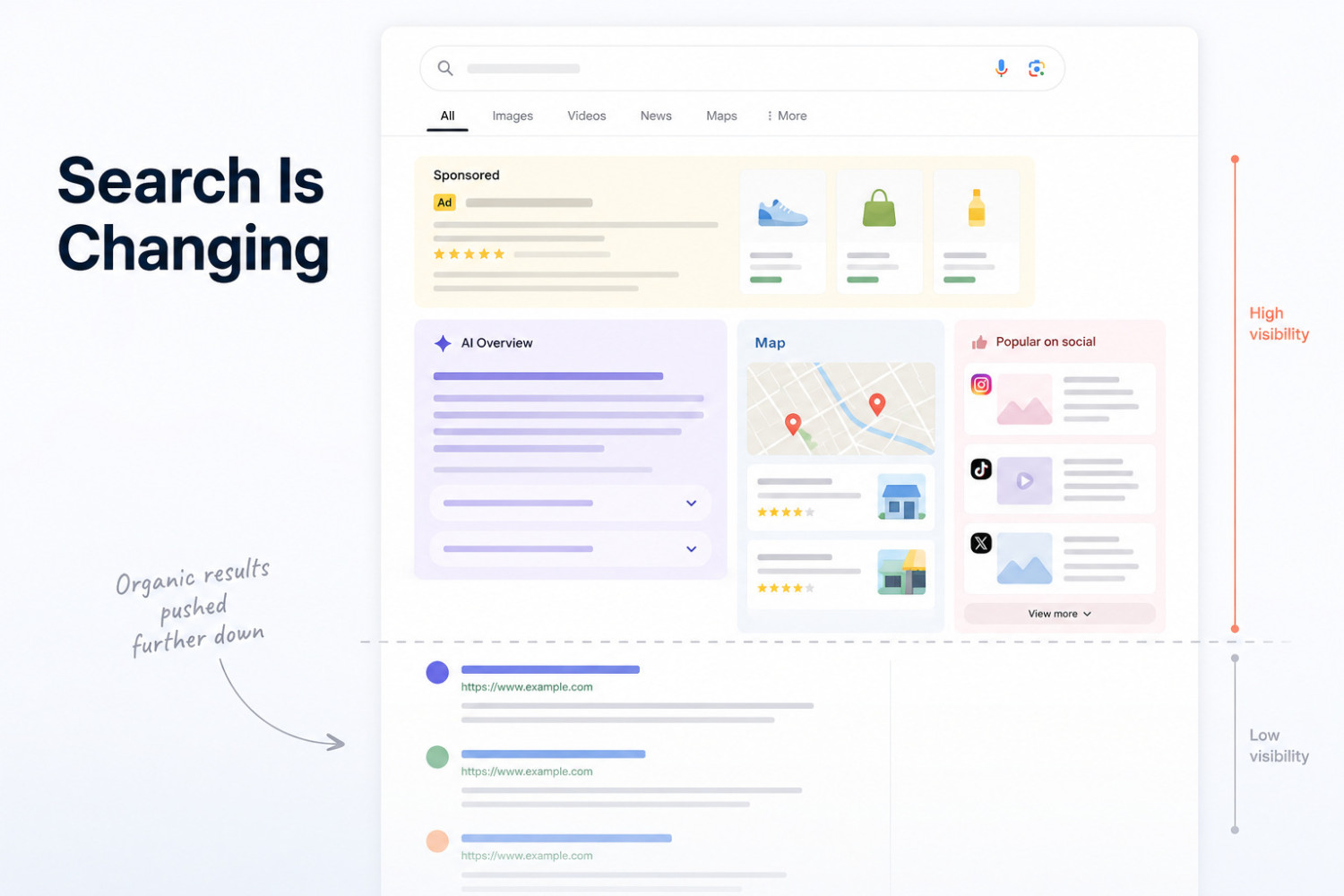
SEO alone may not be enough because people no longer rely only on traditional Google search results...
Read Article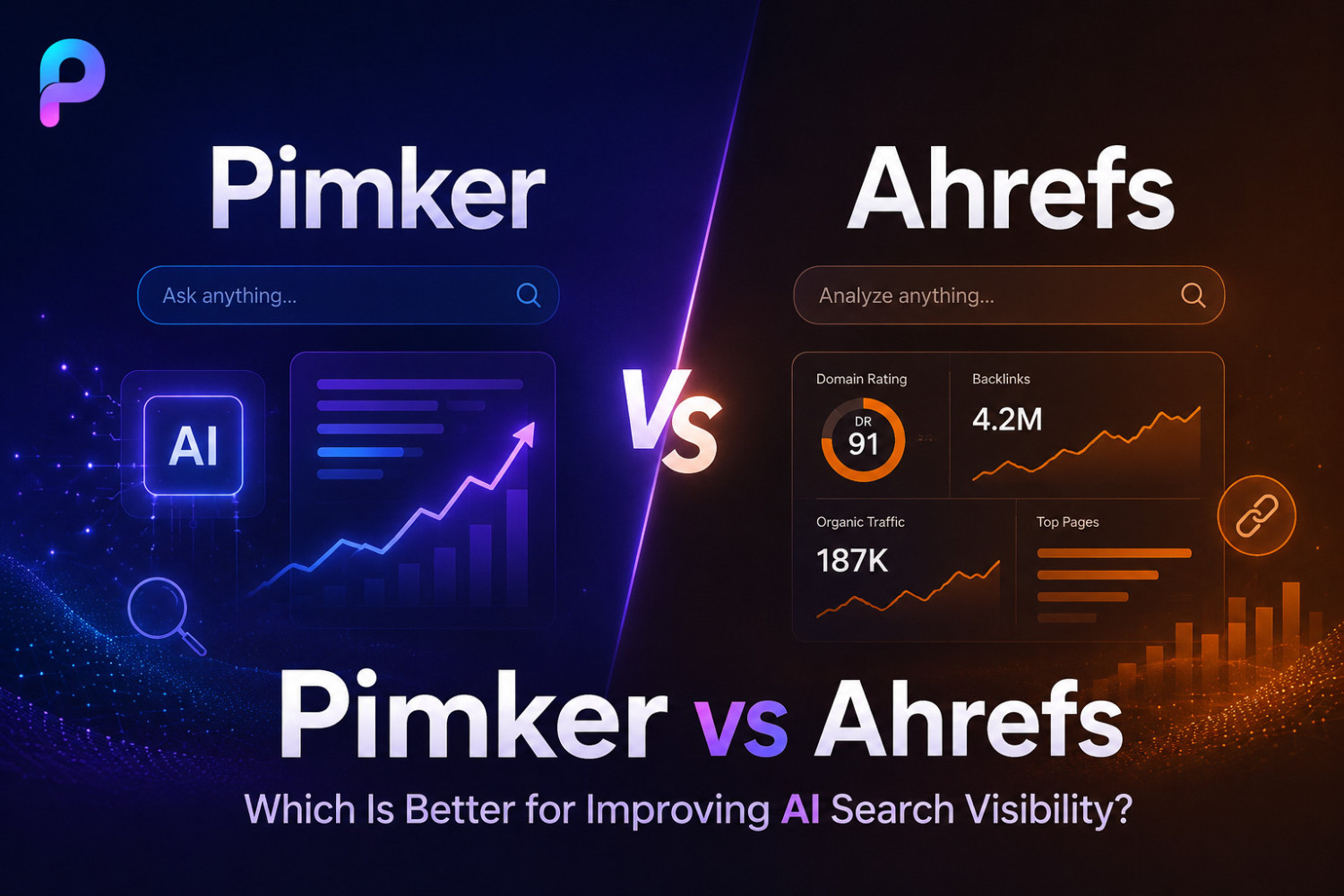
If your goal is traditional SEO research, keyword discovery, backlink analysis, and Google rank trac...
Read Article
AI search can make small companies harder to find, but not because AI intentionally favors big brand...
Read Article
If your website has been live for a long time but still gets little visibility on Google and AI sear...
Read Article
Your company is probably not being recommended by ChatGPT because the AI cannot quickly verify, from...
Read Article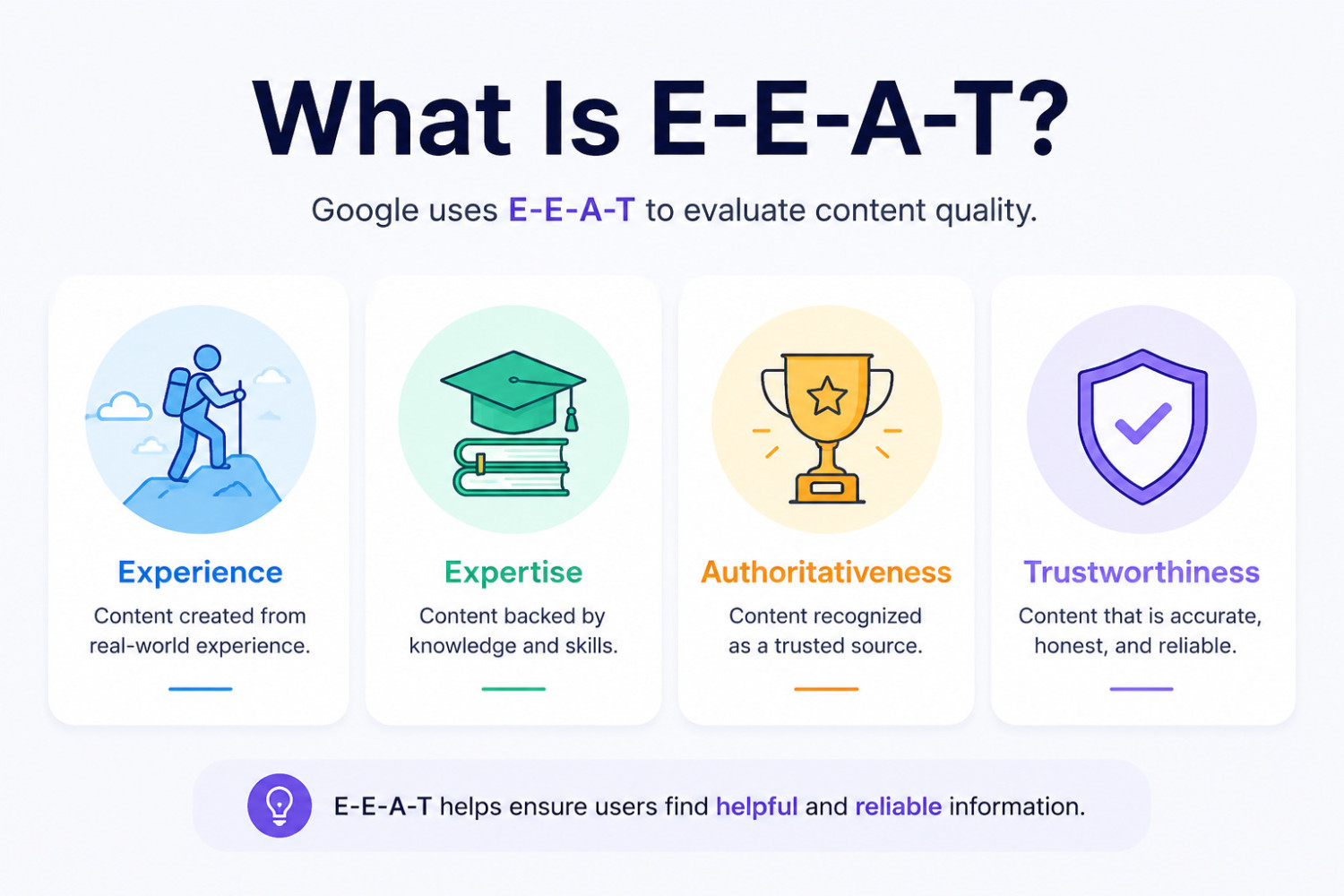
E-E-A-T is a concept Google uses to evaluate content quality. It stands for Experience, Expertise, A...
Read ArticleWe make your brand easier for AI to discover and recommend. From brand positioning and content structure to a strategic update cadence, Pimker turns your website into a system that supports long-term visibility.
Contact Us

© Pimker 2026 AI marketing software built for modern businesses All rights reserved.