

Pimker vs Ahrefs: Which Is Better for Improving AI Search Visibility?
If your goal is traditional SEO research, keyword discovery, backlink analysis, and Google rank tracking, Ahrefs is the better fit. But if your goal is to help
If your goal is traditional SEO research, keyword discovery, backlink analysis, and Google rank tracking, Ahrefs is the better fit. But if your goal is to help
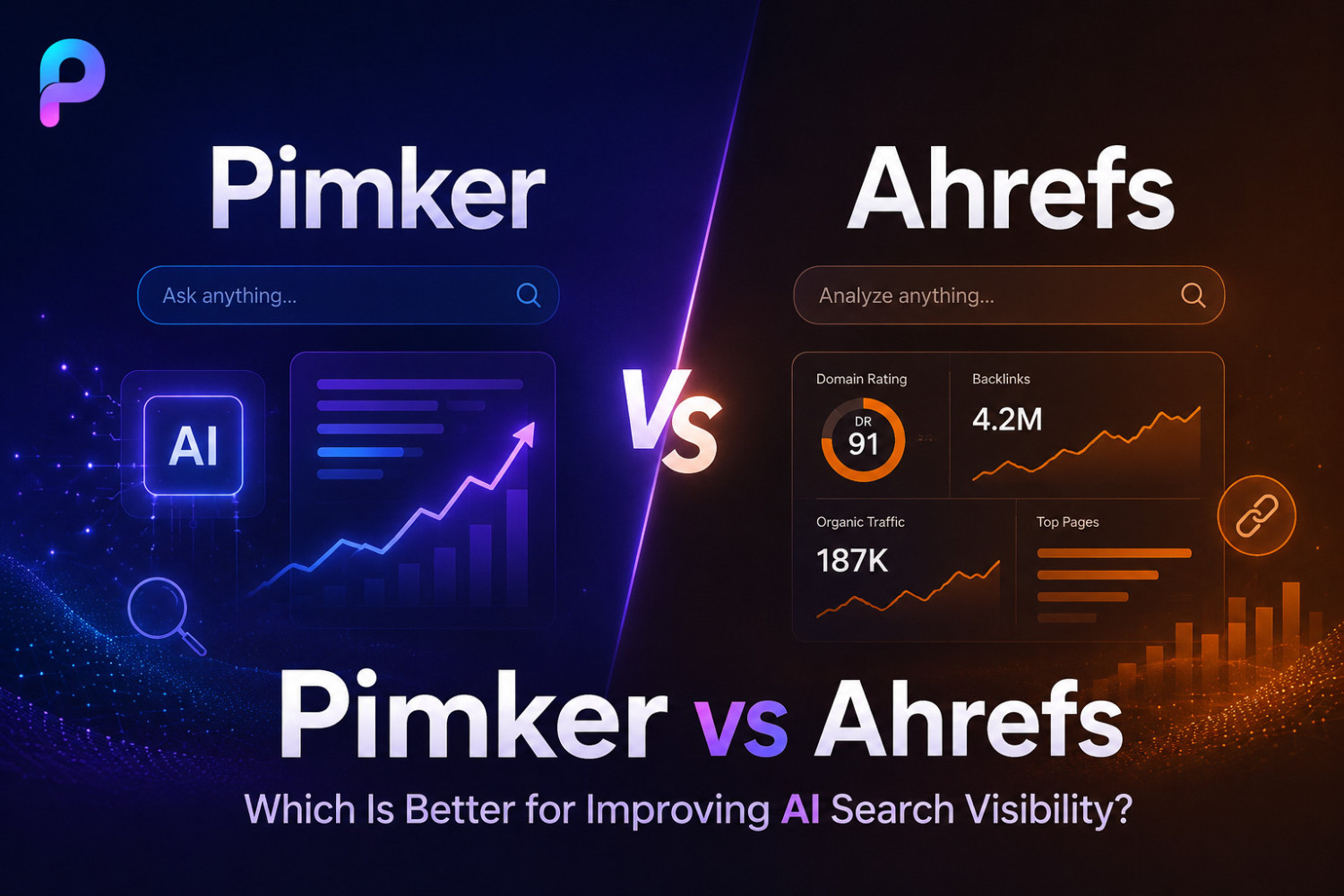
If your goal is traditional SEO research, keyword discovery, backlink analysis, and Google rank tracking, Ahrefs is the better fit. But if your goal is to help ChatGPT, Gemini, Claude, Google AI Overview, and other AI answer systems understand your company, describe your services accurately, and include your brand when potential customers compare options, Pimker is the better fit. Put simply, Ahrefs is more like an SEO data toolbox, while Pimker is closer to a managed AI search visibility and website readability service. They are not perfect substitutes. Ahrefs helps you see search demand and competitive data; Pimker helps turn your website into a clearer content system that AI can understand, cite, and recommend.
| Comparison point | Pimker | Ahrefs |
|---|---|---|
| Core positioning | AI search visibility, AI readability, website structure, ongoing optimization | SEO, keywords, backlinks, rank tracking, search data analysis |
| Best for | Businesses that want to be found by ChatGPT, Gemini, and Claude but lack technical or marketing resources | SEO specialists, content teams, agencies, and teams that can interpret data themselves |
| Main use case | Help AI understand and cite your brand, service pages, and FAQs | Research keywords, analyze competitors, track rankings, and identify SEO issues |
| AI search approach | Improves content, service pages, FAQs, internal links, and AI readability signals | Provides SEO, brand visibility, AI visibility, and competitor analysis data |
| Learning curve | Lower, especially for businesses that want expert-managed optimization | Higher, because users need to understand SEO metrics, search intent, and content strategy |
| Output | Clearer website content and stronger AI understanding of your services | SEO / AI visibility data and opportunities around ranking, links, and content |
| Fit for new websites | Strong fit, especially when content and positioning are not yet clear | Good fit if the team knows how to prioritize and execute from the data |
| Replaces SEO? | No. It extends SEO into AI search visibility | Still a powerful SEO platform, now also expanding into AI / AEO features |
| One-line takeaway | Best for businesses that want to be understood by AI | Best for teams that want to analyze search data and run SEO themselves |
The biggest difference between Pimker and Ahrefs is not which one is “better.” It is what problem each one is built to solve.
Ahrefs has long been a go-to platform for SEO teams. It helps users analyze keywords, backlinks, competitors, ranking changes, content opportunities, and site health. For SEO specialists, content teams, and agencies, that type of data is extremely valuable because it helps them decide which pages to optimize, which keywords to target, and which competitors to monitor.
But having a tool is not the same as solving the problem. Ahrefs is like a powerful X-ray machine. It can show you a lot about SEO and AI visibility, but after you see the findings, you still need to decide what matters most, which pages to rewrite, what FAQs to add, how to restructure service pages, how to connect internal links, and how often to update content.
Pimker is closer to a service that helps businesses turn their websites into systems AI can understand. It is not only about showing what is wrong. It is about clarifying who your company is, what you offer, who you serve, what problems you solve, which pages should connect, which questions your FAQs should answer, and which content gaps make AI less likely to recommend you.
For many businesses, the missing piece is not another data dashboard. The missing piece is a repeatable process for making the website clearer, more complete, and easier for AI systems to understand. When you start thinking about what AI search is, the question is not only “Should we do SEO?” It becomes “Can AI treat our website as a clear, trustworthy, and citable source?”
If we only compare traditional SEO data, Ahrefs has a clear advantage.
Ahrefs is well suited for questions like:
These questions matter a lot to SEO specialists, content teams, and marketing agencies. If a team is planning 50 articles, for example, they might use Ahrefs to research keywords, evaluate search volume, check ranking difficulty, and prioritize topics.
But for many small businesses, B2B companies, consulting firms, clinics, design agencies, contractors, and SaaS companies, the core issue is often not “We do not know which keyword has traffic.” The issue is “Our website does not explain our services clearly enough.” The homepage may rely on vague brand copy. The service pages may not explain who the service is for. Case study pages may not describe results. FAQs may not answer the real questions customers ask before they buy.
In that situation, seeing a long list of keywords in Ahrefs does not automatically tell you what to fix next.
That is why Ahrefs is better for teams that already have SEO execution capability. Pimker is better for businesses that understand AI search matters but do not want to spend every week studying SEO tools, AI search changes, and content structure.
AI search changes the problem. Traditional SEO often focuses on winning positions in Google search results. But now users may ask ChatGPT, Gemini, Claude, or Perplexity questions like “Which company is best for this service?” “What are good vendors for small businesses in the U.S.?” or “How is Company A different from Company B?” AI may not simply list links. It may summarize options and shape the user’s first impression.
Ahrefs has started addressing this shift. It is no longer only a traditional SEO tool; it is expanding into AI visibility and AEO-related workflows. That shows a new market need: businesses do not only want to know where they rank on Google. They also want to know whether they appear in AI answers, whether AI describes them accurately, and whether they show up in competitor comparisons.
Pimker starts from a different angle. Pimker focuses on whether your website itself is clear enough for AI to understand. Who are you? What do you do? Who do you serve? What trust signals do you have? What questions can you answer? When AI decides whether to include a company in an answer, it does not only look at one article. It needs consistent, complete, readable information across the website.
This is why data alone is not enough. You may see in a tool that your brand is not being mentioned, but the real issue may be vague service pages, thin FAQs, unstructured case studies, weak internal linking, or a lack of decision-stage answers. Those are website and content problems that need actual improvement.
To understand the broader shift, read why SEO alone may not be enough. Traditional search still matters, but people now form opinions through AI answers as well as search links.
Ahrefs is powerful, but it does not automatically do SEO for you.
You need to understand metrics like Keyword Difficulty, search volume, click potential, SERP structure, backlinks, Domain Rating, anchor text, top pages, content gaps, and site audit issues. More importantly, you need to turn the data into action. Seeing an opportunity does not mean one article will succeed. You still need to understand search intent, page format, competitor depth, internal links, CTA placement, FAQs, schema, and refresh cadence.
Ahrefs is like a detailed map. It shows the roads, terrain, traffic, and where competitors are. But you still have to choose the route and start moving.
Pimker is closer to having help with the route and the destination. Instead of asking your team to monitor every SEO and AI visibility metric, it helps structure your website so AI systems and search engines can understand it more easily. That is especially useful for businesses without a full-time marketing team, SEO specialist, content editor, or engineering support.
When a new website launches, many businesses rush to publish more articles. But the first priority may be to clarify the homepage, service pages, brand positioning, FAQs, internal links, and readability. Pimker’s guide on what a new website should do first reflects this idea: help Google and AI understand you before adding more content.
Ahrefs is strong for content strategy because it helps identify what people search for, which competitor pages get traffic, and which topics still have gaps.
But AI search visibility is not solved by publishing more articles alone. Many business websites have lots of content, yet AI still does not understand what the company is truly good at. The content may not be connected. Service pages may be unclear. FAQs may be too short. Brand positioning may be abstract. The content may chase keywords without building a clear semantic structure.
Pimker treats content as an information system for both humans and AI. An article should not exist in isolation. It should connect to relevant service pages, FAQs, case studies, technical explanations, and plan pages so both users and AI can understand the site’s topic map.
For example, if you are a B2B consulting firm, simply writing “What is digital transformation?” may not be enough. You also need to answer:
If these answers are scattered across the website and not clearly connected, AI will have a harder time understanding the whole picture. You can start by using the Webpage Score tool to see how a page performs on positioning, content completeness, trust signals, conversion design, and AI readability.
Technical SEO matters. If a site has many 404s, duplicate pages, slow performance, missing titles, confusing canonicals, or sitemap issues, search engines and AI systems may struggle to read it. Ahrefs-style site audit tools are good at surfacing those problems.
But a technically clean website does not guarantee AI can explain your company correctly. AI does not only need a site that is “not broken.” It needs a site with clear answers.
Think of a résumé. Good formatting, no typos, and a file that opens properly are basic requirements. But if the résumé does not explain what the person can do, what experience they have, or what role they fit, the recruiter still cannot make a decision. Websites work the same way. Technical SEO is a foundation; AI understandability is the content layer above it.
Pimker’s view is that websites should keep preparing for AI visibility over time. That includes content structure, AI readability, sitemap signals, submission rhythm, website data organization, and continuous updates. The goal is not only to fix technical errors once, but to help the site build signals AI can understand over time.
One of Ahrefs’ best-known strengths is backlink analysis. It helps SEO teams see which sites link to them, which sites link to competitors, which content earns links, and which links may be risky. For traditional SEO, that is extremely useful.
But in AI search, backlinks are not the only signal. AI answer systems may consider whether brand information is consistent, whether the content is clear, whether third-party sources mention the brand, whether service pages are complete, whether FAQs answer concrete questions, whether the site shows credible evidence, and whether the content can be crawled and understood.
Backlinks are a signal that others mention you. AI also cares whether you explain yourself clearly. If your brand has external exposure but your own website is vague, AI may still struggle to describe your services accurately.
So Ahrefs is strong for analyzing external links and competitive context. Pimker is stronger for organizing your owned website content so AI can build a clearer understanding of your brand. Ideally, a mature team can use Ahrefs for market and competitor insights and Pimker to strengthen the AI-readable foundation of the website.
Ahrefs may be the better choice if:
In these situations, Ahrefs can be extremely valuable. Agencies, large content sites, SaaS marketing teams, global brands, and experienced SEO teams can often get a lot from it.
But if you buy Ahrefs and no one reads the reports, updates the content, or improves service pages, it may become an expensive underused tool. Tools do not replace strategy and execution.
Pimker may be the better choice if:
This is where Pimker becomes useful. It does not require you to become an SEO expert. It helps turn your website into something AI search systems can understand. This matters especially for B2B, professional services, consulting, healthcare, education, SaaS, construction, design, and business services because buyers often research before contacting sales. If AI never mentions you during that research stage, you may never enter the buyer’s shortlist.
The article Does AI Search Help B2B Businesses? explains this well: B2B buyers often research solutions, compare vendors, review case studies, and ask AI before reaching out. If your website is not understood by AI, you may be filtered out before the buyer even visits your site.
Many businesses compare Pimker and Ahrefs by looking at monthly fees. But the more important question is whether your team can turn the tool into outcomes.
If you buy Ahrefs, someone still needs to:
If you already have a team, this is reasonable. But for a small business owner, it can become a heavy workload. A common outcome is: the tool is purchased, but no one has time to use it; the report is reviewed, but no one implements changes; the problems are visible, but no one knows where to start.
Pimker approaches cost differently. It packages AI search visibility improvement into a managed workflow. The AI Search Growth Roadmap shows how audits, managed AI visibility, content growth, internal links, and foundational fixes connect.
The real comparison is not “Which is cheaper?” It is “Which one can move the problem forward?” If you have the team, Ahrefs can be worth it. If you lack execution capacity, Pimker may be more direct.
Yes. For mature teams, using both can be the best setup.
Ahrefs can handle market intelligence: keyword opportunities, rising competitors, pages that drive traffic, important external sources, and content gaps.
Pimker can handle website clarity and AI readability: brand positioning, service page completeness, FAQ quality, internal link structure, and AI-readable content.
Together, the workflow might look like this:
If you can choose only one, look at your bottleneck. If you lack data, choose Ahrefs. If your website is unclear, AI does not understand it, and no one has time to execute, choose Pimker.
No.
Ahrefs can reveal SEO and AI visibility data and help identify content and brand visibility opportunities. But whether AI recommends you depends on whether your website is clear, trustworthy, complete, externally supported, and relevant to a specific question.
You may know an important keyword and see competitors getting traffic. But if your service page does not explain what you offer, who it is for, what proof you have, or how customers should decide, AI may not include you in a recommendation list.
Ahrefs helps you see where to go. It does not automatically rebuild the website for you. Without execution, data remains data.
No.
Pimker does not make SEO unnecessary. Traditional SEO still matters because AI search and traditional search are not separate worlds. AI answers may still be influenced by web content, search results, site readability, credible sources, and brand signals.
A more accurate way to think about Pimker is that it extends part of the SEO foundation into the AI search era. You do not only need Google to crawl your pages. You also need AI to understand them. You do not only need rankings. You also need your brand information to be organized correctly in AI answers.
If you are worried about AI answers changing website traffic, read Do AI Answers Affect Website Traffic?. The point is not that SEO disappears. The point is that websites must now prepare for Google Search, AI summaries, ChatGPT, Gemini, Claude, Perplexity, and other entry points.
No.
Many small businesses think, “We are not a big brand, so AI will not mention us.” That misses the long-tail opportunity in AI search.
Users do not always ask for the most famous companies. They may ask specific questions like:
These questions do not always favor the largest brand. AI needs clear, trustworthy, readable, relevant information. If your services, audience, use cases, FAQs, and proof are well organized, you have a better chance of being understood in long-tail questions.
That is why Can ChatGPT Find My Company? is such an important question. The real issue is not whether AI knows your name. It is whether AI can connect your company to the problem a potential customer is asking about.
If you have an SEO team, content editors, and marketing analytics capability, and you want to research keywords, backlinks, competitors, and rankings yourself, Ahrefs is a strong choice. It is a mature SEO and AI visibility tool for teams that can turn data into action.
If you do not have enough resources to operate SEO tools, or your main issue is that your website is unclear, AI does not understand your services, service pages and FAQs need work, and you want to be found by ChatGPT, Gemini, and Claude, Pimker is likely the better fit. Pimker’s focus is not to give you more reports. It is to help your website become easier for AI search systems to understand, cite, and recommend.
The decision is simple:
If you want to see how clear your website looks to AI, start with the Pimker Webpage Score. If you are ready to improve AI search visibility systematically, review the Pimker plans.

Leave your name and email to receive future blog updates and product insights.
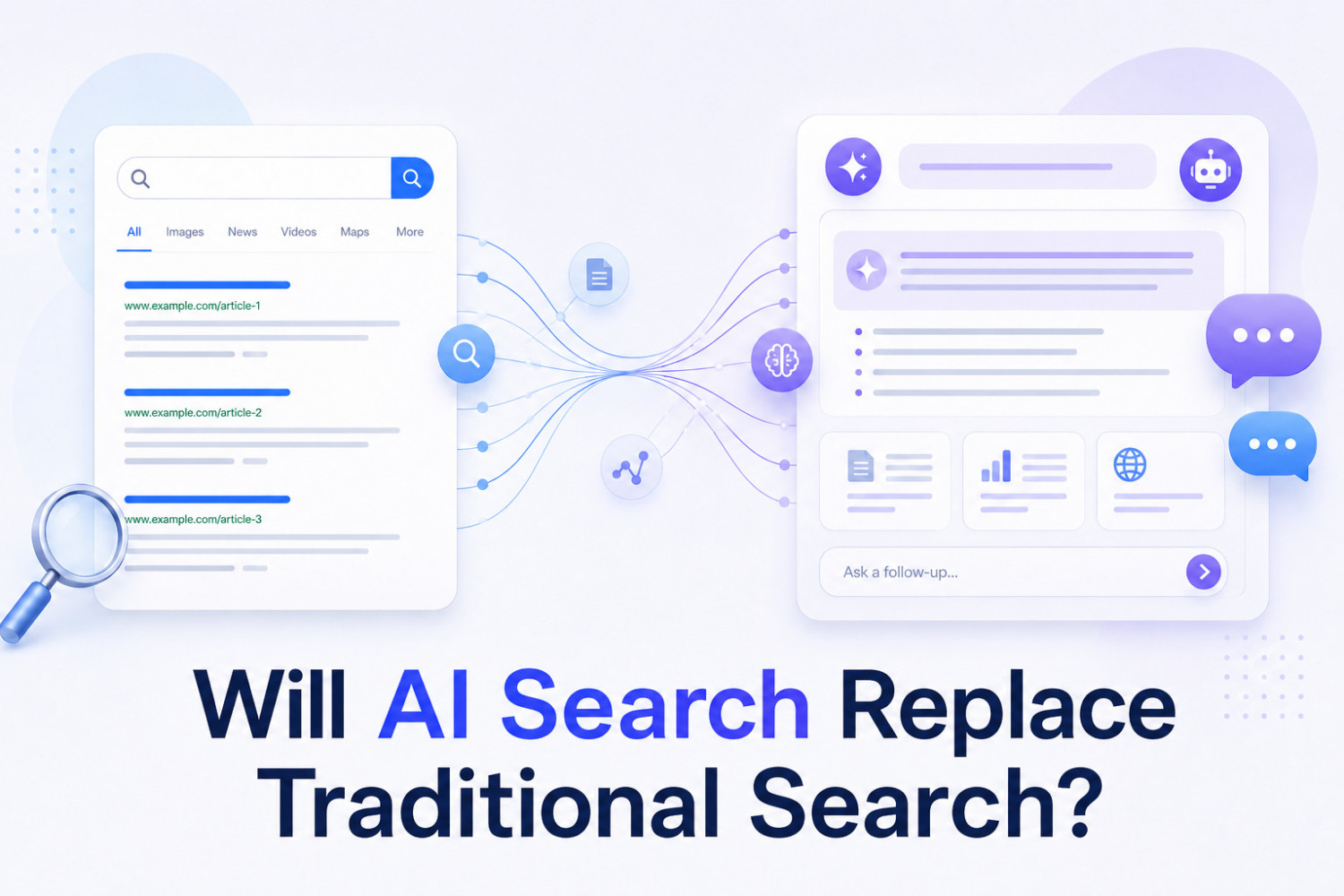
AI search probably will not completely replace traditional search, but it will change how many people look for information. A more realistic way to think about it is this: people will use both AI search and traditional s...
Read Article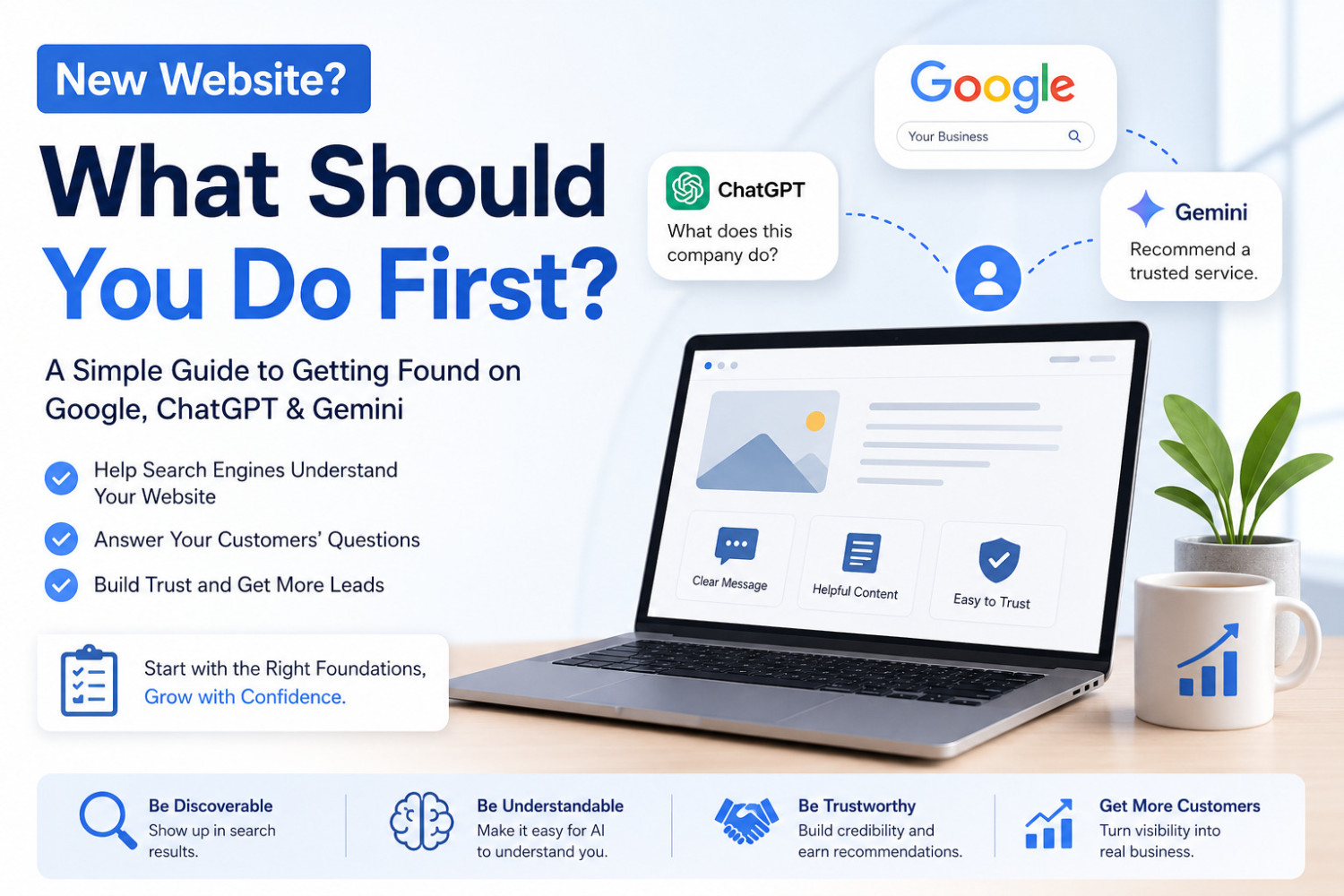
When a new website goes live, many businesses assume, “Now that the site is done, customers should start showing up over time.” But in reality, Google may not find you easily, and ChatGPT or Gemini may not know whether y...
Read Article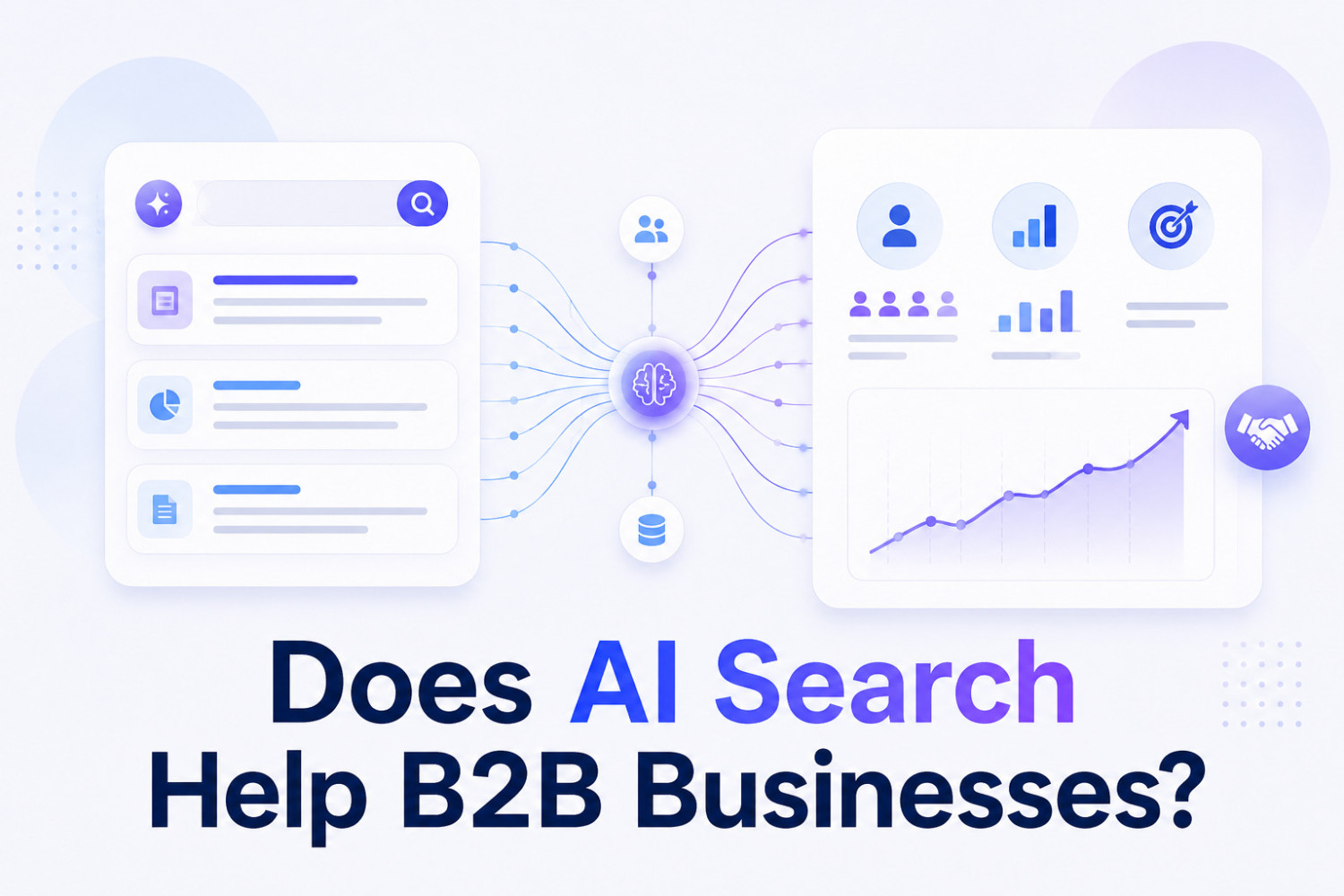
Yes. AI search can be very helpful for B2B businesses, especially when the product or service is expensive, complex, or takes a long time to buy. The reason is simple: B2B buyers usually do a lot of research before they...
Read Article
Yes, they often can. Even if the mini plan mainly optimizes your homepage, once that homepage becomes easier for AI search engines, ChatGPT, Gemini, Claude, and other LLM systems to understand and trust, the other pages...
Read Article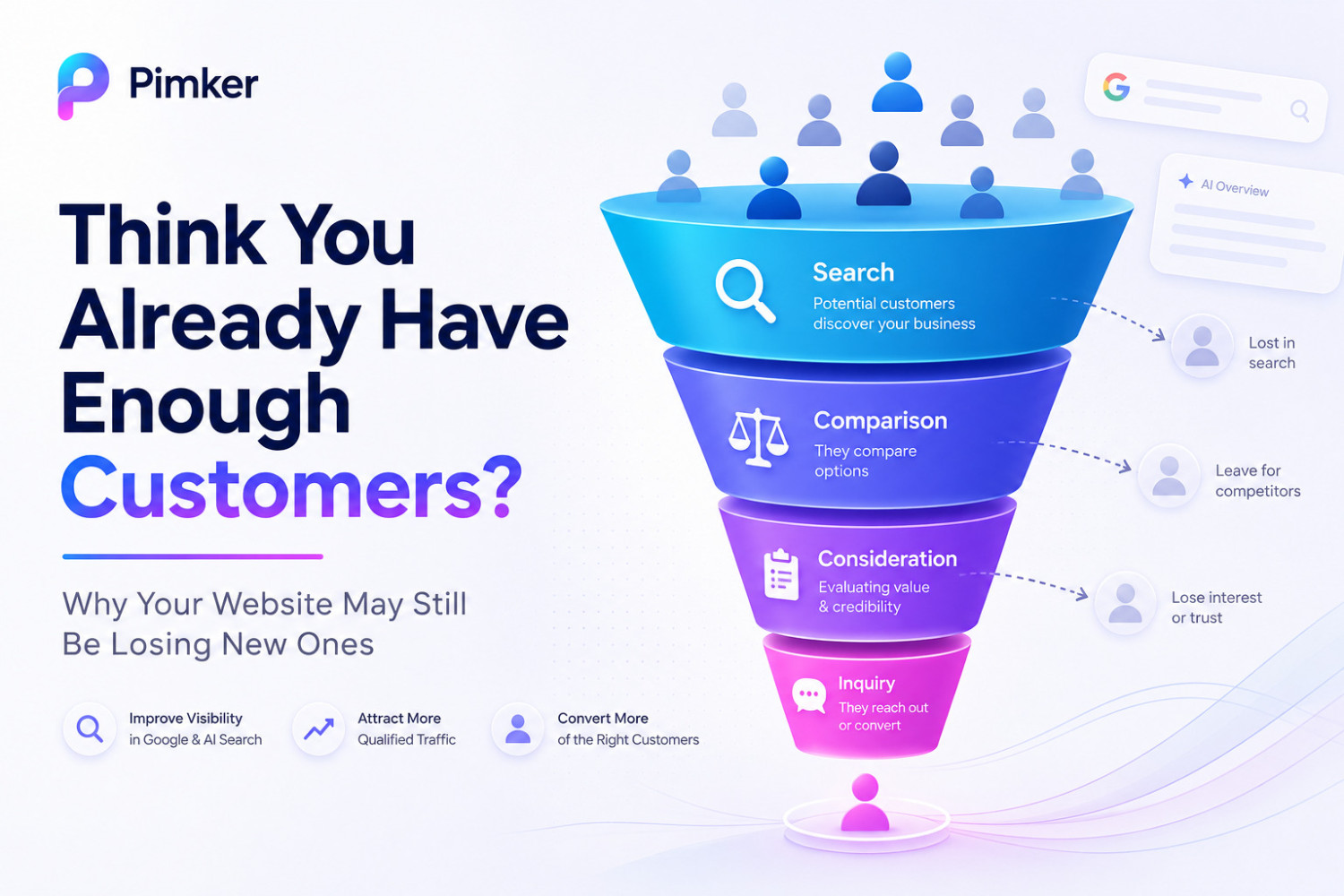
Many business owners think, “We get phone calls. People fill out our contact form. We probably have enough leads.” But the real problem does not always happen after a customer contacts you. It often happens before they e...
Read Article
Yes, AI answers do affect website traffic, and the impact is becoming more noticeable. In the past, users often searched a keyword, clicked through several websites, and pieced together the answer themselves. Now, they m...
Read Article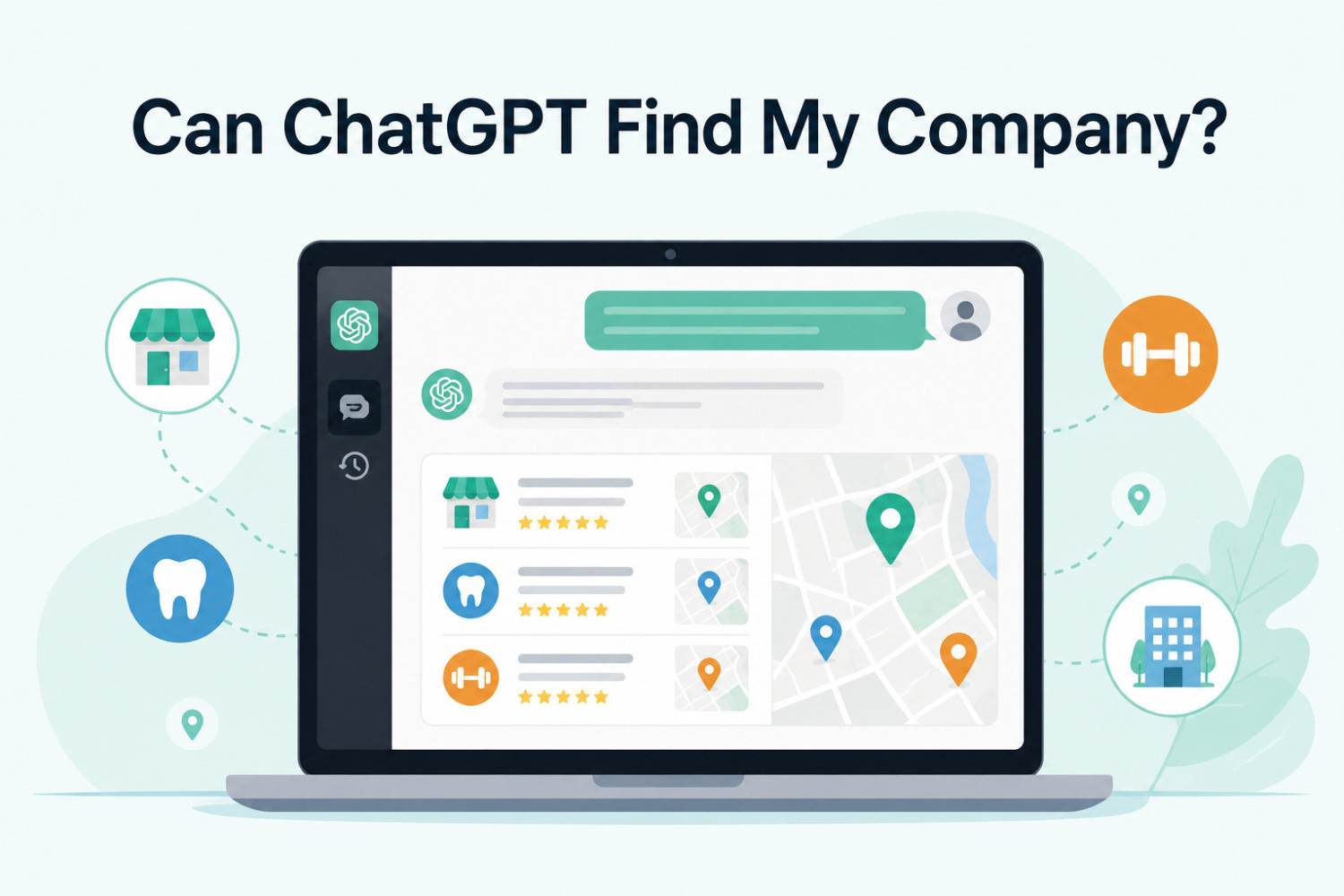
ChatGPT may not be able to find your company automatically. The more accurate answer is this: if your company has clear, trustworthy, publicly available information online, and that information is easy for AI systems to...
Read Article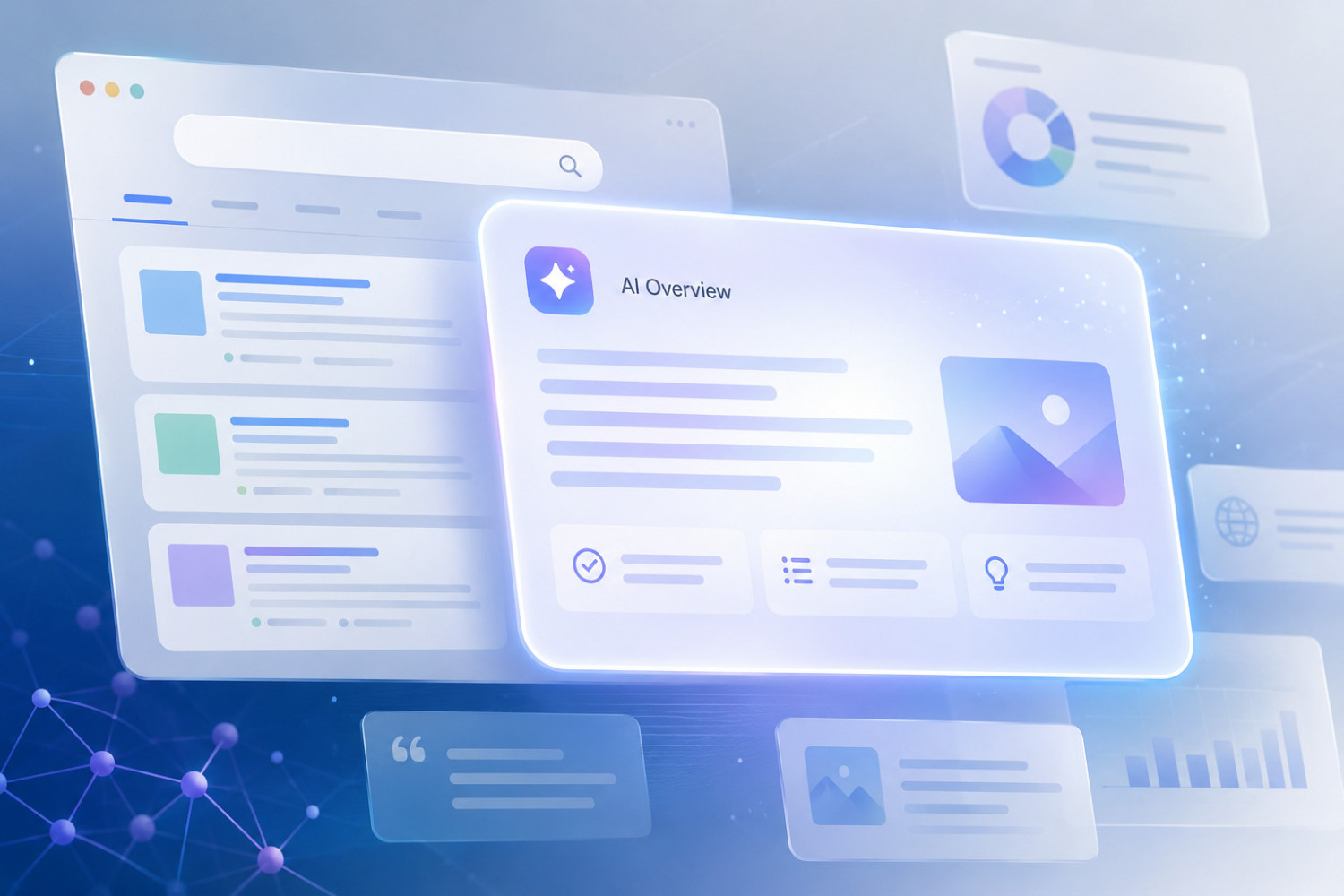
Google search results are starting to look more like AI answers because Google is moving from “showing a list of webpage links” to “understanding your question, summarizing the key points, and then showing useful sources...
Read Article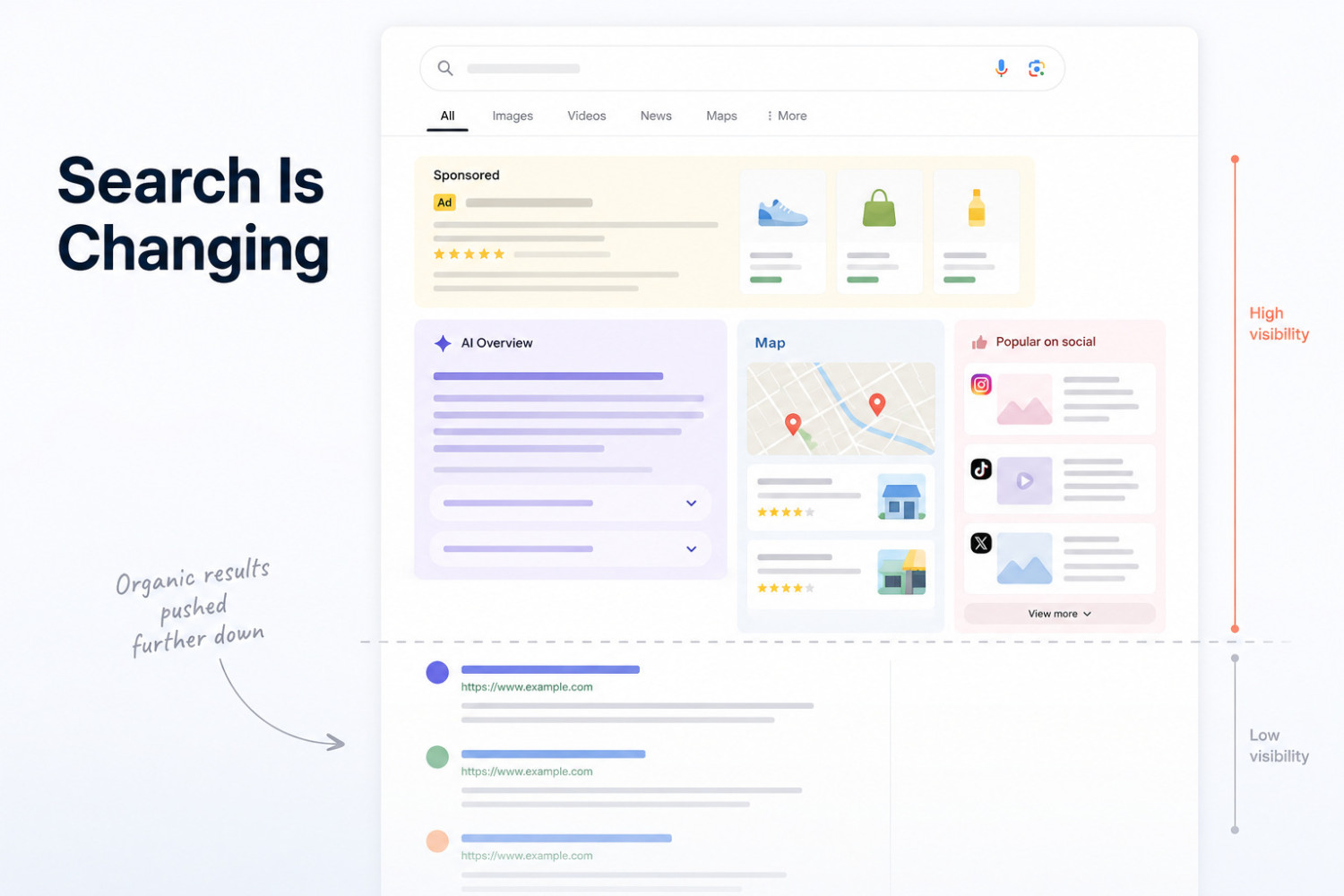
SEO alone may not be enough because people no longer rely only on traditional Google search results to find answers. They also use ChatGPT, Gemini, Google AI Overview, social platforms, and review content to make early c...
Read Article
AI search can make small companies harder to find, but not because AI intentionally favors big brands. The main reason is that AI tends to surface brands and content that are clear, trustworthy, and easy to understand. I...
Read Article
If your website has been live for a long time but still gets little visibility on Google and AI search, the most common reason is not that the site looks bad. It is that Google and AI systems still do not clearly underst...
Read Article
Your company is probably not being recommended by ChatGPT because the AI cannot quickly verify, from publicly available information, who you are, what you offer, who you serve, and why your business should be trusted. It...
Read Article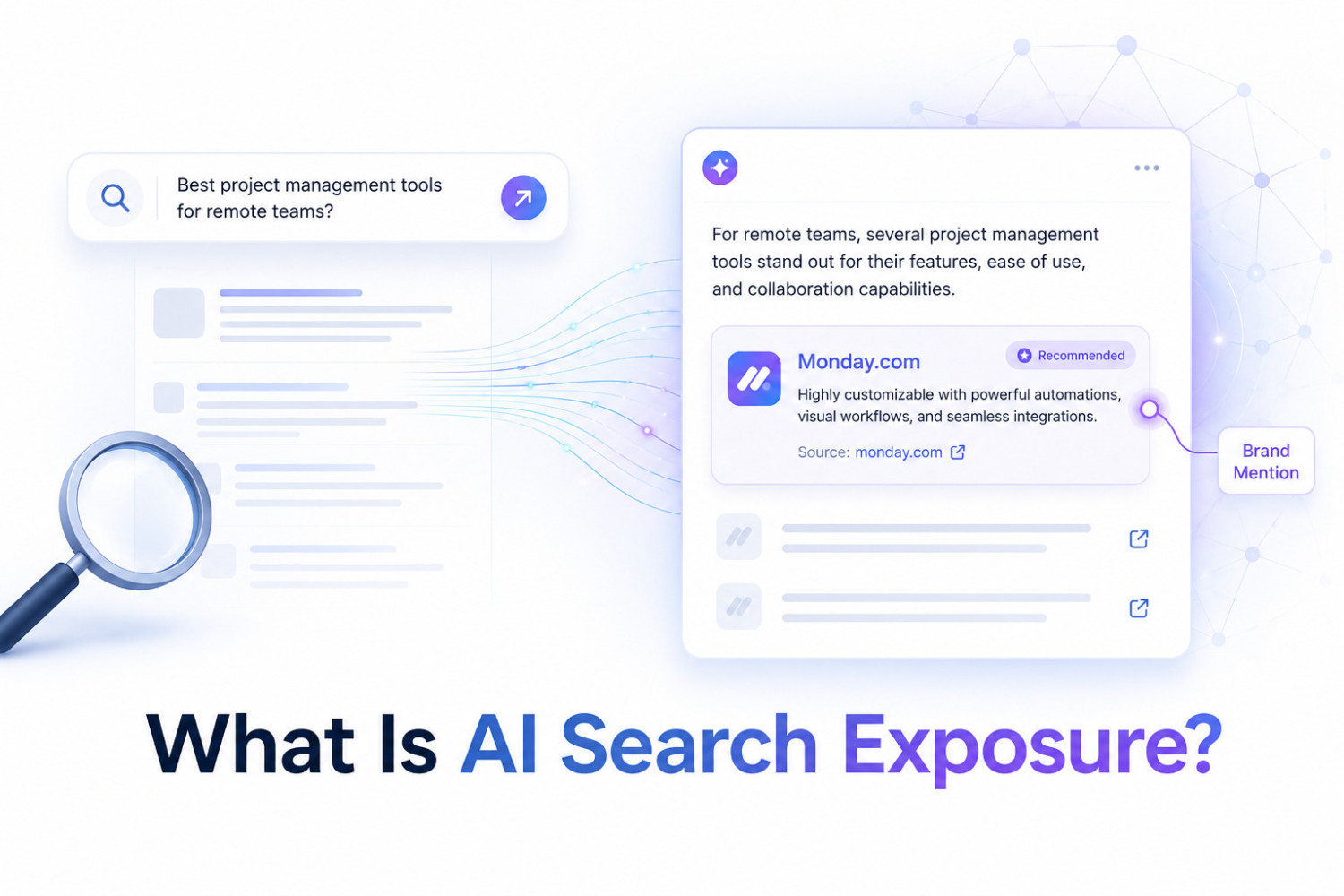
AI search exposure means the chance that your brand, website, product, service, or content appears inside answers generated by AI search tools. These tools may include ChatGPT, Gemini, Claude, Perplexity, or AI-powered a...
Read Article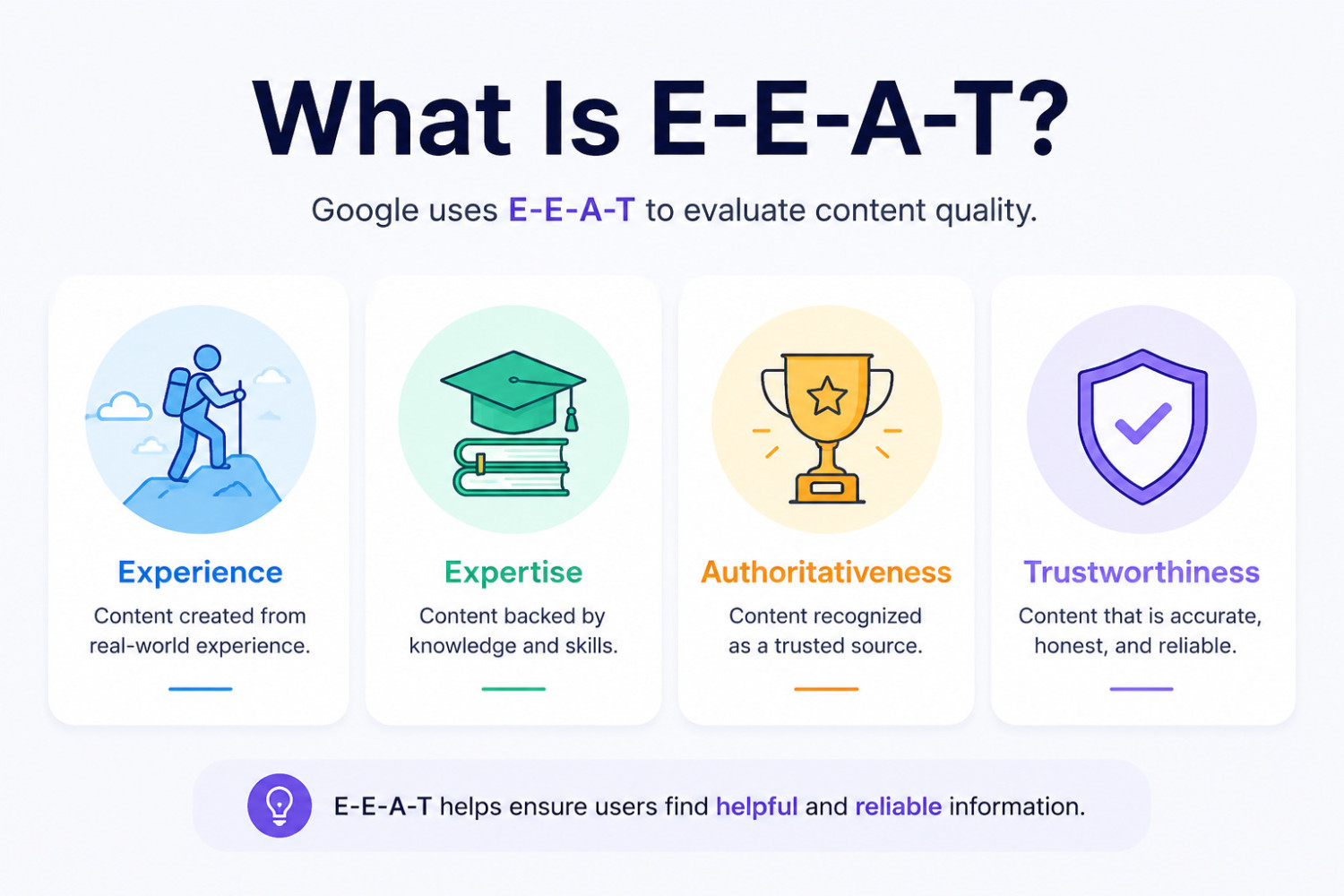
E-E-A-T is a concept Google uses to evaluate content quality. It stands for Experience, Expertise, Authoritativeness, and Trustworthiness. In simple terms, E-E-A-T is not about stuffing a page with keywords. It is about...
Read Article
AI search is a way of using artificial intelligence to help people find information, understand a question, and turn scattered sources into a clear answer. Traditional search usually gives you a list of web pages. You ty...
Read ArticleWe make your brand easier for AI to discover and recommend. From brand positioning and content structure to a strategic update cadence, Pimker turns your website into a system that supports long-term visibility.
Contact Us

© Pimker 2026 AI marketing software built for modern businesses All rights reserved.