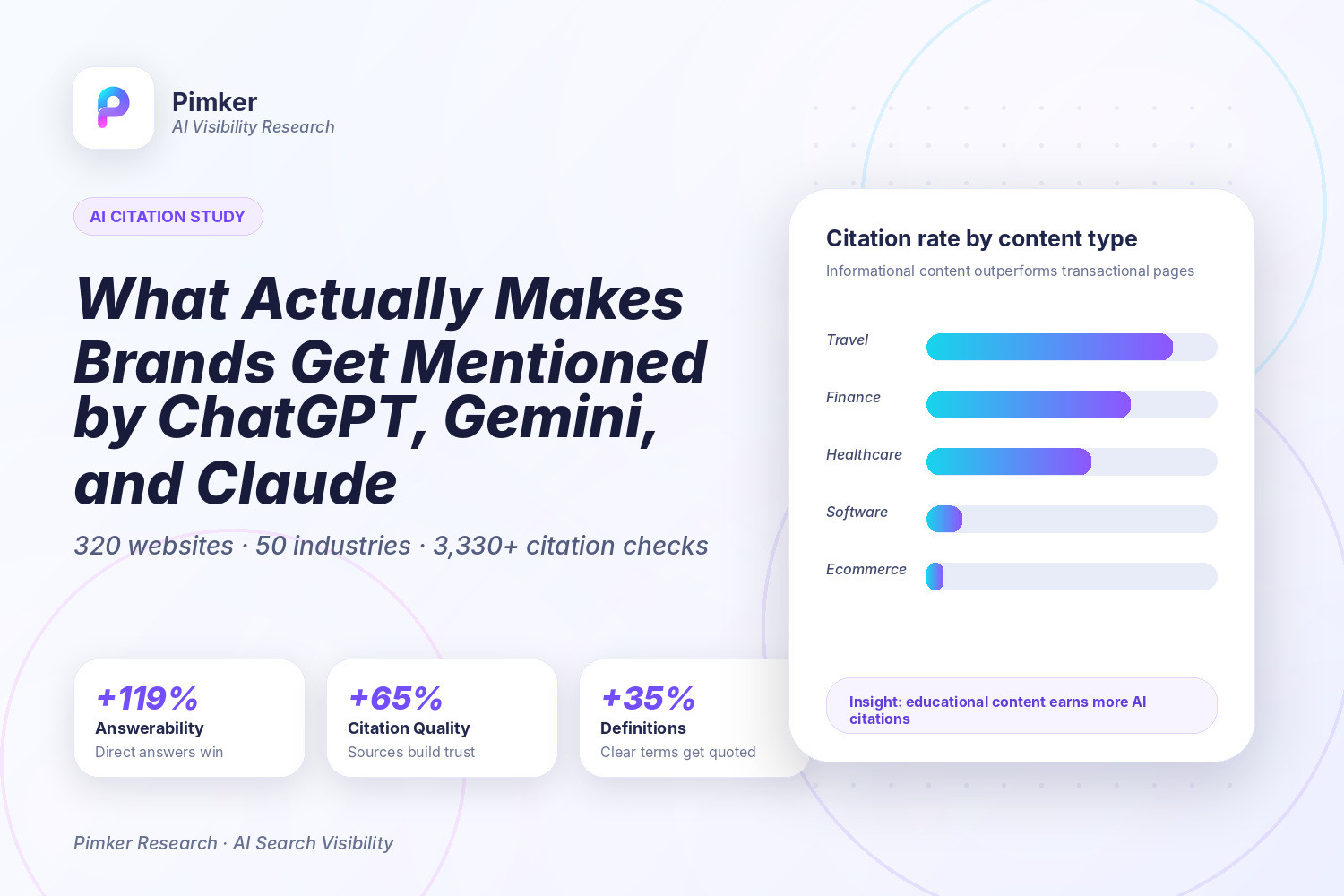
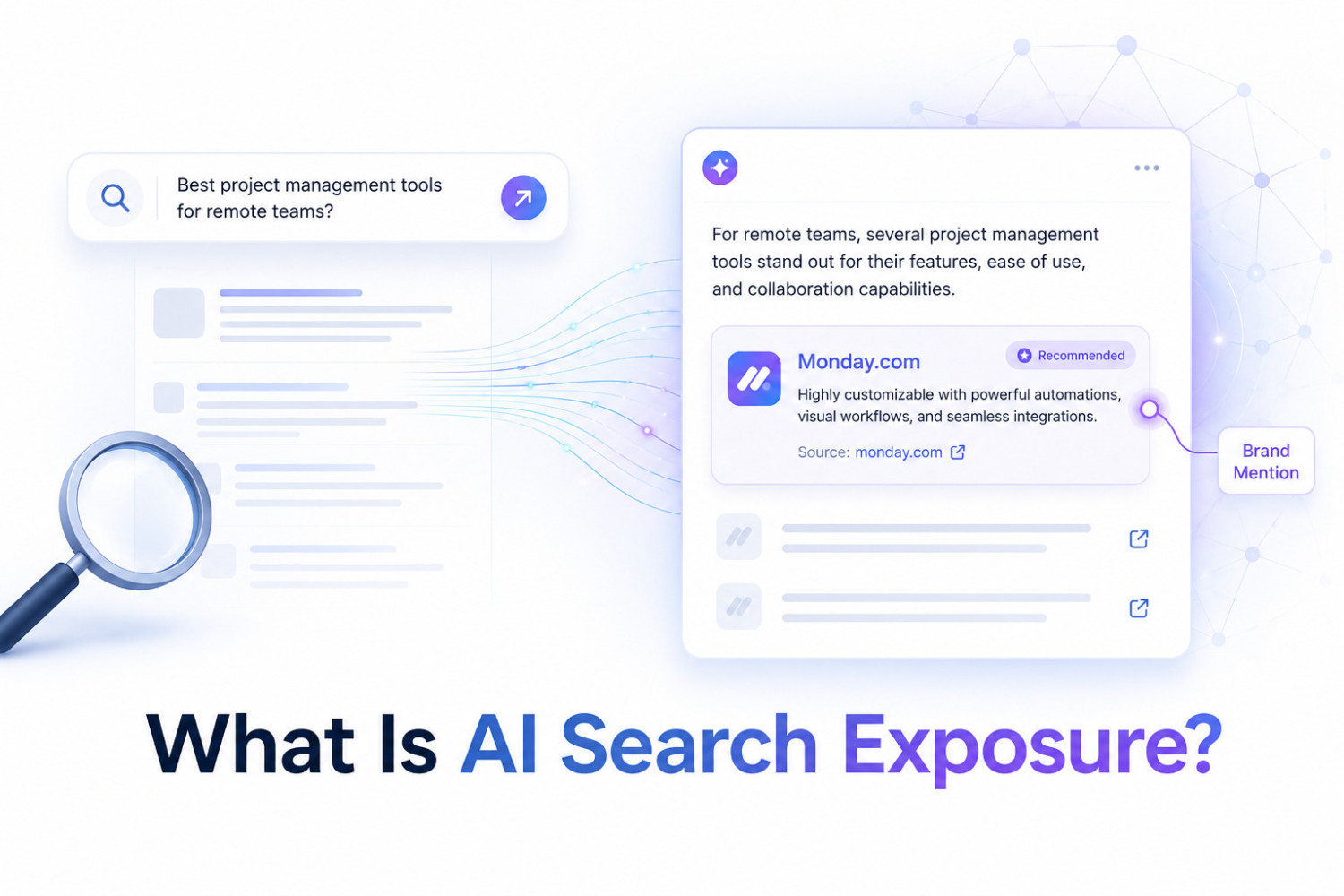
Over the past three months, Pimker ran a three-phase study on AI citations: 320 websites, 50 industries, and more than 3,330 citation checks across ChatGPT, Gemini, and Claude. The goal was simple: understand what kinds of websites are more likely to be cited or mentioned when AI systems answer user questions, and why some websites remain invisible even when their content looks complete.
This matters especially for business websites, brand websites, service websites, and small to mid-sized companies. Most businesses do not have a “no website” problem. They have a “website reads like a sales deck” problem: company intro, service list, case studies, and a contact form. Those pages may help a human visitor, but they often lack the direct, usable sentences AI systems need when forming an answer.
If you are adjusting your content strategy, start with AEO and AI optimization. AI does not only need to “see” your page. It needs to decide whether the page can be safely, clearly, and credibly used to answer a user’s question.
The Strongest Signal Is Not Layout. It Is Whether You Answer the Question.
The strongest predictor in the study was answerability: whether the content directly answers the user’s question. This factor produced a +119% citation lift.
The difference is not content length. The difference is whether the answer is easy to extract. A sentence like “GEO is the practice of optimizing content for AI search engines” gives AI something it can quote, summarize, or reframe. A sentence like “We help businesses unlock value through next-generation solutions” gives AI almost nothing, because it does not clearly explain what the service is, what problem it solves, or who it is for.
For a commercial website, the test is practical: open your service page and look at the first sentence of each section. Can that sentence answer a real customer question on its own? A user may ask, “What does this company do?”, “Who is this service for?”, “When would I need this?”, or “How should I evaluate the cost?” If a reader needs three paragraphs before they can guess the answer, AI is unlikely to treat the page as a strong citation source.
This is also why many websites are almost never mentioned in ChatGPT. The problem is not that the website does not exist. The problem is that AI cannot find enough clear material to use. For a deeper diagnosis, read Why Is Your Website Almost Never Mentioned in ChatGPT?.
Content With Sources Is Easier for AI to Trust
The second major signal was citation quality: whether your content links to credible sources. In the study, websites with high-quality external references saw a +65% lift in AI citation rate.
The point is not to add random links. The point is to show that your claims are not floating on their own. Links to research papers, government sources, educational institutions, industry publications, standards, or credible media make content more verifiable. They turn a marketing statement into a claim with context.
Service businesses often overlook this. Consulting firms, clinics, legal services, financial services, and B2B SaaS companies frequently send every link to their own internal pages because they worry external links will distract visitors. From an AI citation perspective, however, a page with no external basis can look weaker. When AI systems answer a question, they tend to prefer pages that explain, support, and contextualize their claims.
How do you judge whether your citation quality is strong enough? Check three things: whether the page cites sources beyond your own site, whether each source supports the specific claim around it, and whether the source is something a user would reasonably trust. If you are building a brand content system, include this in your AI visibility checklist before publishing, not after the article is already live.
Clear Definitions Help AI Understand What You Mean
The third meaningful signal was definitions. Explicitly defining key terms produced a +35% citation lift.
This sounds basic, but most business websites do it poorly. SaaS companies, agencies, consultants, marketing firms, and technical service providers often use internal vocabulary without explaining it. People inside the company may understand “brand visibility,” “AI SEO,” “data pipeline,” or “content strategy,” but AI needs quotable definitions.
A good definition is direct: “X is Y, used to solve Z.” For example: “AI visibility is the ability of a brand to be understood, mentioned, or cited by AI answer systems such as ChatGPT, Gemini, and Claude.” That sentence can be parsed by AI and understood by a searcher.
A weak definition hides the meaning inside abstract language, such as “We build end-to-end intelligent growth solutions.” It sounds complete, but it does not give AI anything concrete to evaluate. Add clear definitions to service pages, FAQ sections, educational articles, and case studies. You can also build them into AI learning content, where each article answers one specific question.
Why Structure, Schema, and E-E-A-T Are Not as Predictive as People Expect
One surprising result from the study is that content structure, schema markup, E-E-A-T signals, and multimedia did not independently predict AI citations as strongly as many people assume.
That does not mean they are useless. It means they are closer to baseline requirements. Most websites already have headings, lists, sections, and basic HTML structure, so structure alone is no longer a differentiator. Schema markup can help machines parse a page, but it cannot replace a clear answer or credible evidence. If the page does not say anything precise, schema only packages vague content in a cleaner format.
E-E-A-T showed a -23% correlation in the dataset, likely because of content-type confounding. Some websites with strong E-E-A-T signals are brand-heavy, transactional, or corporate profile pages. They may be trustworthy in a general sense, but they may not be useful as direct answer sources. Multimedia showed a -37% correlation, likely because image- or video-heavy pages often contain less parseable text and lower answer density.
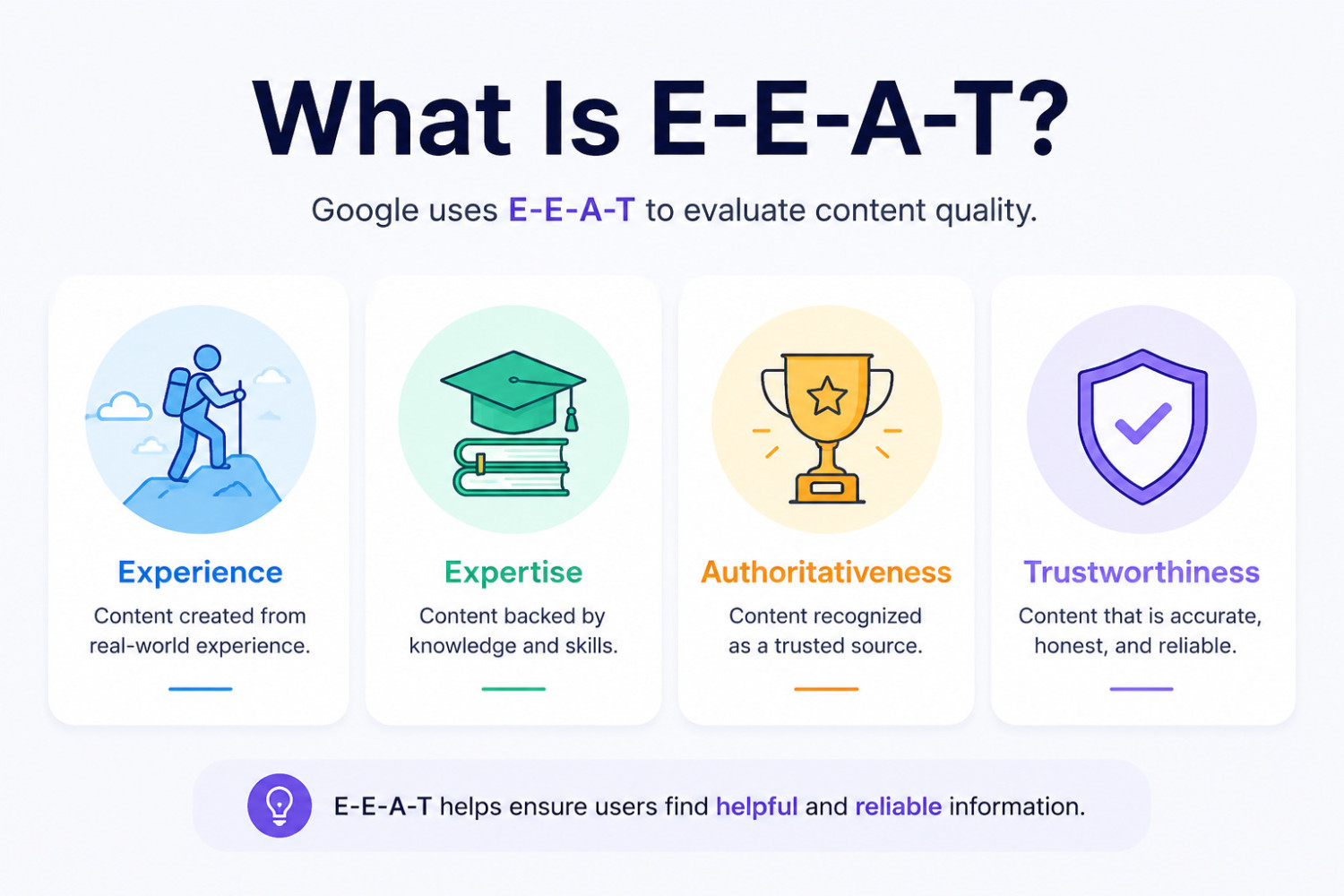
E-E-A-T is a framework Google uses when evaluating content quality. It stands for Experience, Expertise, Authoritativeness, and Trustworthiness. For a business website, E-E-A-T does not mean filling a page with company introductions. It means helping readers and search systems understand who created the content, whether they have real experience or expertise in the topic, whether the content is supported by credible evidence, and whether the website deserves trust. Among the four, Google emphasizes trust as the most important element; experience, expertise, and authority should all support the same goal: helping users believe the answer can be relied on.
For small and mid-sized businesses, the commercial takeaway is clear: do not spend your first budget on complex technical adjustments before checking whether the content itself can answer questions. Technical foundations matter, but they are not the main growth lever. You can think of Pimker’s AI visibility infrastructure as a system for helping search engines and AI systems understand a brand, not just as a way to make a website look better.
The Biggest Difference Comes From Content Type
The most important finding for business websites is that AI citation rate varies heavily by content type.
Travel content had an 85% citation rate. Finance content reached 70.5%. Healthcare content reached 56.9%. By contrast, software product pages were cited only 12.5% of the time, and ecommerce pages dropped to 6%.
| Content type | AI citation rate | Content nature | How to interpret it |
|---|
| Travel content | 85% | Informational | AI can turn this content into itineraries, locations, and practical guidance. |
| Finance content | 70.5% | Informational | AI can cite definitions, calculations, frameworks, and knowledge-based explanations. |
| Healthcare content | 56.9% | Informational | AI can cite clear questions, decision criteria, and explanatory guidance. |
| Software product pages | 12.5% | Transactional | Product pages often include subjective claims and commercial positioning, so AI is more conservative. |
| Ecommerce pages | 6% | Transactional | Purchase decisions involve price, preference, inventory, and timing, so AI citation rates are lowest. |
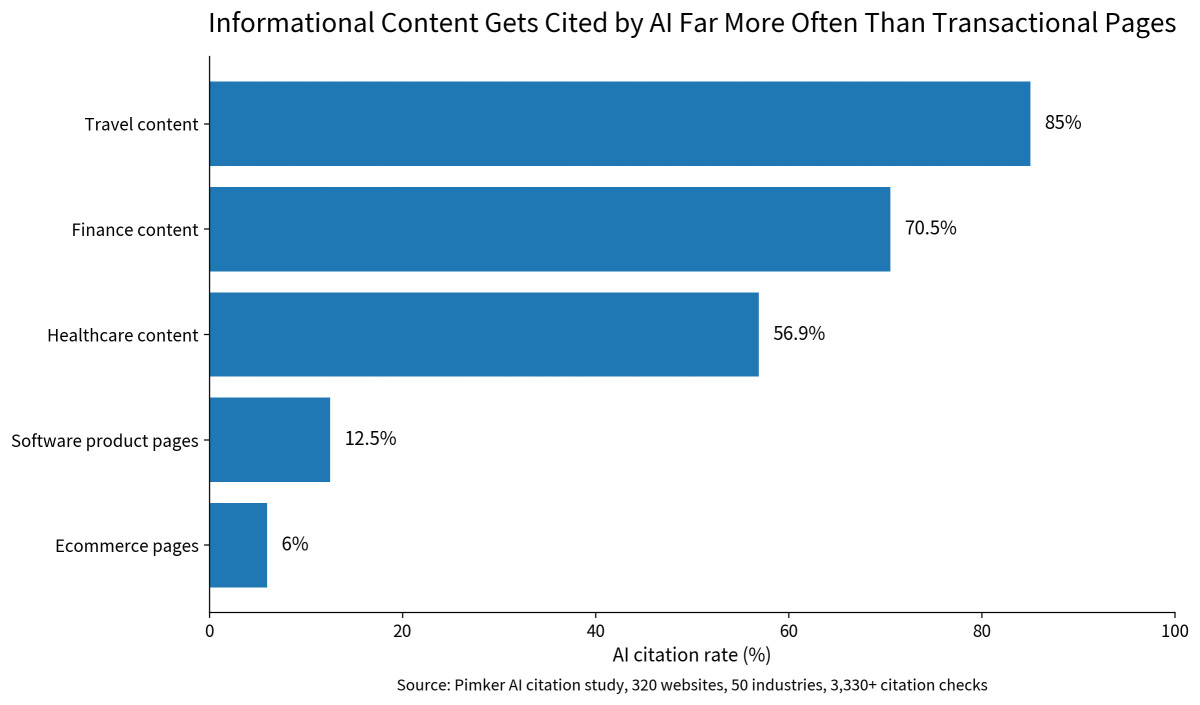
Chart takeaway: AI cites informational content such as travel, finance, and healthcare far more often than transactional pages such as software product pages and ecommerce pages. This is why business websites need educational content, not only product or service pages.
The reason is straightforward: AI is more comfortable answering informational questions than making subjective purchase recommendations. Questions like “How do I find a doctor?”, “What is compound interest?”, or “What should I know before visiting this destination?” have relatively clear information needs. AI can summarize those pages and cite sources with more confidence.
By contrast, questions like “Which CRM is best?”, “Which running shoes should I buy?”, or “Which company should I hire?” involve subjective judgment, live pricing, personal preference, brand comparison, and commercial risk. AI becomes more cautious and often leans toward well-known brands or large platforms.
So if you are a SaaS company, ecommerce brand, consulting firm, agency, clinic, renovation company, or B2B service provider, do not only optimize product pages or service pages. Build informational content around them: “How to choose a CRM,” “What to check before starting SEO,” or “How small businesses should evaluate whether AI search is affecting lead generation.” These pages match the kinds of questions AI is more willing to cite, and they can still lead qualified visitors back to your service or contact page.
This is also where customer success stories can do more than prove credibility. A case study should not only report results. It should explain the customer’s problem, how the problem was diagnosed, what steps were taken, and which type of business can learn from the example. That turns a case study into business knowledge AI can understand.
Brand Recognition Still Matters, but It Is Not a Reason for Smaller Brands to Give Up
The study also revealed an uncomfortable reality: Yelp received a low AEO score, but ChatGPT, Gemini, and Claude cited it 100% of the time. The reason is not hard to understand. AI systems have seen Yelp extensively in training data and web data, so the brand is already strongly recognized.
For small and mid-sized businesses, this can feel unfair. But it does not mean optimization is pointless. It means you should not try to compete with global brands across every broad query. You should first improve your odds inside your own competitive category.
For example, if you are a local B2B consulting firm, your goal may not be to appear in every broad query for “consulting firm.” A better target is to help AI understand you in more specific questions, such as “What should small businesses do first when optimizing for AI search?”, “How can service websites increase AI citation opportunities?”, or “How should a brand website structure FAQs so AI can understand them?”
Those queries are closer to business intent and more realistic for smaller brands. When you and a similar competitor answer the same specific question, the page with clearer answers, stronger sources, better definitions, and more educational context has a better chance of winning.
If you want to understand where your website currently stands, start with a free website check or contact form to see whether your main issue is missing answers, missing sources, missing definitions, or a content mix that is too transactional.
ChatGPT, Gemini, and Claude Are Converging
Across the study, the three platforms cited websites at similar rates: ChatGPT at 41.5%, Claude at 35.6%, and Gemini at 40.7%.
That means companies do not need a completely separate content strategy for every AI platform. You do not need one version for ChatGPT, another for Gemini, and another for Claude. The real task is to organize your website so that all AI systems can understand, cite, and trust it.
Of course, each platform still differs in data sources, live-search behavior, and citation style. But from a content strategy perspective, the direction is clear: lead with answers, support claims with sources, define key terms, and build enough informational content. These practices also improve traditional SEO, user experience, and lead quality.
To follow platform-level changes, you can regularly read Google Gemini updates, Claude updates, and AI news. But do not build your entire strategy around short-term product changes. The stronger long-term investment is content that can be understood and reused by AI systems.
How Should a Business Website Change?
The first step is not rebuilding the entire site. Start with your highest-value pages and check three questions page by page: Does this page directly answer user questions? Does it cite credible sources? Does it clearly define its key terms?
A service page should read more like an answer page. Do not only say, “We provide a complete solution.” Explain who the service is for, what problems it solves, what a buyer should prepare before starting, and how to judge whether they need it. Product pages can stay conversion-focused, but they should be supported by informational articles that answer pre-purchase questions.
FAQ sections should not be treated as footer filler. For AI, an FAQ is a high-density answer area. Each question should map to a real search intent, not just something the company wants to say. Article introductions should also stop taking too long to get to the point. The first paragraph should already explain the answer, the use case, and the decision criteria.
If your website already has many articles but lead quality or AI mentions have not improved, check whether the content is centered on what the brand wants to say rather than what customers are actually asking. That is one of the most common gaps on business websites. You can use this guide on what a service page should include so AI can understand it as a practical starting point, then improve your FAQ structure with how to write an effective FAQ.
AI Citation Is Not Magic. It Is a Content Usability Problem.
The most important conclusion from this study is that AI citation is not mainly about who has the prettiest page, the most complete schema, or the most polished brand slogan. AI more often cites content that directly answers questions, provides credible sources, and clearly defines concepts.
For business websites, this changes the order of content investment. Instead of endlessly adding product pages, campaign pages, or corporate profile pages, build a set of educational pages that answer the real questions customers ask before they contact you. These pages are more likely to be cited by AI and more likely to attract visitors who are comparing options, evaluating vendors, and getting ready to make an inquiry.
If you want to turn this into a practical priority list, start with three page types: homepage and service pages for answer clarity, articles for external source quality, and FAQs for pre-purchase questions. Then decide whether you need a more complete AI visibility strategy and content roadmap.
To find out which gap matters most for your website, use the contact form for an initial diagnosis. If you are ready to improve AI visibility more systematically, review the Pimker plans.